




Cleaning windows like a seasoned pro really comes down to five core moves. It begins with a gentle rinse of pure water and ends with a meticulous wipe that catches the smallest smudge. Nail your blade angle and edge-wipe routine, and you’ll cut your cleaning time in half.
As a Professional Window Cleaning company, we serve Arizona (Phoenix, Scottsdale, Tempe, Chandler, Paradise Valley, Glendale, Flagstaff), Colorado (Denver, Boulder, Arvada, Westminster, Erie, Commerce City, Golden), and Nevada (Las Vegas, Laughlin). We rely on professional-grade squeegees, water-fed poles with pure water, secure ladders, boom lifts, scaffolding, and rope descent systems to ensure every pane is spotless.
Fast Professional Window Cleaning
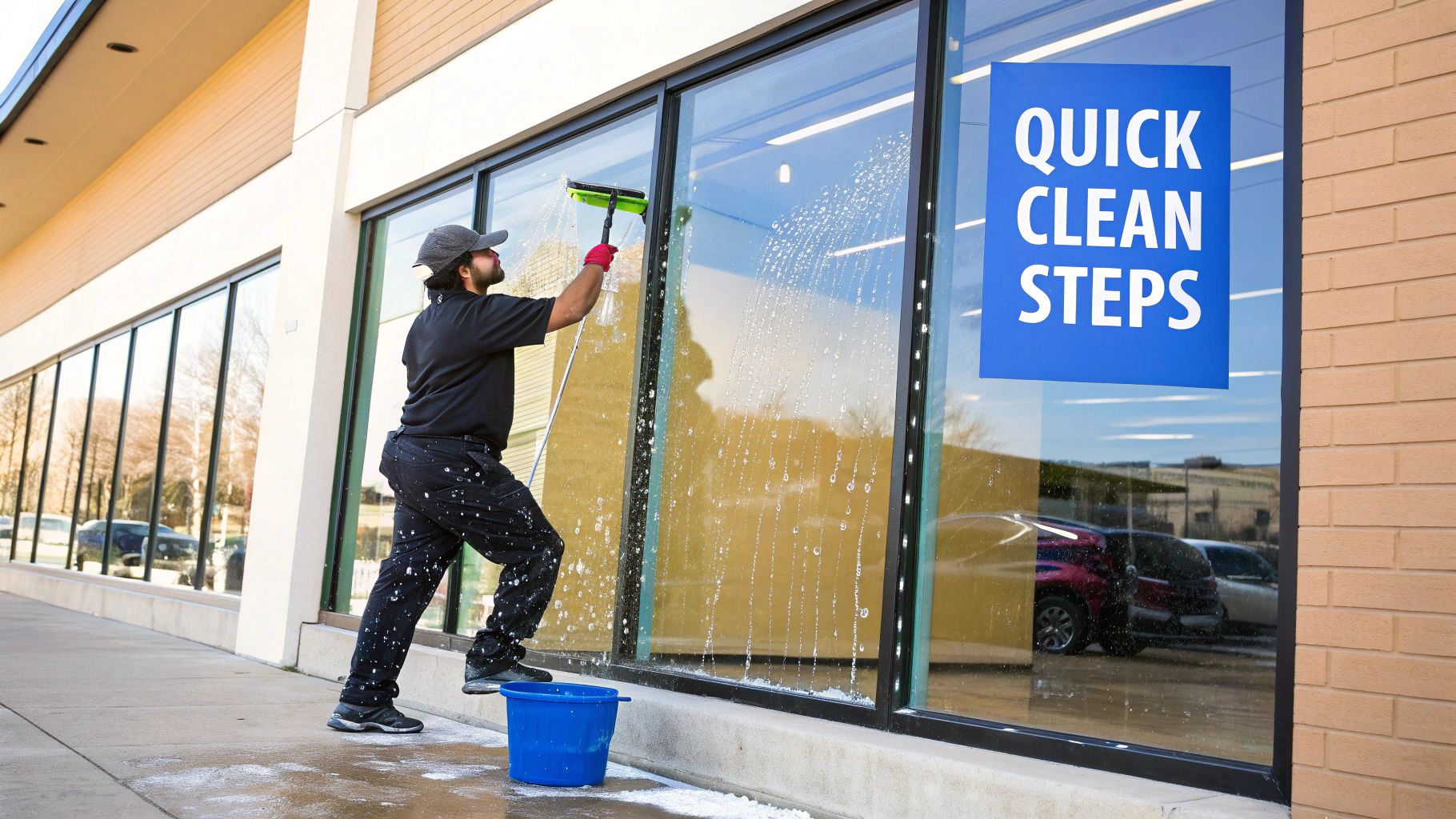
First up, give the glass a low-pressure spray of pure water to loosen dust and grit. No detergent yet—this step prevents abrasive particles from scratching the surface.
Then mix your cleaner: about 1–2 ounces per gallon hits the sweet spot. It tackles fingerprints and oil without leaving a residue.
Pro Cleaning Steps At A Glance
Here’s a quick reference to keep your process consistent:
| Tool Equipment | Purpose | Pro Tip |
|---|---|---|
| Squeegee | Remove solution | Hold at 45° angle |
| Strip Applicator | Loosen grime | Use overlapping strokes |
| Microfiber Towel | Edge wipe | Wipe before drips form |
| Pure Water Pole | Pre-rinse glass | Filter removes minerals |
Keep this table handy so each pass stays smooth and streak-free.
After your rinse and soap mix, pull the squeegee down in one fluid motion. Follow with the strip applicator, then finish each pane by edge-wiping before any drips set.
Key Benefits Of This Routine
- Cuts cleaning time by 50% even in dusty or sunny conditions
- Protects glass from scratches by removing loose particles first
- Delivers reliable streak-free results no matter the climate
On a sun-baked storefront in Phoenix, that initial rinse stops sand from etching the glass. In a dusty Denver shopfront, dialing back detergent strength and tweaking blade angle avoids repeat passes.
“Following these five steps reduced our job time by 50% and kept every pane streak-free,” says a technician in Chandler.
Never skip the final head-to-toe inspection under bright sunlight or LED. Tilt the squeegee toward the glass for a wet cut, then flip it over for a dry finish—this double-pass hunt catches any lingering smudges.
Give this five-move sequence a try on your next Chandler storefront or Glendale patio doors. You’ll speed up the job, impress clients, and slash callbacks.
For multi-story facades or complex high-rise work, call in the experts at Professional Window Cleaning.
Essential Tools And Solutions
Picking the right gear can mean the difference between sparkling glass and a streaky mess. Over the years, I’ve discovered that a top-notch squeegee with interchangeable rubber blades is non-negotiable. It glides through grime on any pane, day in and day out.
Blade angle also plays a starring role. I generally stick with 45° for standard glass and switch to a softer angle on tinted or coated windows to avoid damage.
• Squeegees deliver a precise wipe for truly streak-free results.
• Water-fed poles stretch up to 50 feet, letting you tackle high windows from the ground.
• Microfiber applicators trap detergent and lift dirt without scratching.
Water-fed pole setups depend on pure water filtration—no minerals mean no spots. In scorching Scottsdale summers, keeping crews earthbound with long poles isn’t just efficient; it also cuts down on sun exposure. Pre-filtering dust and grit protects both the glass and your blade’s rubber.
Choosing Blade And Pole Options
Interchangeable blades are a game changer. You can swap durometers depending on glass thickness and local dust conditions.
Hard water is a real headache in Glendale, so I always reach for balanced, eco-friendly detergents that break down mineral films. And remember: not all microfiber weaves are created equal. Tight threads polish away fine grit, while looser weaves tackle dusty, windy days.
Pro Tip Choose a 45 durometer blade for everyday work and bump up to a 55 durometer blade when you’re working on tinted panes.
Detergent formulas shift by region. In hot desert climates, low-sudsing mixes keep residue at bay. Meanwhile, pure water handles mineral removal upfront, letting your detergent go to work without leaving streaks.
Check out our guide on essential tools every window cleaner should have for deeper insights: Essential Tools Every Window Cleaner Should Have.
Eco Friendly Detergent Mixes
Gentle, biodegradable surfactants are the backbone of any eco-friendly cleaner—they slice through oily films without harsh chemicals. Where mineral content is high, balancing pH is crucial to prevent streaks and protect blade life.
The market for specialized glass-care gear has surged, hitting an estimated USD 3.29 billion in 2024. In fact, analysts forecast the global glass cleaner market to climb to USD 6.14 billion by 2033. For more on industry shifts, see these glass cleaner market trends.
Combining pure water poles with eco-friendly detergents gives you windows so clear, clients from Tempe to Chandler can’t help but notice. When mounting rooftop rigs—be it boom lifts or scaffolding—plan around roof pitch and structural support. Always confirm anchor points and weight limits before every high-access job.
• Ladders should lean at a 75° angle for optimal safety.
• Boom lifts demand certified operators and annual inspections.
• Rope descent systems require both certified harnesses and synchronized crew checks.
Expert Equipment Selection
Choosing the right rig in Flagstaff or Boulder comes down to elevation and wind patterns. Scaffolding heights and railings must match your building’s facade to the inch, and boom lifts vary from 40 to over 100 feet of reach.
A mixed fleet—ladders, lifts, water-fed poles—lets professionals tackle any window challenge without cutting corners. Our teams swap out blades every 100 hours to keep edges razor-sharp. For a full breakdown and buying tips, explore our deeper article.
Mastering these tools lays the groundwork for both speed and flawless results. Don’t overlook maintenance:
• Rinse microfiber heads after each job and air-dry in the shade.
• Store detergent in opaque containers to prevent UV breakdown and algae growth.
• Keep poles and blades indoors to maintain rubber flexibility and prevent wear.
• Use a soft-bristle brush to loosen stubborn dirt before going in with your squeegee.
• Replace filters in pure water systems on schedule.
• Track equipment age in a simple log so you can forecast replacements and budget accordingly.
With the right tools at your fingertips, cleaning windows like a pro soon becomes second nature. Up next: advanced techniques and troubleshooting to elevate your game even further. Stay tuned for some powerful methods.
If you hit any snags or need gear support, our regional offices in Phoenix, Denver, and Las Vegas are here to help.
Master Squeegee And Water Fed Pole Techniques
Perfecting your squeegee stroke and dialing in pure-water flow can turn an average clean into a pro-level finish. Nail these fundamentals and you’ll save time, reduce touch-ups, and walk away with streak-free glass every time.
Key Focus For Expert Results
- Overlapping Vertical Passes at a precise 45° angle for total coverage
- Consistent Blade Tension to keep pressure uniform across each pane
- Adjustable Flow Control on water-fed poles to pre-soak and loosen deposits
Overlapping Passes And Blade Tension
Overlap your strokes to eliminate shadow lines along the edges. I learned this lesson on a windy rooftop in Boulder, where shaky poles forced me to slow each 45° pass and really feel the blade against the glass.
- Edge Lines pop up when horizontal pressure wavers
- Crosshatch Marks are a telltale sign of too-flat a blade angle
- Water Trails appear if your pole’s flow rate is cranked too high
The following infographic visualizes the essential tool workflow from squeegee to detergent application.
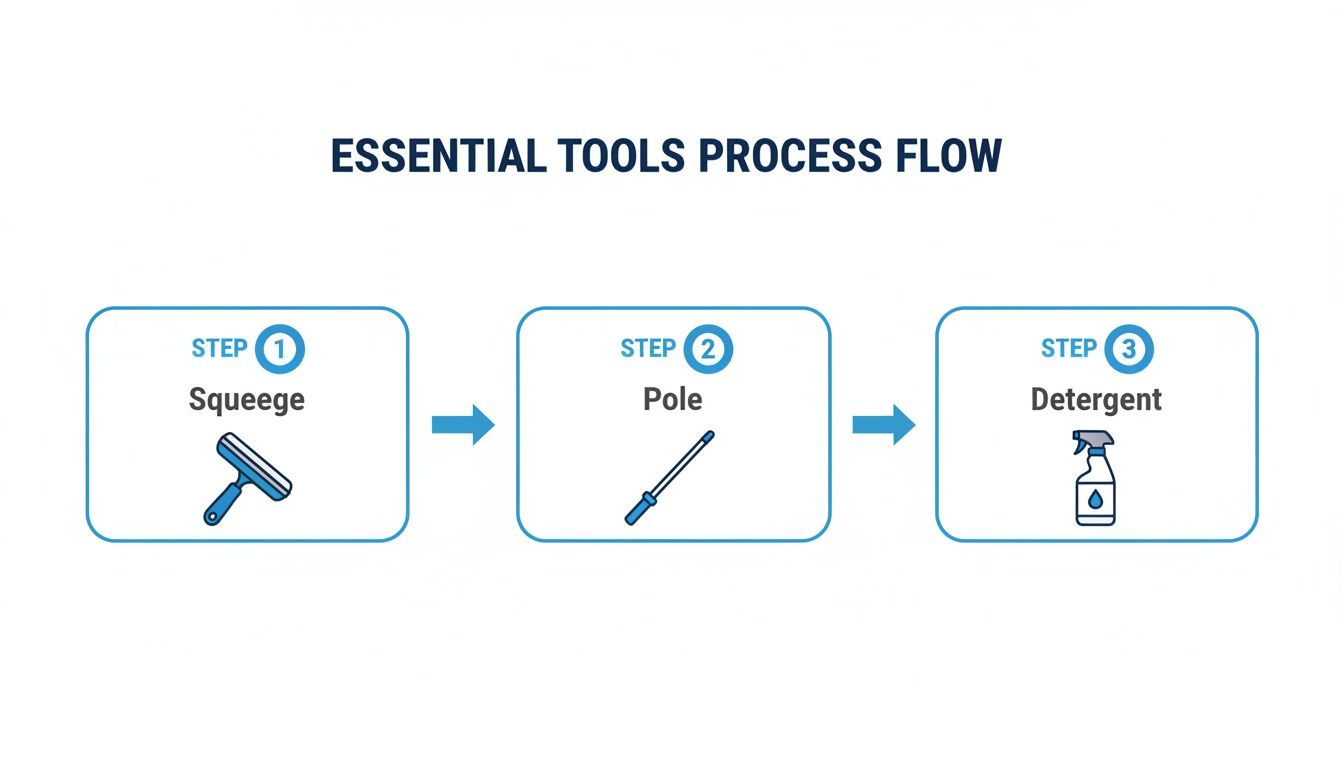
See how each tool stage links seamlessly—from pure-water rinse to the final wipe.
Pre Soak Deposits With Pure Water
When mineral film won’t budge, a blast of pure water softens it before any blade ever touches the glass. During a storefront job in Flagstaff, dialing my pole’s flow rate up properly sliced scrubbing time in half.
- Low Flow (1–2 GPM) for light dust and fine residue
- Medium Flow (2–4 GPM) for pollen, dirt, and everyday grime
- High Flow (4–6 GPM) to tackle heavy mineral and paint deposits
Dig deeper into water-fed pole science in our full guide: From Ground To Sky The Science of Waterfed Pole Systems.
Maintaining Blade And Pole Integrity
A worn blade can ruin your best technique. After a scorching season under Phoenix sun, I swapped every rubber strip before heading back to Boulder’s gusts—and it made all the difference.
- Rinse blades with pure water and let air-dry
- Store poles indoors to shield fittings from UV damage
- Lubricate telescoping locks and guides every quarter
“Fine tension and flow control separate pros from hobbyists,” notes a high-rise technician.
| Blade Hardness | Best Use |
|---|---|
| 45 durometer | Standard clear glass |
| 55 durometer | Tinted or coated windows |
Replace filters on a strict schedule—dirty filters mean spots on your work.
| Source | Change Interval |
|---|---|
| Municipal supply | Every 6 months |
| Groundwater or well | Every 3 months |
Common Streak Mistakes
- Skipping that pre-soak lets grime lodge under the blade
- Over-pressing creates drag lines that scream “amateur”
- Ignoring wind turns poles into uncontrollable whips
Tackle seasonal quirks for consistent results:
- In summer, rinse brush heads more often to fend off mineral buildup
- In winter, stow poles indoors to prevent freezing residue
- During monsoon season, dial down flow to avoid splashback
Master these methods and maintain your gear, and every window—from ground level to penthouse suites—will emerge crystal clear.
Ensure Safety With Ladders And Access Equipment
Reaching every window safely means more than a trusty squeegee. Professional teams rely on heavy-duty ladders, scaffold platforms, boom lifts and rope-descent gear to hit those high panes. Before you dip your brush in the bucket, make safety your first stop.
Ladder Setup Best Practices
Getting the angle just right sets you up for a secure climb. Rest the ladder at 75°, lock the spreader braces and double-check that the ground underfoot is solid.
- Place ladder feet on non-slip surfaces
- Engage all locks before climbing
- Keep three points of contact—always
- Move the ladder instead of overreaching
Inspect rungs, rails and fasteners for cracks or corrosion at the start of each day. Tag out any worn parts and swap in new ones immediately. A few quick checks can slash tip-over mishaps almost overnight.
In desert sun, metal ladders heat up fast. I once watched a Phoenix crew switch to heat-resistant gloves and fresh foot pads right before monsoon season kicked off. That simple tweak stopped slips in their tracks.
Anchoring And Harness Safety
Above ground level, your harness is a literal lifeline. Clip into rated anchors on scaffolding or building tie-backs, and give your ropes, carabiners and stitching a thorough look.
Daily equipment audits and fall arrest plans cut incident rates by up to 80% in Denver commercial towers
Whether you’re assembling guardrails on a scaffold or running through a pre-flight checklist on a boom lift, follow ANSI guidelines for anchor strength and hardware compatibility. A solid rigging setup pays dividends in both safety and peace of mind.

Conduct Preproject Risk Assessment
Every high-altitude job kicks off with a simple survey: building height, facade materials, power lines, wind exposure and foot-traffic zones. From there, map out your hazard controls.
- Identify fall and trip hazards
- Set emergency rescue procedures and clear communication protocols
- Plan anchor points and harness attachment locations
- Verify all equipment logs and inspection records
Always log inspections the same day you check blades or test anchors. For a ready-made template, explore our guide on risk assessment and preproject planning for high-altitude cleaning.
Emergency Response And Communication
When something goes sideways at height, seconds count. Keep waterproof two-way radios on hand, plus a fully stocked first aid kit and rescue rope within reach.
- Test radios and record communication logs before each shift
- Replenish first aid supplies: trauma shears, bandages, burn gel
- Run buddy-check drills at the beginning and end of every day
Having a confident crew starts with a crystal-clear emergency plan. Following OSHA 1910.27 standards does more than satisfy regulators—it keeps your people safe and focused on spotless glass.
Adapt Cleaning For Local Climate
When you’re chasing that flawless shine, weather rules the game. A dusty desert breeze or mountain haze can throw off your entire routine. Crews in Arizona, Colorado and Nevada have learned to tweak every step for crystal-clear results.
Pre Rinse Before Monsoon Storms
Before monsoon season rolls into Tempe, teams give each window a soft rinse of purified water. That gentle blast sweeps away fine grit that can scratch glass and wreck blades.
Key Steps:
- Maintain 2–4 GPM on water-fed poles to wash away grit without overspray
- Hold the nozzle at a 45° angle, aiming downward for smooth runoff
- Rinse frames and sills to stop soil from redepositing
Then we switch to an eco-friendly detergent. This rinse-and-soap combo cuts blade wear by 30% and keeps glass etching at bay.
Adjust Detergent For Hard Water
High elevations like Flagstaff treat every drop with caution. Mineral-rich water clings to glass, so pros test rinse-water clarity in real time and dial the mix down to 1 ounce per gallon.
| Location | Challenge | Detergent Ratio |
|---|---|---|
| Flagstaff | High minerals | 1 oz per gallon |
| Glendale | Moderate hardness | 1.5 oz per gallon |
| Boulder | Soft water | 2 oz per gallon |
When a Glendale crew adopted these ratios, post-cleaning spot checks fell by 40% overnight.
Protect Blades Under Intense Sun
UV rays from Champagne-sky afternoons can turn rubber blades brittle. In Commerce City, we’ve switched to UV-resistant blades for south-facing windows.
- Store spare blades in shaded cases during midday sun
- Inspect edges for tiny cracks before and after every use
- Rotate blade sections to distribute sun exposure evenly
After upgrading, a Phoenix-based team noticed smoother strokes and far less rubber degradation.
Schedule Work To Avoid Evening Humidity
Las Vegas nights are famous for sudden humidity spikes—and streaky windows. We book big jobs at dawn while dew point stays under 30%. If evening work is unavoidable, we start with pure water and follow immediately with a precise squeegee edge-wipe.
Consistent timing and tool selection make the difference between good and flawless results.
In Laughlin, overnight cooling can slow drying by 20 minutes. To counteract that, crews split each pane into smaller sections and lock in finishes right away.
Plan Equipment Care For Temperature Swings
Mountain towns like Boulder or Flagstaff often see frost settle in once the mercury dips below 40°F. Our techs drain hoses, wrap poles in insulated sleeves and stow squeegee blades in climate-controlled cases.
- Flush filters with ambient water to prevent ice blockages
- Wrap hoses in insulated sleeves for overnight jobs
- Store blades indoors to avoid cold-induced cracking
Winter freezes can reduce pure-water flow by 15% unless equipment is prepped.
These simple moves keep fittings intact and your tools working smoothly through rapid temperature changes.
All these regional adjustments start with smart planning. Check out our guide on Beating the Heat Window Cleaning Strategies for Summer for seasonal best practices. With the right tweaks, every storefront or mountain lodge will beam with streak-free clarity. Stay weather-ready.
Plan Maintenance And Professional Help
I’ve found that a solid upkeep routine is what keeps glass gleaming all year—no surprises, no last-minute scrambles. In cities like Phoenix and Chandler, a quick monthly rinse stops dust before it settles.
- Monthly Plans cover light dust checks and basic pure-water rinses
- Quarterly Services bring full squeegee passes and deep edge wipes
- Annual Inspections tackle hard water spots and frame-mechanical cleaning
Maintenance Schedule Examples
For homeowners, flexibility and budget-friendly options matter most. Commercial clients often lock in set visits, crew sizes, and guaranteed time windows.
| Plan Type | Frequency | Crew Size | Typical Price Range |
|---|---|---|---|
| Residential | Monthly | 1–2 techs | $70–$120 |
| Commercial | Quarterly | 2–4 techs | $200–$350 |
| Premium | Annual | 3–6 techs | $500+ |
When To Call Professional Teams
If your roof is steep or you’re dealing with more than two stories of glass, ladders just won’t cut it. Specialized rigging and platforms become lifesavers.
- Boom lifts offer reach up to 100 feet safely
- Rope descent systems give precise control on tricky angles
- Scaffolding provides a stable platform for frames and sills
Industry Growth means more advanced tools on every job
In 2024, the window-cleaning market hit USD 141 billion, climbed to USD 151.18 billion in 2025, and could reach USD 257.27 billion by 2032. Learn more about these projections here.
Structuring Service Contracts
Pricing usually hinges on how often you book, crew size, and the job’s complexity. Smaller homes in Glendale might only need quarterly visits, while large retail parks schedule monthly cleanings.
- Basic Monthly: lower rates with single-tech teams
- Premium Quarterly: adds a frame wash and seasonal inspection
- Annual Comprehensive: deep-clean plus access-equipment setup
Skipping preventive upkeep lets small stains turn into big repairs. Reactive cleaning can spike costs by up to 30% because of extra labor and heavy equipment.
Regular maintenance cuts downtime and saves on emergency mobilization
Working with a trusted team from your first quote through every visit keeps budgets predictable. Reach out to Professional Window Cleaning in Arizona, Colorado, or Nevada to tailor a plan that fits your needs.
Benefits Of Scheduled Maintenance
Keeping your windows consistently clean does more than boost curb appeal—it protects your building’s value. With a routine plan, you’ll also forecast budgets and avoid peak-season rushes.
- Improves tenant satisfaction by delivering clear views
- Reduces scheduling conflicts during busy months
- Minimizes harsh chemicals through regular gentle rinses
Next Steps For Your Windows
Take a moment to review our home and commercial plans, then choose the one that works for you. You can schedule a free quote with our local teams in Phoenix, Chandler, or Glendale today.
Each visit is backed by OSHA-trained technicians, fully insured crews, and a satisfaction guarantee. Monthly clients see 20% fewer service calls over the year compared to reactive customers, while quarterly programs strike a perfect balance of cost and performance.
- Contact us via the online scheduler or by phone for immediate booking
- Mention your city to get the fastest local response
Investing in scheduled maintenance lowers your overall cleaning budget and prevents unsightly streaks or damage. Our crews arrive equipped with water-fed poles, squeegees, boom lifts, and rope-descent gear—ready for any window scenario.
For streak-free glass all year in Phoenix, Chandler, or Glendale, contact Professional Window Cleaning and schedule your recurring service today.
FAQ
Cleaning windows like a pro brings up plenty of questions—best blades, streak fixes and safety checks. Whether you’re a homeowner in Tempe or a storefront manager in Las Vegas, this FAQ dives into expert tips that really work.
Which Squeegee Blade Is Best For Tinted Or Coated Glass
I learned early on that soft blades make all the difference on sensitive finishes. A 45–55 durometer rubber blade glides over tints without scratching them. Do a quick patch test before tackling an entire pane.
I swap blades after about 100 hours of real-world use. You can feel when edges dull—drag or tiny streaks start showing up. Stash extras in a cool, shaded box to keep UV rays from cracking the rubber.
Blade Selection Tips
- 45 durometer: Standard tinted windows
- 50 durometer: Moderate sun exposure
- 55 durometer: Ultra-soft coatings
- Swap blades at the first sign of drag or skipping
Proper blade care can slash replacement costs by 25%, and you’ll notice crisper results on every pane.
How Often Should I Schedule Professional Window Cleaning For A High Rise
High-rises in the city need more TLC than a backyard bay window. I’ve found a quarterly visit keeps glass free of pollution film and mineral spots.
In Phoenix or Scottsdale, desert dust piles up fast. In Denver, winter grit becomes a constant chore. During windy monsoons or heavy pollen season, bump service to every two months. That way you:
- Stop hard-water rings before they etch the glass
- Guarantee tenants enjoy the best views
- Cut down on deep-clean restoration passes
| Frequency | Benefit |
|---|---|
| Quarterly | Balanced upkeep all year |
| Bi-Monthly | Extra dust control in peak seasons |
| Monthly | Critical for flagship spaces |
Routine servicing helped one management team reduce follow-up calls by 30% last year.
For buildings over ten stories, we pair our squeegee work with a pure-water pre-rinse and rely on boom lifts or rope-access gear for safe, efficient reach.
Can I Use Purified Water For Interior Windows
Absolutely. Deionized water leaves zero mineral residue, so streaks simply vanish. Indoors I often attach a water-fed pole to reach skylights and atriums without risking ladders.
Here’s my go-to method:
- Mix purified water with a squirt of eco-friendly surfactant
- Agitate spots with a microfiber brush head
- Finish with a single-pass squeegee
If you’re moving from one room to the next, swap out your bucket every 10 windows to keep the water spotless. Replace filters every 6 months to maintain peak clarity.
Cleaning windows with pure water can speed up interior jobs by 50%—and you won’t worry about drips damaging furnishings.
What Safety Gear Is Required For Multi Story Window Cleaning
Safety isn’t negotiable when you’re off the ground. Here’s my go-to kit:
- Full-body harness rated at 5,000 lb
- Shock-absorbing lanyard and secure anchor points
- OSHA-certified rope descent or boom lift gear
- ANSI Z89.1 hard hat
- Slip-resistant boots and cut-resistant gloves
Before each shift, I run a quick gear check—stitching, carabiners, anchors. Then we huddle for a toolbox talk covering rescue plans, wind limits and rigging checks. Those routines can drive down incidents by up to 80% on commercial towers.
- Ensure every team member completes annual OSHA 1910.27 training before tackling new projects.
Our crews in Phoenix, Scottsdale, Chandler, Denver and Boulder arrive fully geared for any job. Reach out if you’re in Glendale, Flagstaff or Laughlin—we’ll set you up with a free estimate and a safe schedule.
Ready for spotless, streak-free glass? Book with Professional Window Cleaning in Arizona, Colorado or Nevada today. Whether you call or click through our online scheduler, you’ll lock in on-time crews with over 22 years of OSHA-trained experience.
Our Prescott and Sedona offices are open year-round, serving both rural retreats and urban skylines.