



Searching for a substitute for Windex often means looking for a way to avoid streaks, residue, re-cleaning, and wasted effort. That’s a different problem than choosing another bottle.
In professional window cleaning, the best substitute usually isn’t another spray at all. It’s a method. On residential glass in Chandler, storefront glass in Tempe, or exterior panes on mid-rise buildings in Denver and Las Vegas, the result comes from purified water, the right tools, correct access equipment, and trained technique. The liquid matters, but far less than people think.
Searching for a Better Clean Not Just a Better Bottle
People searching for a substitute for Windex usually assume the answer is another spray. In the field, that is rarely the problem we are solving.
What matters is whether the glass is cleaned without residue, spotting, or damage to coatings and seals. A different bottle can help on a small interior mirror. It does very little for sun-baked exterior glass, dusty tracks, oversized panes, or windows that show every flaw the moment afternoon light hits them.
That is why professionals stopped building their process around consumer glass spray. As noted by Stay Clean Long Island’s discussion of why professionals moved away from Windex, the shift came from both safety concerns and finish quality. That change matters because it reframes the whole question. The better substitute is a professional system that controls water quality, tool choice, agitation, and removal.
The primary goal is a finish that holds up under real conditions
Pros do not judge a cleaner by how the glass looks for sixty seconds. We judge it by what shows up after the panel dries fully and the light exposes every miss.
A reliable result depends on a few practical factors:
- Water quality: Hard water leaves minerals behind, even if the soap itself is fine.
- Glass type: Low-E coatings, tint, and older seals can react poorly to the wrong chemistry or too much scrubbing.
- Site conditions: Heat, dust, pollen, and direct sun shorten working time and make residue more obvious.
- Removal method: Dirt has to be suspended and taken off the glass, not spread thin and polished around.
That is also why advice built around a paper towel and a spray bottle falls apart fast outdoors. Even methods that seem simple, like cleaning windows with a hose, run into limits once minerals, runoff control, and drying technique become part of the job.
Practical rule: If the glass looks clean in shade and streaky in direct light, the issue is usually residue or poor removal, not a lack of stronger spray.
Small-pane advice does not carry over to exterior window work
Consumer tips are usually written for interior touch-ups. Professional work deals with skylights, second-story panes, storefront systems, atrium glass, and wide exterior panels that heat up fast and collect bonded grime, not just fingerprints.
That difference is why the best substitute for Windex is not a homemade mix with a different label. It is a repeatable process using the right tools, purified water where needed, and technique that matches the glass and the building. In practice, that is what produces a clear finish, and it is why hiring a professional is usually the smarter call for exterior windows.
Why DIY Glass Cleaners Fail in the Southwest
DIY glass cleaners fail faster in the Southwest because the problem is not just the bottle. It is the environment, the water, and the pace of evaporation on exterior glass. I see the same pattern on homes and storefronts across hot, dry markets. A cleaner that looks acceptable on an indoor bathroom mirror can leave obvious residue on a sunlit exterior pane within minutes.
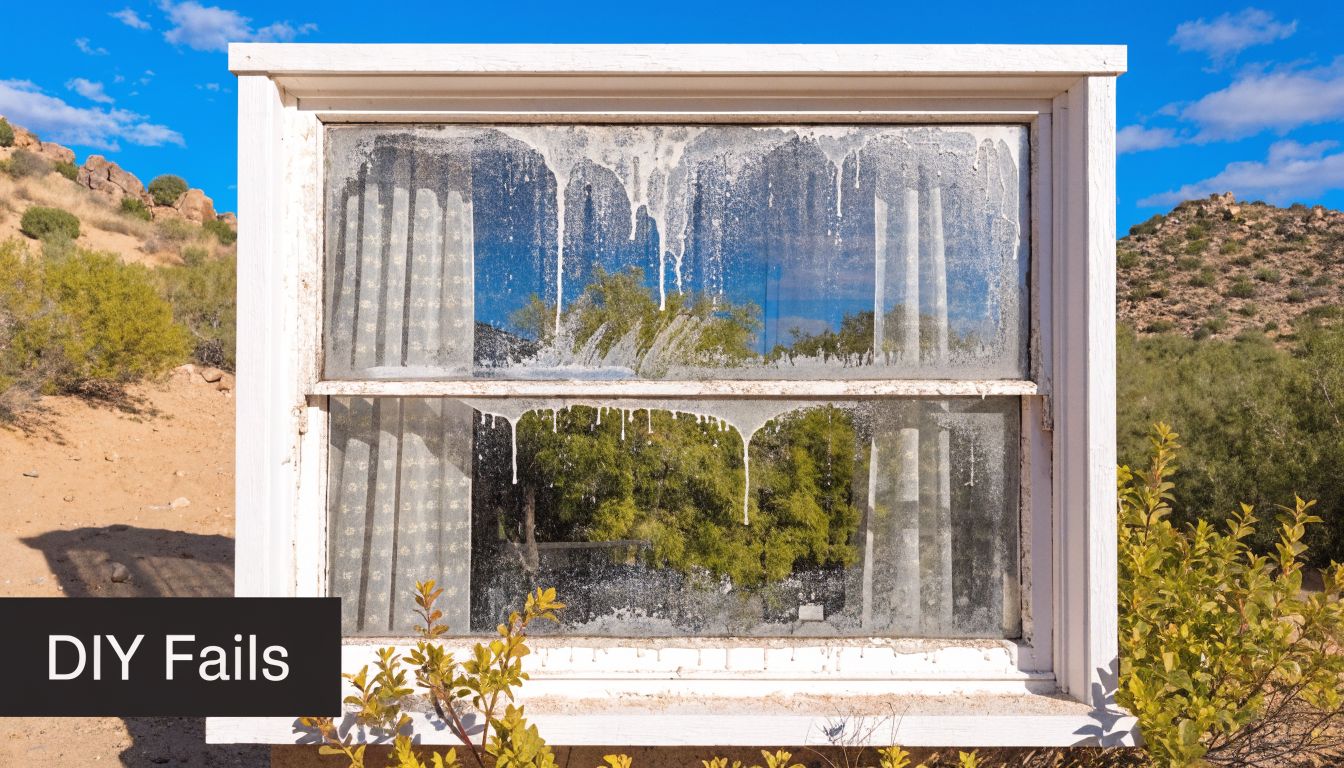
The usual DIY substitute is a vinegar and water mix. On a small shaded pane, it may look serviceable. On exterior glass in Arizona, Nevada, or Colorado, it often dries before it can do the job. That leaves behind dissolved minerals, loosened dust, and edge lines that show up as soon as the sun hits the glass.
Heat is only part of it.
Southwest windows collect fine dust, airborne grit, irrigation overspray, and hard water residue. Those contaminants need to be lifted, controlled, and fully removed. A spray bottle and paper towel usually spread that material around, especially on larger panes. Homeowners trying to clean exterior windows with a hose run into a similar limit. If the rinse water carries minerals, the glass can dry dirtier than it looked a few minutes earlier.
Fast drying creates a chain of problems:
- Water spots stay behind: Tap water leaves mineral residue as it evaporates.
- Soil gets redistributed: Dust and grime dry back onto the pane instead of coming off it.
- Detail lines become visible: Frames, corners, and edges dry unevenly and leave marks.
- Each extra pass adds risk: More wiping often means more smearing, not a cleaner finish.
Large exterior glass makes those weaknesses obvious. A small interior pane may forgive a weak method. A west-facing picture window, a second-story panel, or a storefront in full sun will not. The larger the pane, the more important water control and removal technique become.
Modern glass adds another layer. Low-E coatings, tint films, treated glass, and aging seals do not respond well to trial-and-error chemistry or aggressive scrubbing. I have seen DIY cleaning turn a simple maintenance job into a restoration call because the wrong product dried too fast or the wrong pad scratched debris across the surface.
That is the part consumer advice usually misses. The optimal substitute for Windex in Southwest conditions is a professional method that controls water, matches the tool to the glass, and removes contamination completely. For exterior windows, especially on larger or higher glass, that is usually the difference between "looks fine from inside" and properly clean.
The Professional System Pure Water and Perfect Technique
A better result does not come from swapping one blue spray bottle for another. It comes from a system that controls what touches the glass, how contaminants are removed, and how the surface is left to dry.
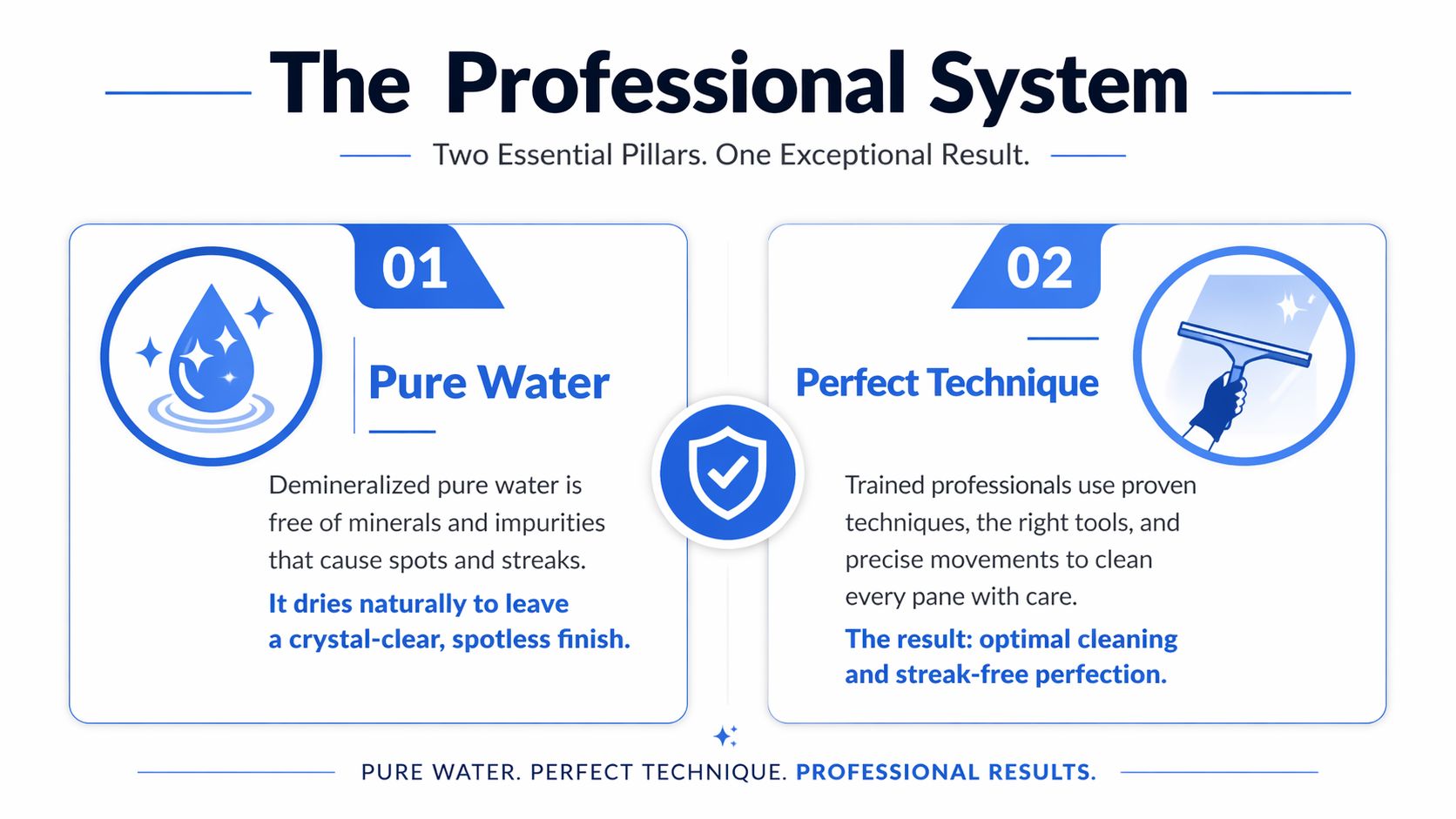
For professional exterior work, that usually means purified water, the right brush for the soil load, and disciplined squeegee technique where hand detailing gives a cleaner finish. In the Southwest, that method matters more than the label on a bottle because sun, dust, and mineral-heavy water expose weak cleaning habits fast.
Pure water solves the source of exterior residue
Tap water leaves something behind. Purified water does not, provided the system is maintained correctly and the glass is rinsed thoroughly.
That is why professional crews use deionized or reverse-osmosis filtration for many exterior windows. The water itself becomes part of the cleaning process. It lifts soil, carries it off the pane, and dries without mineral spotting. On larger homes, storefront glass, and sun-exposed elevations, that is a major advantage over spray-and-wipe methods that depend on towels staying clean and glass staying cool.
If you want a clearer explanation of why water quality often matters more than retail glass cleaner, this guide on the best window cleaning solution for professional results breaks that down well.
Technique determines whether the glass is actually clean
Pure water is only half the system.
On interior panes, lower storefront glass, and any surface where precision matters, a skilled squeegee still gives the best finish. The difference is not the tool alone. It is blade condition, soap mix, glide, pressure, angle, overlap, and edge work. Poor technique leaves trails and pull lines. Good technique removes the dirty water cleanly on the first pass and keeps detailing to a minimum.
I see this mistake all the time. Homeowners focus on what to spray. Professionals focus on removal.
Clean glass depends on controlled removal. Putting liquid on the pane is easy. Getting all of it, plus the loosened soil, off the surface without residue takes practice.
DIY vs Professional Window Cleaning
| Factor | DIY Approach | Professional Service |
|---|---|---|
| Water quality | Usually tap water or a homemade mix | Purified water that dries spot-free on exterior glass |
| Residue control | Depends heavily on wiping and re-wiping | Soil is scrubbed, rinsed, and removed with a repeatable method |
| Large exterior panes | Dry too fast and show every missed pass | Built for broad panes, direct sun, and consistent results |
| Modern coatings | Product choice is often guesswork | Method is matched to the glass and surrounding debris |
| Access | Limited by ladder reach and household tools | Professional equipment handles height and awkward placement |
| Finish quality | Can look acceptable indoors, then streak in sunlight | Holds up from multiple angles and in harsher light |
Where each tool actually belongs
A professional setup uses different tools for different conditions.
- Water-fed poles: Best for many exterior windows where purified water can scrub and rinse without leaving mineral residue.
- Squeegees: Best for interior glass, entry glass, and any pane that needs close control at the edges.
- Microfiber detailing cloths: Best for touch-up work on frames and corners, not for replacing proper extraction.
- Extension poles: Best when glass can be reached safely from the ground while keeping good tool control.
That is the primary substitute for Windex in professional work. It is a method. Consumer products can help with light interior touch-ups, but they do not replace purified water systems, trained technique, and the equipment needed for a consistently streak-free finish. In Southwest conditions, that gap shows quickly.
Equipped for Every Challenge From Skylights to Skyscrapers
Access is where DIY window cleaning usually breaks down.

A spray bottle and paper towels can handle a bathroom mirror. They do not solve skylights, clerestory glass, deep recessed panes, or multi-story exterior windows baking in desert sun. On those jobs, a substitute for Windex is an access plan, the right tools, and a repeatable cleaning method that keeps the finish clean after the light hits it.
Consumer recipes also create problems once the glass gets large or exposed. Cornstarch mixes, for example, can leave haze if the ratio is off or if the window dries too fast. In the Southwest, that happens often. Heat shortens working time, hard water spots surrounding surfaces, and broad panes show every mistake.
Residential work proves the point fast. Upper-story windows over tile roofs, courtyards, planters, and uneven grade are common on larger homes. The challenge is not just touching the glass. The challenge is reaching it without crushing landscaping, scuffing stucco, or forcing unsafe ladder angles.
That is why professional crews change tools based on the window and the property.
- Sectional ladders help in tight side yards and interior spaces where full ladder setups are clumsy.
- Extension poles let crews keep better control on reachable glass without dragging hoses or ladders through finished spaces.
- Purified-water systems clean many exterior panes from the ground with less risk of residue and less disturbance to the property. This overview of a water-fed pole window cleaning system shows why that method works so well on upper exterior glass.
- Skylight access methods depend on roof pitch, footing, frame condition, and whether the glass or surrounding material can tolerate close contact.
Commercial work raises the stakes. Large storefronts, mid-rise offices, atriums, and high-rise exteriors require planned access before cleaning even starts. Crews may use boom lifts, scaffolding, rope descent systems, or a combination, depending on facade layout and safe tie-off options. Those choices are governed by training and working on heights safety, not by whatever cleaner happens to be in the bottle.
The equipment affects the finish too. Broad commercial glass has to look uniform across the whole elevation, not just pass inspection from one angle at ground level. A trained crew works the edges, frames, runoff, and rinse quality as part of the job because missed detail stands out fast on reflective glass.
I have seen plenty of homeowners get decent results on one or two easy panes, then lose the finish on the first skylight or sun-baked second-story window. That is normal. Height changes the job. So does heat, exposure, and scale.
Window cleaning above easy reach is skilled exterior maintenance. The best answer is usually a professional crew that can choose the right access method, protect the property, and leave glass that stays clean-looking in full Southwest light.
The Hidden Risks of DIY Window Cleaning
Poor glass cleaning rarely fails in an obvious way. It fails later, in full sun, after residue bakes on, after a frame gets oversaturated, or after a coating is scratched by the wrong pad.
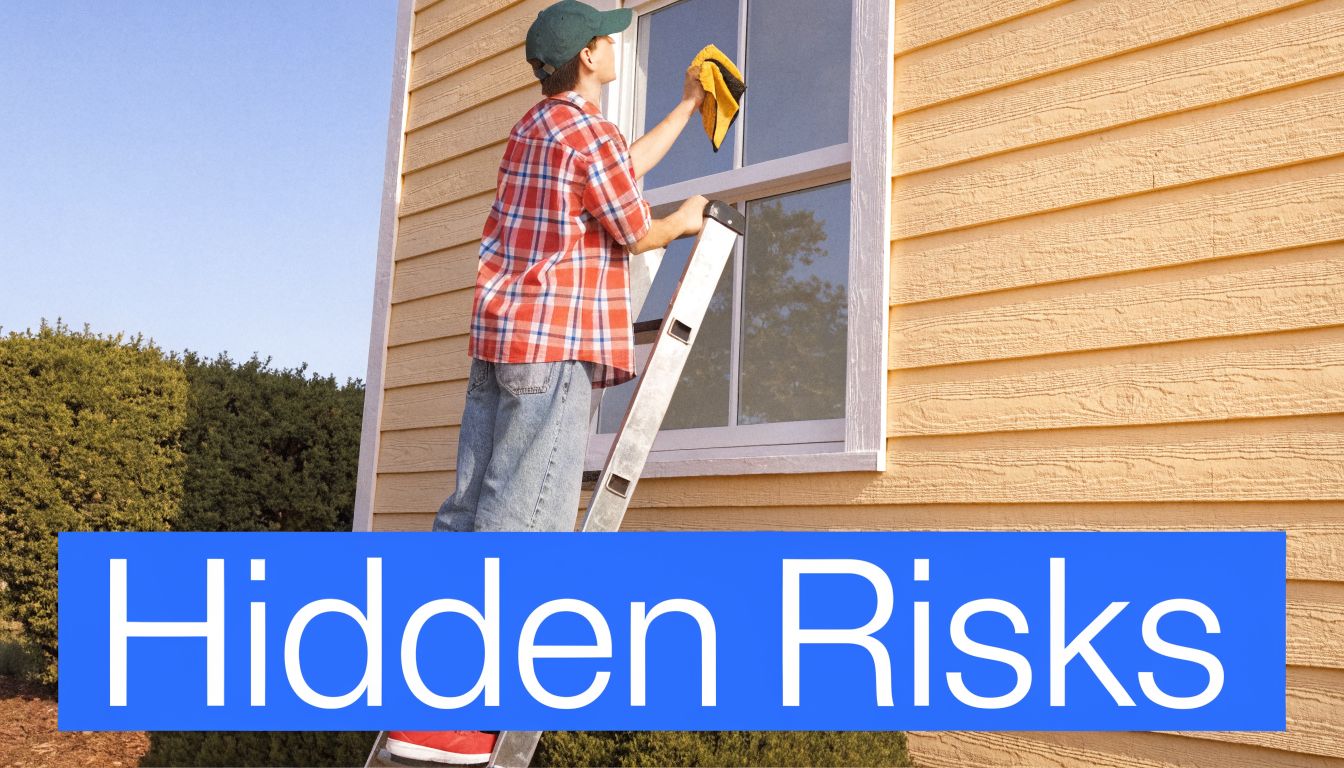
The big mistake in DIY advice is treating window cleaning like a bottle choice. It is a surface-identification and process-control job. On modern glass, the wrong homemade mix or store-bought spray can haze coatings, weaken film edges, stain surrounding materials, or leave residue that looks worse every afternoon once Southwest light hits it. Consumer guides rarely account for low-E coatings, aftermarket tint, hard-water exposure, hot glass, or the fact that many windows are surrounded by finishes that react badly to overspray.
The expensive part is that damage often starts small. A corner turns cloudy. A tinted panel stops matching the one beside it. A fabricating mark or mineral trace that needed the correct removal method gets rubbed harder and made more visible. By the time the owner notices the pattern, the issue is no longer "cleaner versus cleaner." It is repair, replacement, or living with a bad result.
I see this most often on glass that looked easy from the ground.
Height adds another layer of risk, but not only because of falls. People overreach from ladders, carry open spray bottles while climbing, set feet on decorative stone, lean tools against frames, or scrub too aggressively because they cannot hold a stable position. Anyone evaluating that kind of work should understand basic working on heights safety, especially when access and cleaning method affect each other.
Professional crews reduce risk by narrowing variables before any glass gets wet. We identify the glass type, check for coatings or film, account for heat and mineral load, and choose tools that control water, pressure, and contact. Sometimes that means a traditional mop-and-squeegee setup. Sometimes it means purified water and a water-fed pole so the glass can be cleaned from the ground with no soap residue left behind.
That approach usually includes:
- Using pH-appropriate products for coated, tinted, or otherwise sensitive glass
- Avoiding abrasive pads and razor use unless the surface and debris type have been confirmed
- Controlling runoff so frames, seals, stucco, and interior finishes are not soaked
- Using stable access equipment instead of improvised ladder placement
- Cleaning for the conditions so solution does not flash-dry and leave fresh spotting
A DIY substitute for Windex can clean a mirror or a small interior pane. It is not a substitute for a professional method. On sun-exposed exterior glass, large panels, skylights, and coated windows, the safer and cheaper decision is often to hire a trained crew the first time.
Know When to Call a Professional Window Cleaner
The decision usually becomes clear before you pick up a bottle. If the job involves height, heat, specialty glass, heavy mineral spotting, or a finish that has to look clean from every angle, it has already moved past DIY territory.
I tell clients to stop judging the job by square footage and start judging it by risk and finish standard. A bathroom mirror and a sun-baked exterior panel are different jobs. A second-story window over rock beds or pool decking is a different job again.
Call a professional when access changes how the glass must be cleaned. That includes upper-story windows, skylights, clerestory glass, and architectural panes set above stairs, slopes, or uneven hardscape. The problem is not just reaching the glass. The problem is controlling water, tools, and body position well enough to leave the pane clean without damaging frames, screens, landscaping, or yourself.
Call a professional when the glass itself needs judgment. Low-E coatings, tinted glass, film, tempered panels, and newer premium window packages all have limits on what tools and chemistry they can tolerate. On those surfaces, guessing is expensive.
Appearance also changes the answer fast.
If the glass faces customers, tenants, guests, or prospective buyers, the standard is higher than "better than before." Storefronts, restaurants, office entries, HOA common areas, and multi-unit properties need consistency across every pane, not one good window next to three streaked ones. In those settings, missed edges, runoff marks, and mineral haze read as poor maintenance.
Some jobs should never be treated like routine wipe-downs. Post-construction glass, dust-event cleanup, sprinkler overspray, oxidation runoff, and baked-on hard water deposits all require inspection before cleaning starts. I have seen homeowners turn removable debris into permanent scratching because they scrubbed first and identified the surface second.
If you compare exterior service categories, the same principle shows up outside window cleaning too. This example of professional power washing services in Lititz makes the point well. The right result comes from process and equipment, not effort alone.
Use this checklist:
- You cannot clean every pane safely from the ground
- The glass is part of a business, HOA, condo, or multi-unit property
- The window has tint, film, low-E coating, or another specialty surface
- The panes sit above landscaping, stairs, decorative stone, or uneven footing
- You are dealing with skylights, atriums, or oversized fixed glass
- Direct sun causes your solution to dry before you finish
- You cleaned it once and it still looks smeared, spotted, or cloudy at an angle
If you have to guess at the method, hire someone who already knows the glass.
That is the true substitute for Windex. A professional system with purified water, the right contact tools, safe access equipment, and a technician who can read the surface before starting. For many homes and nearly all commercial properties, that is the safer call, the cleaner result, and the cheaper outcome once you count the time, risk, and rework.