



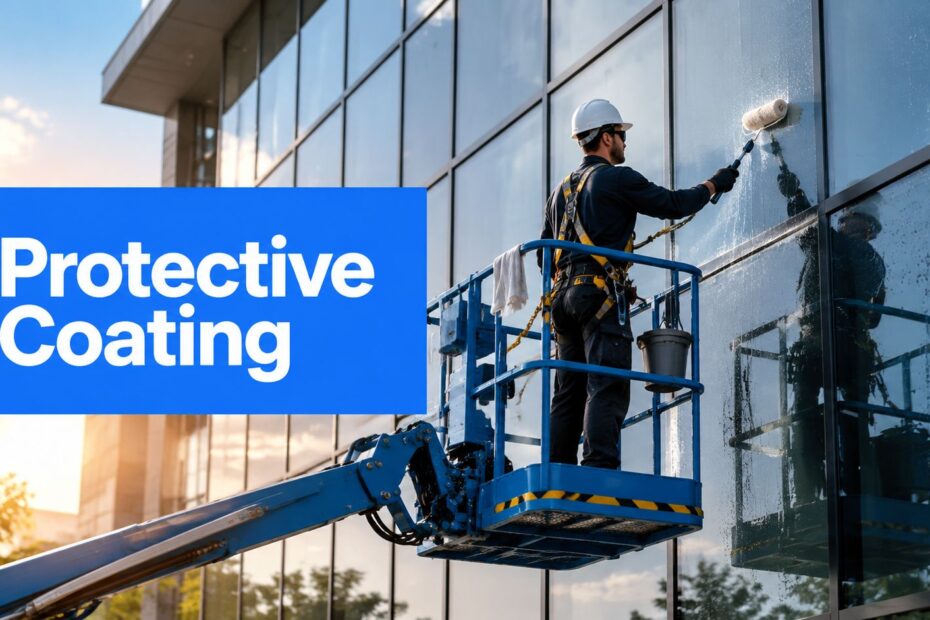
If you're responsible for a building with a lot of glass, you're probably already seeing the warning signs. In Phoenix and Scottsdale, the sun cooks sealants, dries out gaskets, and leaves exterior glass and frames taking a daily beating. In Denver and Boulder, freeze-thaw swings and airborne grit work on surfaces differently, but the result is the same. Materials age faster when they stay exposed.
That's where protective coating application stops being a cosmetic add-on and starts looking like building preservation. On glass and surrounding exterior surfaces, the right coating helps reduce wear, slow degradation, and make routine maintenance less punishing on the material underneath. For owners and facility managers, that matters a lot more than a short-term shine.
Why Protective Coatings Are a Smart Investment
A lot of owners still treat coatings like a finish upgrade. That's the wrong frame. On buildings in places like Phoenix, Las Vegas, and Tempe, sun exposure alone can push glass, metal trim, and facade elements into a constant maintenance cycle. If you wait until surfaces look rough, you're already paying more than you needed to.
The market tells the same story. The global protective coatings market is projected to grow from USD 15.03 billion in 2024 to USD 57.11 billion by 2033, with reported growth driven by demand for materials that extend asset life and lower long-term maintenance costs, according to protective coatings market projections. That isn't a niche trend. It reflects how owners now think about coatings as part of preservation planning.
The real cost isn't the coating
Glass replacement is disruptive. Access equipment has to be scheduled. Tenants notice. Storefront operations get interrupted. High-rise work adds another layer of coordination because access, weather, and safety planning all have to line up.
A good coating job changes that equation by helping the surface resist the daily abuse that causes premature wear. It also makes regular washing more predictable, which matters if your building runs on a maintenance schedule instead of emergency calls.
Practical rule: If a building has recurring spotting, grime adhesion, or visible weathering on exposed elevations, the owner shouldn't ask, "Do we need a coating?" The better question is, "What will replacement and disruption cost if we skip it?"
Harsh climates punish delay
In the Southwest, UV exposure and dust are the obvious problems. In Colorado, it's often a mix of seasonal moisture, wind-driven debris, and thermal movement. Those conditions don't care whether the property is a storefront, condo tower, office campus, or medical building.
Owners who already understand how to save money with maintenance usually grasp coatings faster than owners who only compare upfront bids. Preventive work costs less than reactive work because it gives crews control over timing, access, and surface condition.
Here's the bottom line:
- Coatings protect assets: They're part of a maintenance strategy, not just an appearance upgrade.
- Timing matters: Applying protection before heavy wear sets in gives better results than trying to rescue neglected surfaces.
- Professional execution matters: The product helps, but the process decides whether the investment lasts.
Choosing the Right Coating for Your Building and Climate
Not every building needs the same coating, and that's where a lot of bad decisions start. The best protective coating application plan matches the surface, the exposure, and the maintenance demands of the property. If you put the wrong chemistry on the right building, you still get the wrong result.
Technical literature describes protective coatings as thin films designed to prevent or inhibit substrate degradation, and notes that correctly chosen and applied systems can extend service life by 15 to 40 years across many applications. That long service-life logic is one reason coating decisions deserve more care than “pick the most popular option,” as noted in technical guidance on protective coatings.
What usually makes sense by climate
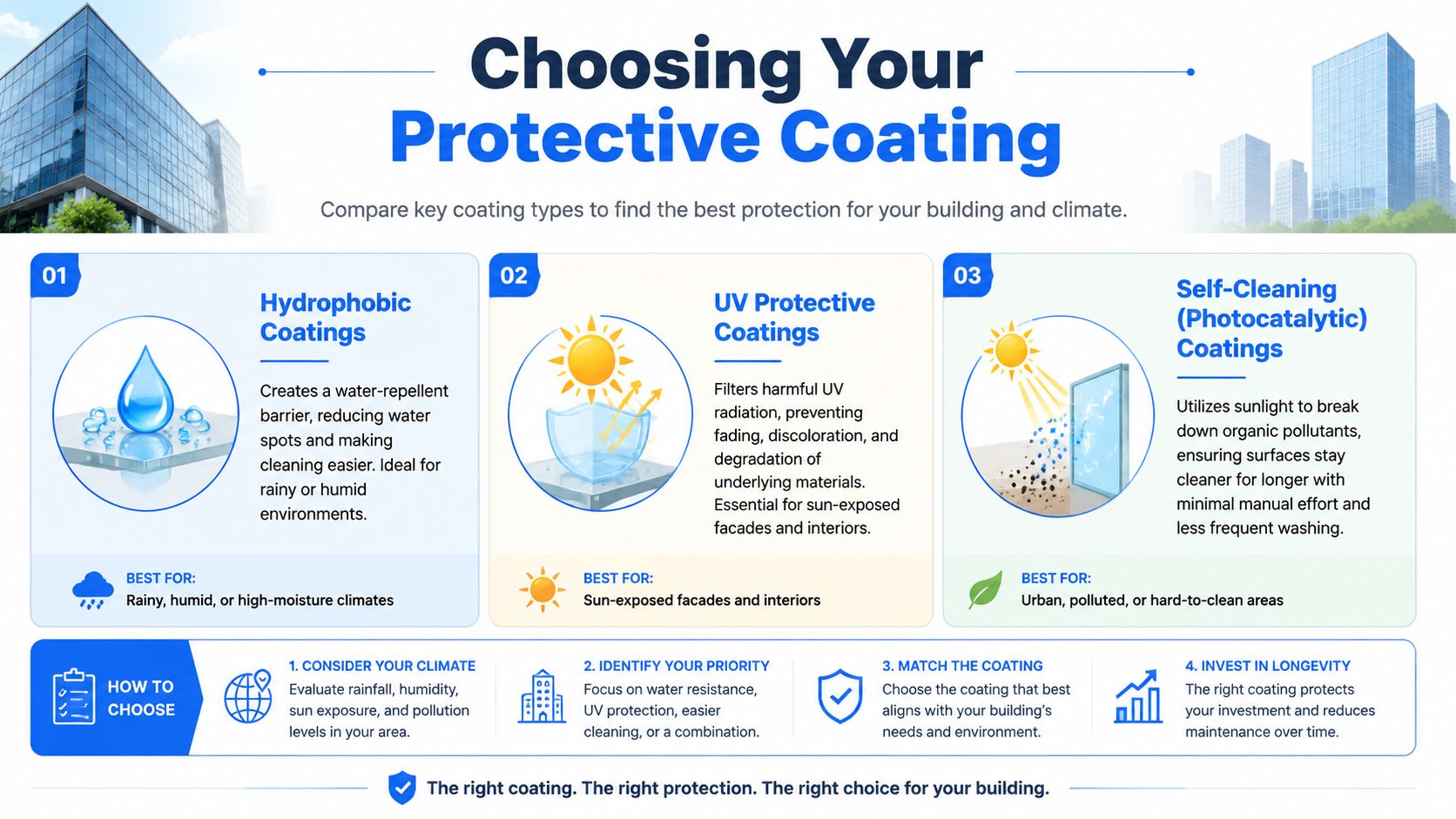
For sun-heavy markets, UV resistance deserves a hard look. For urban storefronts and mixed-use buildings, dirt-release and easier washdown may matter more. On some properties, the right answer is not the most advanced coating. It's the one your maintenance team can realistically support.
| Protective Coating Selection for AZ, CO, and NV | ||
|---|---|---|
| Coating Type | Best For | Key Benefit |
| Hydrophobic | Glass exposed to water spotting, dust adhesion, and regular washing | Helps water bead and makes routine cleaning easier |
| UV-protective | Sun-exposed facades, high-desert elevations, south and west exposures | Helps reduce surface degradation from heavy sun exposure |
| Self-cleaning (photocatalytic) | Buildings where reducing manual cleaning frequency is a priority | Uses sunlight to help break down organic buildup |
Matching coating choice to local conditions
In Phoenix window cleaning service areas, sun exposure is a constant design factor, not a seasonal issue. South-facing and west-facing elevations usually need coating performance that can handle relentless UV and dust without turning every wash into a fight.
For Denver commercial glass conditions, I'd weigh durability against variable weather and grime pickup. Buildings there often benefit from coatings that support easier cleaning and hold up through changing seasons rather than just addressing one climate stressor.
In Las Vegas exterior glass environments, the conversation often comes back to heat, glare, and dust. Coatings that help surfaces stay cleaner between service visits are usually worth serious consideration on heavily exposed properties.
The right coating doesn't just survive the climate. It has to fit the way the building is cleaned, accessed, and maintained afterward.
Don't ignore adjacent assemblies
A lot of glass problems start around the glass. Frames, transitions, parapets, roof runoff patterns, and nearby building materials all affect contamination and wear. If the property has a flat roof system, understanding how adjacent materials age under Arizona conditions can help owners ask better questions. A practical example is this overview of TPO roofing Arizona conditions, which shows how climate-specific exterior protection decisions often interact across the building envelope.
A pro recommendation usually comes down to three questions:
- What is the main threat, UV, grime adhesion, mineral spotting, or general weathering?
- How will the building be cleaned after the coating is applied?
- Can the coating be installed safely on the elevations that need it most?
If those answers aren't clear, the product selection is still guesswork.
The Critical Surface Preparation Phase
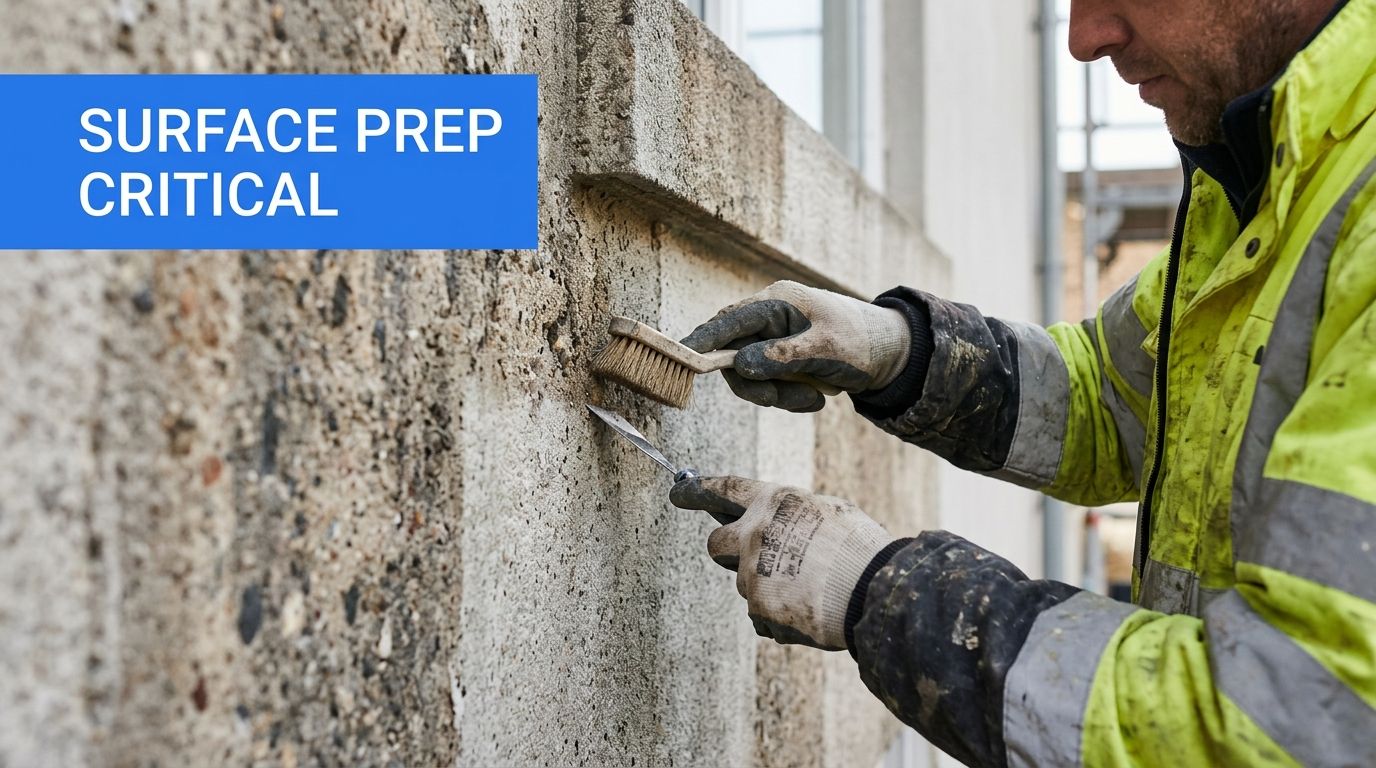
Application is often considered the hard part. It usually isn't. Surface preparation is where coating jobs are won or lost.
The U.S. Bureau of Reclamation's guidance is blunt on this point. The most failure-prone step in industrial coating work is surface preparation, and success depends on getting the substrate completely free of dust, salts, and grease before coating starts, as outlined in this protective coatings inspection and maintenance guide.
Clean doesn't mean "looks clean"
On exterior glass, a panel can look clean and still be a bad candidate for coating. Dust residue, oily film near exhaust areas, hard water minerals, adhesive traces, and fine construction debris all interfere with bond quality. If any of that stays on the surface, the coating may lay down nicely and still fail early.
Professional prep is methodical. Crews don't just wipe the glass and move on. They wash, detail edges, inspect under changing light, and keep contamination from being reintroduced during staging and handling.
What separates pro prep from a casual attempt:
- Pure water rinsing: Useful for removing particulate and dissolved residue without leaving behind more contaminants.
- Professional squeegee work: Helps control water removal and edge detail on glass.
- Access planning: Ladders, scaffolding, lifts, or rope work have to be set so the surface can be cleaned thoroughly, not just quickly.
- Inspection before mixing: Product shouldn't be opened until the substrate passes inspection.
The prep sequence that prevents trouble
A disciplined crew follows a sequence. Prep first, then masking, then mixing, then application, then inspection, curing, and quality checks. If someone compresses that sequence to save time, defects usually show up fast.
Typical coating problems from rushed prep include:
- Bubbles: Often tied to trapped contamination or moisture.
- Runs and uneven build: Sometimes blamed on application alone, but poor substrate condition contributes.
- Adhesion loss: Common when dust, salts, grease, or loose material remain.
- Patchy appearance: Usually a sign the surface condition wasn't uniform across the elevation.
If a contractor can't explain how they verify a coating surface is free of residue before they mix product, they're gambling with your building.
Edge conditions deserve more attention
Edges, corners, and transitions are where coating systems often get tested first. That matters on window frames, metal trims, and facade details exposed to heavy sun and wind. Industry discussion around edge preparation shows there's still not enough standardized chemistry-specific guidance, especially when different primer types behave differently at corners and sharp edges. In practice, that means over-preparing wastes labor, and under-preparing invites early failure.
For window cleaning crews who also handle protective coating application, this is where experience matters. A crew chief knows the difference between a panel that's ready and one that only looks ready from the ground.
Professional Application Techniques for Flawless Results
Once the surface is ready, the job becomes a control problem. You're controlling film build, overlap, timing, and site conditions. Good protective coating application isn't about moving fast. It's about laying down a consistent film without creating weak spots.
Industry guidance for coating work recommends using wet film thickness gauges during application, keeping a 6 to 8 inch overlap between passes, and allowing 12 to 24 hours between coats for many systems, as noted in this roof coating application process guide. Even though that guidance comes from roof and architectural coating practice, the discipline behind it applies directly to professional exterior work on glass-adjacent surfaces and facade elements.
What pros control during the pass
A pro crew watches several things at the same time. Film thickness is one. Pass pattern is another. Then there's the environment: wind, temperature, surface temperature, and the amount of time the coating has before conditions shift.
That's why professional tools matter. If you want a better sense of the gear crews rely on every day, this overview of what professional window cleaners use is a useful reference point. The same mindset applies in coating work. Purpose-built tools produce repeatable results.
Three habits separate solid application from sloppy work:
Maintain overlap on every pass
Thin lanes and missed edges are common when an applicator rushes the pattern. Consistent overlap keeps the film continuous.Check thickness while the coating is still workable
Waiting until the film has already skinned over is too late. Wet film checks catch trouble before it hardens into a callback.Respect recoat timing
If the first coat hasn't reached the right stage, the second coat can compromise the system instead of strengthening it.
Environmental judgment matters more than product hype
A crew can have the right coating and still miss the job if they ignore site conditions. Starting too early, finishing too late, or working through marginal weather can trap moisture, create uneven formation, or leave the finish vulnerable before it stabilizes.
For crews working exterior glass lines and facade details, I'd rather delay a section than force an application window that doesn't make sense. That's a hard lesson on exposed buildings. The coating doesn't care what the schedule said.
Smooth application comes from repeatable technique, not a steady hand alone. Pros verify thickness, maintain overlap, and stop when conditions turn against the film.
What doesn't work
A few bad habits show up over and over:
- Stretching material too far: That creates thin spots.
- Treating edges like an afterthought: Corners and transitions need deliberate coverage.
- Skipping in-process checks: Visual confidence is not the same as measurement.
- Rushing second coats: If cure timing gets ignored, the finish may look acceptable at first and still underperform later.
Flawless results aren't accidental. They come from process discipline.
Integrating Safety and Skill in High-Access Applications
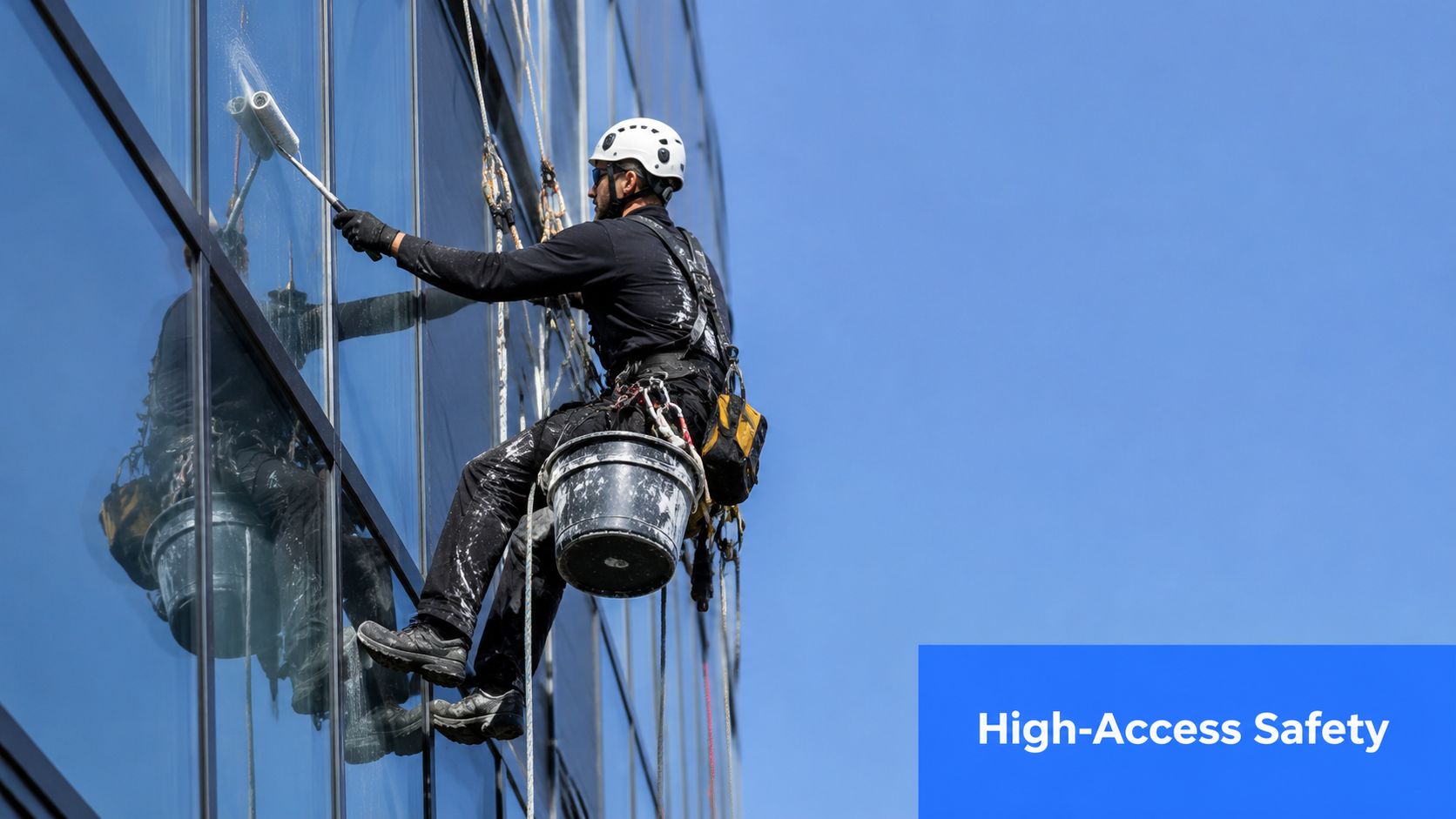
High-rise coating work has a problem most generic guides barely touch. They talk about safety on one side and coating quality on the other, as if the two can be handled separately. In the field, they're tied together every minute the crew is off the ground.
Industry analysis has pointed out the gap in standardized guidance for applying coatings safely while crews are suspended on rope descent systems or working from boom lifts, especially when managers need to balance OSHA 1910.27 compliance with a continuous, flaw-free film. That issue is outlined in this discussion of safe application of protective coatings.
The access method changes the application method
On a low storefront, the applicator can work from stable ground or a short ladder and keep a steady body position. On a high-rise in Phoenix or Denver, the body position changes constantly. Rope movement, swing stage movement, boom lift vibration, and wind all affect hand speed, pass alignment, and edge control.
That means the coating plan has to be built around the access plan.
A smart crew adjusts for:
- Rope descent movement: The applicator needs controlled descent speed and stable positioning before starting the pass.
- Boom lift vibration: Film quality suffers if the basket isn't settled before detail work begins.
- Wind shear on exposed elevations: The surface may be coatable on one face of the building and not on another.
- Material handling at height: Tools, cloths, and applicators have to be staged so the worker isn't improvising mid-pass.
Safety systems have to support quality
A lot of facility managers worry that strict safety protocols will slow the work and create visible inconsistencies. The truth is the opposite. Good safety planning gives the applicator better control because positioning, tie-off, staging, and rescue planning are already solved before product is opened.
For teams reviewing PPE, staging gear, and jobsite protection basics, a comprehensive guide for industrial safety is a practical companion resource. It won't solve the coating technique question by itself, but it helps reinforce how safety equipment choices affect field execution.
The training side matters too. Crews who work at height need more than generic awareness. They need applied, task-specific instruction, especially where fall protection and suspended work overlap with detailed facade care. For that reason, this breakdown of fall protection training requirements is worth reviewing if you're evaluating how serious a contractor is about high-access work.
On high-rise jobs, the best coating applicator isn't the fastest person on the crew. It's the one who can maintain film quality without fighting the access system.
What works in cities with tall glass
In dense urban work, crews usually get better results when they divide roles clearly. One person focuses on positioning and safety checks. Another controls material and watches conditions. The lead applicator stays locked into the pass pattern and surface response.
That's especially important on towers in Arizona, Colorado, and Nevada where heat, glare, reflected light, and changing wind around corners can alter the job within the same shift. Safety-integrated application means the crew doesn't treat OSHA compliance as separate from workmanship. The access method, weather call, and coating technique all have to agree.
Curing Inspection and Maintaining Your Protected Glass
Application isn't the finish line. Curing and inspection decide whether the work holds up.
Most coating problems that owners notice later started during this quiet part of the job. The film looked fine when it was wet. Then moisture, dirt, bad timing, or premature contact interfered before it stabilized. That's why a disciplined crew protects the coated area, verifies uniformity, and checks transitions before signing off.
This kind of post-application care fits into broader facility planning. If you manage recurring exterior upkeep, a commercial building maintenance checklist helps keep coating care tied to the rest of your maintenance cycle instead of treating it like a one-time project.

What inspection should catch
Inspection after curing should be systematic, not casual. Crews need to look for continuity, thin areas, edge misses, contamination, and any sign that the film formed unevenly. On glass-heavy buildings, that usually means checking from multiple angles and under different light conditions.
A useful inspection mindset includes:
- Coverage check: Make sure transitions, corners, and perimeter details weren't left light.
- Surface review: Look for runs, texture changes, and visible inconsistencies.
- Access-related defects: Check areas where rope movement or lift position may have affected the pass.
- Maintenance handoff: Give the owner clear care instructions before the first service visit.
How to maintain the coating without shortening its life
Protected glass still needs professional washing. It just needs the right kind. Maintenance crews should use professional squeegees, pure water systems, and access equipment suited to the building. The goal is to remove buildup without grinding debris into the coated surface or using rough methods that wear it prematurely.
For owners in Arizona and nearby markets, regular service is especially important on exposed buildings in Scottsdale, Chandler, and Tempe, where sun, dust, and hard water exposure can stack up quickly if maintenance gets deferred.
The practical standard is simple:
Protected glass lasts longer when the coating is treated as part of an ongoing maintenance program, not as a one-and-done upgrade.
If the surface starts showing unusual spotting, reduced water behavior, or stubborn adhesion of grime, it's time for a professional evaluation. Don't wait for visible failure. Early maintenance keeps small problems from turning into a rework project.
If you need help with protective coating application, high-access glass care, or ongoing exterior maintenance, Professional Window Cleaning serves commercial and residential properties across Arizona, Colorado, and Nevada with trained crews, specialized access equipment, and field-tested window cleaning methods that protect the surfaces you've invested in.