



Beyond Clean: The True Impact of Professional Window Washing
Years of dust, hard water stains, and city grime don't just block the view. They make a property look older, less cared for, and harder to present well to tenants, guests, shoppers, or buyers. A lot of owners notice the problem only after sunlight hits the glass at the wrong angle or after a photo shoot, inspection, or leasing tour makes every streak obvious.
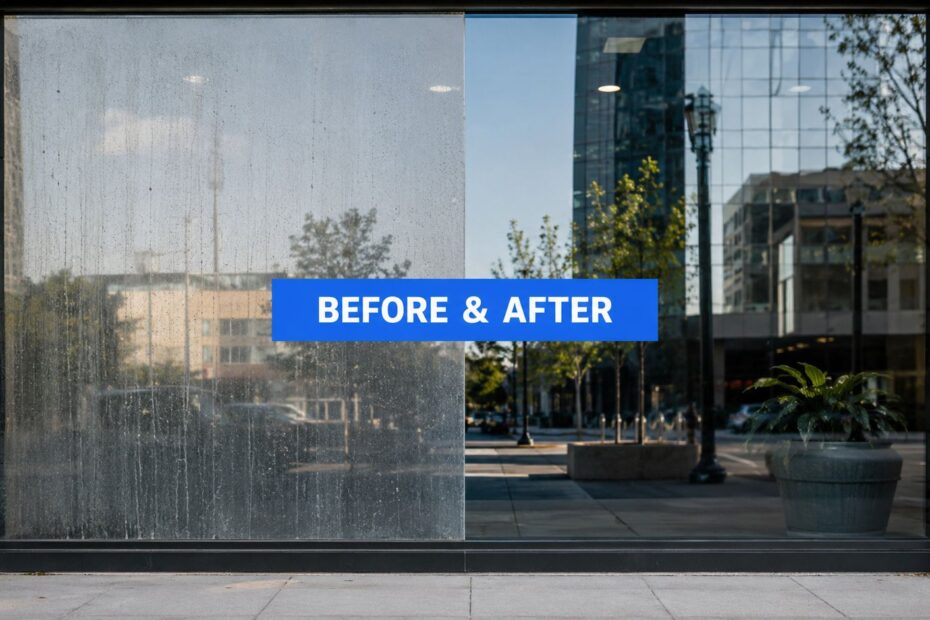
That's when window cleaning before and after becomes more than a visual comparison. It becomes proof of what proper access equipment, sequencing, and technique can fix. On simple ground-level glass, the work is straightforward. On multi-story facades, skylights, atriums, and custom architectural glass, the difference between average work and professional work is obvious from the street.
This gallery focuses on real service conditions in Arizona, Colorado, and Nevada. It highlights what changed, what equipment made the result possible, and what trade-offs had to be managed on each job. If you're evaluating a property for upkeep, resale, leasing, or capital planning, a broader property condition assessment usually starts with surfaces people can see immediately. Clean glass is high on that list.
The examples below move quickly from challenge to result, because that's how clients usually experience the job. They see the buildup, they approve the service plan, and then they see the transformation.
1. Phoenix High-Rise Office Building
Downtown Phoenix high-rises are where window cleaning before and after gets dramatic fast. Fine dust, mineral spotting, and traffic-related film flatten the look of reflective glass, especially on multi-tenant office towers where one dirty elevation affects the whole property's presentation. On a tall commercial building, the challenge isn't just removing buildup. It's reaching every pane safely and cleaning in a sequence that avoids rework.
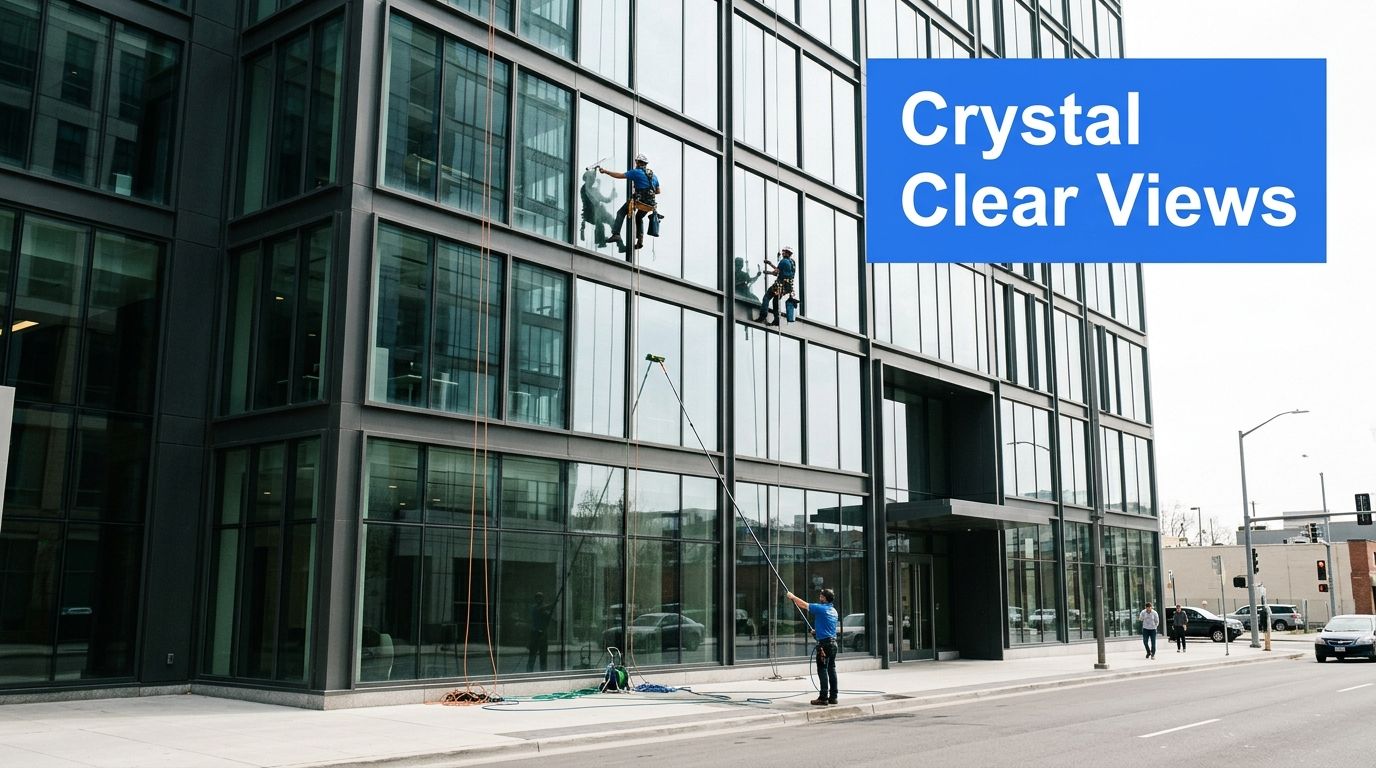
For this kind of project in Phoenix, crews typically combine rope descent systems, safety harnesses, pure water-fed poles where appropriate, and professional squeegee detailing. That mix matters. Pure water speeds exterior production on accessible sections, while hand work handles edges, stubborn deposits, and detail areas that tenants notice first at lobby level.
Why the result changed so much
A documented Phoenix mid-rise case study showed that technicians using a strict top-to-bottom, left-to-right protocol cut service time per floor by 45% while maintaining a 98% streak-free finish rate, and post-cleaning solar transmittance recovered to 94% of manufacturer specs after buildup had reduced it before service. Indoor natural light levels improved by 28%, with an estimated reduction of 15 kWh per day in HVAC lighting load (Phoenix commercial window service sequencing case study). The lesson is simple. Method beats improvisation.
Practical rule: On Phoenix glass, sequence is as important as chemistry. Random cleaning patterns waste time and leave callbacks behind.
For owners comparing exterior improvements, the same visual discipline that matters in glass also shows up in adjacent façade work, as you can see in these house pressure washing before and after results. On high-rise towers, I also tell managers to think about presentation from the visitor's perspective. Leasing traffic and investor walkthroughs react to clarity the same way real estate media does, which is why staging guidance like Miami new-build 3D tour presentation tips translates well to commercial curb appeal.
2. Scottsdale Resort & Spa
Resort glass has a different job than office glass. It doesn't just need to look clean. It needs to frame the view. In Scottsdale and Paradise Valley window cleaning, panoramic window walls pick up desert dust, sprinkler overspray, and mineral spotting that can make premium views feel dull.
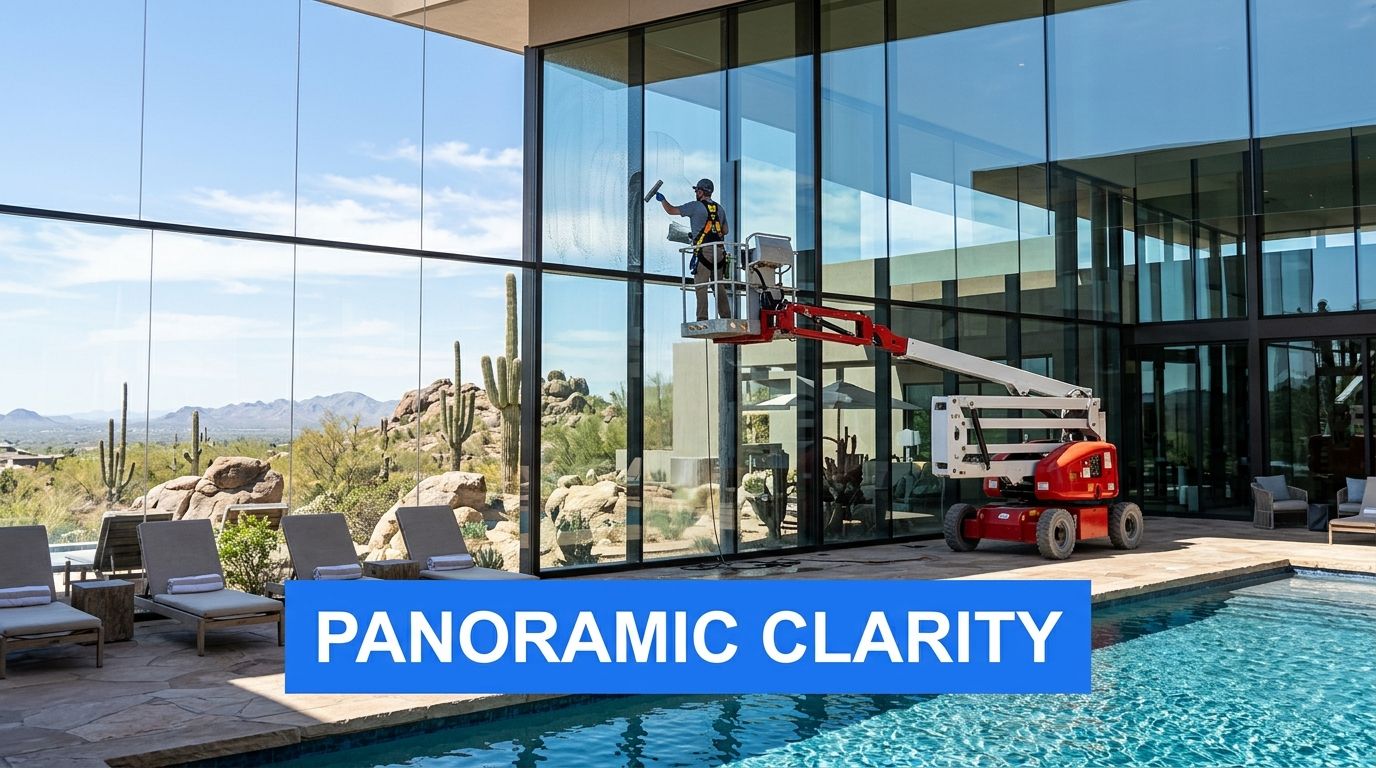
The best approach on guest-facing facades is controlled access with boom lifts where needed, pure water for large exterior sections, and detail passes with squeegees on trouble spots. On hospitality properties, timing is part of the craft. You want the work done without carts, hoses, and lift activity colliding with arrivals, pool hours, and event traffic.
The Arizona-specific trade-off
In Arizona's high-heat environment, windows should be cleaned at least four times annually to prevent dust and grime buildup that evaporation accelerates, and cloudy or humid days are better because they slow evaporation and reduce streak risk (Arizona heat and cleaning frequency guidance). That's why a window cleaning before and after gallery from Scottsdale often reflects more than one service decision. It reflects weather timing, access planning, and disciplined rinsing.
A protective follow-up plan also matters more on resort and luxury residential glass than many owners expect. If the property deals with repeat mineral exposure, protective coating application for glass surfaces subsequently becomes part of the long-term strategy instead of a one-time add-on.
- Best scheduling window: After dust storms, not before them.
- Most common mistake: Cleaning only what guests can see from the pool deck and neglecting upper or side elevations.
- What improves fastest: The way desert views read through the glass at sunrise and late afternoon.
3. Denver Tech Campus
On a multi-building campus, inconsistency is the problem clients notice first. One building shines, the next looks weathered, and the entire property feels uneven. In Denver, Denver window cleaning projects like this usually involve mixed glass types, different elevations, and multiple access methods across connected offices, labs, or institutional buildings.
Scaffolding works well where repeatable access matters and crews need stable positioning across long runs of glass. Water-fed poles handle standard exterior sections efficiently, while hand detailing with squeegees takes care of corners, recessed panes, and areas where glare reveals every line. The goal isn't just to clean each building. It's to make the whole campus read as one maintained asset.
What standardization actually means
The United States window cleaning sector includes more than 35,344 businesses, with increasing training around OSHA 1910.27 fall-protection standards, and the profession's average annual wage has risen from $29,697 to $37,665, while hourly rates have moved from $14.28 to $18 (window cleaning industry trends and training context). That matters on campus work because consistency comes from trained systems, not just effort.
Clean glass across eight connected buildings doesn't happen because one crew “works hard.” It happens because every technician uses the same standard.
For higher facades and difficult elevations, owners often underestimate how much planning changes the finish quality. If your campus has clerestories, atriums, or upper-story glazing, then high-window cleaning methods for hard-to-reach glass become the difference between a partial improvement and a complete visual reset.
4. Tempe University Research Facility
Research buildings don't forgive casual methods. Sloped skylights, clerestory windows, and mixed opaque and transparent panels all respond differently to water flow, tool angle, and access setup. In Tempe window cleaning, these projects often require a mix of rope descent systems for skylights, water-fed poles for vertical glass, and hand-detail work where architecture creates runoff traps.
Natural light is part of building performance in these environments. When exterior glass is coated with dust and atmospheric film, interiors feel dimmer and the architecture loses definition. Before and after results on this kind of facility aren't only about appearance. They restore the building's intended light and transparency.
What crews do first
Professional technique starts with tracks and frames. Dry debris gets brushed or vacuumed out first, then frames are wiped before glass so dirty runoff doesn't drip onto cleaned panes (frame-first window cleaning method). On campuses, that prep step prevents one of the most common quality failures: finishing the glass, then washing contamination right back onto it from the frame above.
For occupied research or academic space, off-peak scheduling is the smart move. Rope work near entrances, courtyards, and service drives needs clear safety perimeters and communication with facilities staff. The visible transformation is the payoff, but the clean result starts with access control and sequencing.
- Pre-inspection matters: Skylight pitch, glass type, and drainage patterns affect tool selection.
- Rope access is justified when: Lifts can't reach safely or would disrupt occupied areas more than controlled descent work.
- Interior experience changes when done right: Spaces feel brighter and less closed in, even before anyone comments on the exterior.
5. Chandler Retail Complex
Retail storefront work is less about dramatic height and more about constant exposure. Fingerprints, dust, product residue, splash marks, and neglected transoms can make strong tenants look tired. In Chandler window cleaning centers with multiple tenants, the before and after difference is often strongest when the whole strip gets cleaned to one standard instead of each business handling glass differently.
Coordinated maintenance programs are effective. Water-fed poles speed up larger exterior runs, pure water helps exterior panes dry without spotting, and squeegee detailing handles entry doors, low glass, and interior presentation areas. A clean storefront doesn't just look better from the parking lot. It makes merchandise, lighting, and signage read more clearly from outside.
One-sided cleaning doesn't solve the problem
Industry guidance puts it plainly: “Windows can still look dirty after cleaning if only one side is cleaned,” and “A window is only as clean as its dirtiest side” (two-sided commercial window cleaning guidance). That's especially true in retail, where customers look through front glass under mixed exterior and interior lighting all day.
Field note: If a storefront still looks hazy after service, check the inside first. Exterior-only cleaning is the usual culprit.
The strongest retail transformations come from coordinated timing. Early morning service keeps crews clear of customers, and property managers who notify tenants ahead of time get better access to interiors. When multiple stores participate, the center stops looking patchwork and starts looking managed.
6. Boulder Historic District
Historic glass demands restraint. Old wavy panes, lead muntins, and aging frames don't tolerate the same pressure or pace as modern commercial curtain wall. In Boulder window cleaning jobs around older storefronts and civic buildings, preservation-grade work means slowing down and matching the method to the material.
Pure water systems are useful on exterior surfaces where mineral avoidance matters, but historic properties also call for soft-bristle agitation, careful detailing, and close attention to frame condition before the first pass starts. Sometimes the best professional decision is not to chase every imperfection aggressively, especially when the glass itself has age-related character that clients want preserved.
What works and what doesn't on older glass
What works is gentle technique, stable access, and documentation before and after service. What doesn't work is treating heritage windows like standard modern panes and pushing speed over control. Rope descent can be appropriate on difficult elevations, but the crew has to protect nearby architectural features and avoid dragging tools or hoses across delicate elements.
A good before and after result in Boulder isn't sterile perfection. It's clarity without damage. The glass should look cared for, the frames should stay intact, and the building should retain its original character instead of looking overworked.
- Use pure water where it helps most: On exterior surfaces prone to spotting.
- Document condition early: Existing waviness, age marks, and frame wear shouldn't be mistaken for cleaning defects.
- Set expectations clearly: Preservation work aims for clean and respectful, not artificially new.
7. Las Vegas Casino Resort
At 5:30 a.m., the front entry is already active. Valet is stacking arrivals, overnight crews are finishing, and the first restaurant traffic is starting to build. On a Las Vegas resort, window cleaning has to fit inside that live operating schedule, not fight it. In Las Vegas window cleaning, that usually means staging work by zone, shift, and guest impact before a tool comes off the truck.
The challenge is scale, but the primary pressure point is visibility. Smudged entry glass, water spots on pool-facing panels, and fingerprints around retail corridors are noticed fast because guests spend the day moving through reflective, high-light spaces. A strong before and after result on a casino property comes from maintaining a uniform standard across hundreds or thousands of panes, not just making one lobby wall look good for a photo.
Access and method depend on the section of the property. Broad exterior runs can be handled with water-fed poles where reach and ground conditions allow. Taller elevations may require boom lifts or rope descent systems, especially on towers, atriums, and architectural glass that cannot be reached safely from below. Inside, hand squeegee work still carries the finish because eye-level glass in gaming areas, restaurants, and entrances has to be detailed closely.
Why the method mix matters on resort work
Pure water helps crews cover large exterior areas efficiently and reduce spotting because the filtered water dries clean, as described in this professional window cleaning methods overview. That matters in Las Vegas, where heat, dust, and irrigation overspray can reload glass quickly. Hand cleaning still has a clear role. Grease film near dining areas, fingerprints on entry doors, and detail work around metal, stone, and decorative trim need controlled, traditional tools.
Industry analysts also continue to track steady growth in building services tied to commercial property maintenance, including window cleaning, according to IBISWorld's window cleaning services market research. Resort operators already treat that work as part of presentation and risk control. Clean glass improves first impressions, but it also supports safer sightlines at entrances, cleaner public-facing interiors, and a more disciplined maintenance standard across a property that never really stops.
8. Paradise Valley Luxury Estate
Luxury residential glass leaves nowhere to hide. On a custom home in Paradise Valley, every smudge, mineral spot, and edge line shows because the architecture is designed around transparency. Floor-to-ceiling windows, glass railings, skylights, and minimal frames create a strong before and after effect when they're cleaned correctly, but they also expose weak workmanship immediately.
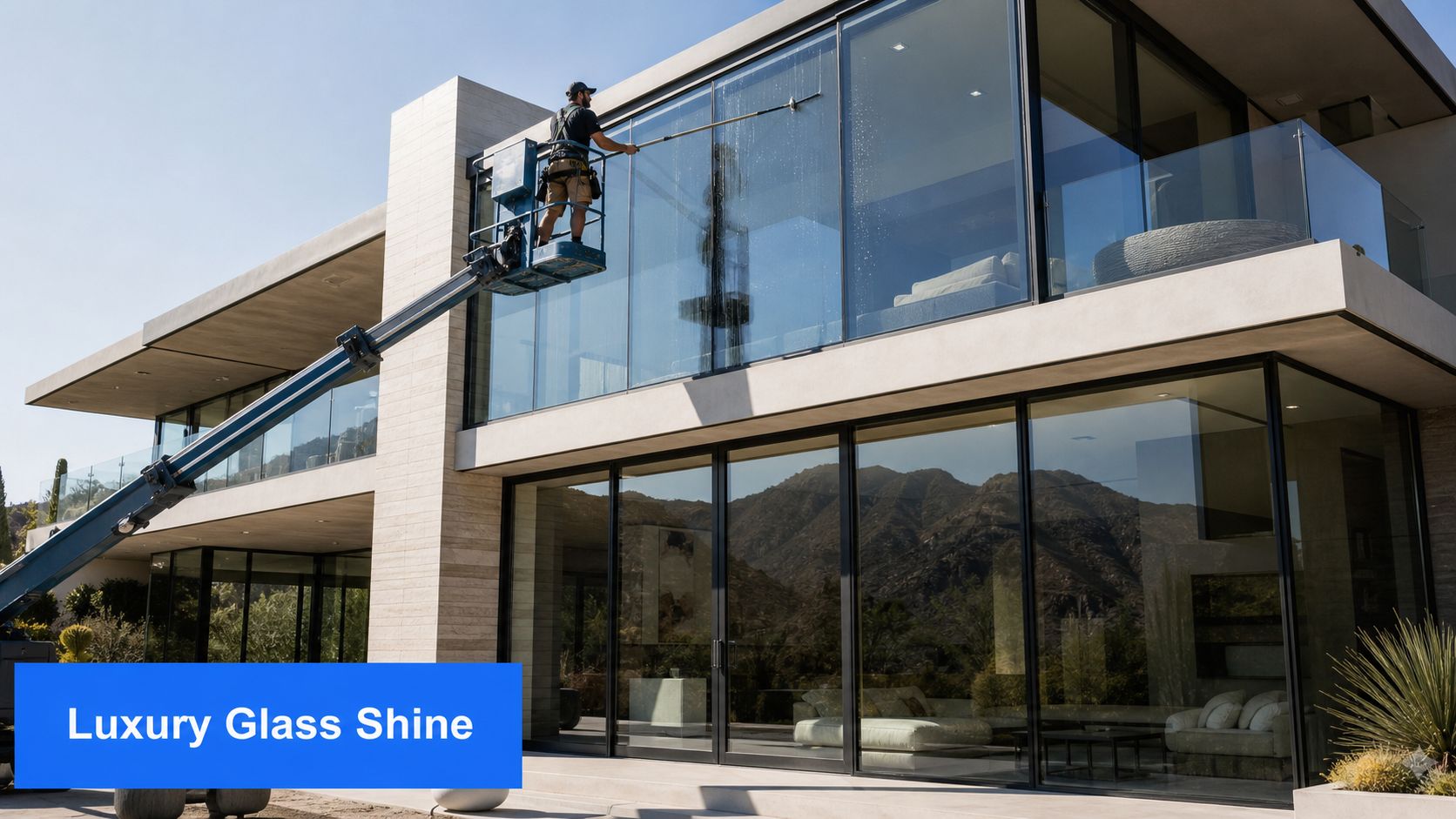
These jobs often use a combination of boom lift access, rope descent where architecture demands it, water-fed poles on reachable exteriors, and detailed hand work on interior panes and architectural features. The challenge isn't just reach. It's protecting premium finishes, landscaping, and custom materials while keeping the glass visually invisible.
The direct-sunlight reality
Even excellent work can show minor imperfections in harsh sun because heat speeds evaporation and can create ghost lines. As one industry discussion put it, “even microfiber rags will leave ghost lines/smears on hot glass,” and “the sunnier it is, the less soap you want in your solution” (direct-sunlight window cleaning discussion). On luxury homes, setting that expectation honestly matters.
Direct sunlight is the toughest critic. Good crews work for clarity in real conditions, not fake perfection in shade only.
The best estate results come from walkthroughs before service, identifying every glass type, and building a maintenance plan that keeps buildup from getting ahead of the finish. On custom architecture, regular service is cheaper than corrective service.
9. Commerce City Industrial Facility
A Commerce City industrial site usually tells the story before we set a ladder or build scaffold. Glass near loading bays picks up diesel film. South-facing elevations collect dust and hard-water spotting. Interior panes often carry a fine layer of production residue that standard janitorial routines do not fully remove. In Commerce City window cleaning and similar Colorado facilities, the before-and-after difference is tied to function as much as appearance.
Access planning drives the whole job. On long industrial runs, scaffolding often makes more sense than repeated ladder moves because crews need stable footing for slow, methodical passes and detail work around frames, mullions, and seals. Where exterior glass can be cleaned from the ground, pure water systems speed up rinsing and reduce residue. Where buildup is heavy, hand work with professional squeegees and scrubbers gives better control than trying to wash everything off at once.
The case-study value on facilities like this is in the details. A warehouse office frontage needs a different approach than a high-bay production wall. Some sections clean up with pure water alone. Others need a restoration pass because bonded grime, mineral spotting, or adhesive residue has been left too long. The strategy changes by elevation, exposure, and how close the glass sits to active operations.
What changes after the glass is restored
Light transmission improves first. Then the whole building reads differently. Supervisors notice cleaner sightlines from office areas to the floor, and visitors stop reading the property as overdue for maintenance.
As noted earlier, the broader market for professional window cleaning continues to grow. At the property level, that shows up in a practical shift. More facility managers now schedule glass service as planned maintenance instead of waiting for visibility complaints or inspection-day cleanup.
- Best timing: Planned downtime, low-traffic shipping windows, or shift changes.
- Most important prep: A site walk that identifies dust type, water access, lift or scaffold needs, and any safety restrictions near equipment.
- Most overlooked benefit: Cleaner glass supports a better first impression for staff, auditors, vendors, and ownership groups.
Before & After: 9 Window-Cleaning Case Studies
| Project | Implementation complexity | Resource requirements | Expected outcomes | Ideal use cases | Key advantages |
|---|---|---|---|---|---|
| Phoenix High-Rise Office Building: 15-Story Commercial Glass Restoration | High, rope descent and floor-by-floor access | Rope descent systems, harnesses, water-fed poles, purified water, OSHA-certified crew | Restored curb appeal, increased natural light, improved tenant satisfaction | Downtown multi-story office towers | Safe, streak-free high-rise cleaning; enhances property value |
| Scottsdale Resort & Spa: Panoramic Window Wall Transformation | High, large continuous panels and angled surfaces | 65ft water-fed poles, boom lift, pure water deionization, lift safety gear | Dramatically clearer views, improved guest photos and bookings | Luxury resorts, panoramic residential facades | Sustainable, low-disruption cleaning that preserves glass integrity |
| Denver Tech Campus: Multi-Building Facade Standardization Project | High, multi-building coordination and scaffolding | Scaffolding, water-fed poles, QA inspection tools, coordinated scheduling | Cohesive campus appearance, consistent maintenance across buildings | Tech parks, university and corporate campuses | Uniform presentation and documented quality control |
| Tempe University Research Facility: Specialty Glass and Skylight Project | High, specialty access for sloped/skylight glass | Rope descent systems, specialized squeegees, pure water, OSHA-trained technicians | Restored critical daylighting, protection for sensitive interiors | Research labs, facilities with skylights and clerestories | Safe access to challenging glass; non-abrasive protection of sensitive environments |
| Chandler Retail Complex: Storefront Window Clarity and Brand Impact | Medium, many storefronts but standard techniques | Water-fed poles, squeegees, portable purification, tenant coordination | Improved product visibility, increased foot traffic, consistent branding | Shopping centers, strip malls, multi-tenant retail | Fast, cost-effective service that standardizes storefront appearance |
| Boulder Historic District: Preservation-Grade Window Restoration | High, delicate historic materials require gentle methods | Pure water systems, soft-bristle tools, rope descent, documentation equipment | Restored historic character without damage; preserved materials | Historic storefronts, civic heritage buildings | Preservation-focused techniques that minimize risk to original fabric |
| Las Vegas Casino Resort: High-Volume Entertainment Glass Restoration | Very high, 24/7 operations and large-scale logistics | Multiple teams/shifts, boom lifts, high-capacity purification, complex scheduling | Enhanced ambience across venues with minimal operational disruption | Major casinos, entertainment complexes, large hotels | Large-scale coordination enabling continuous operations and consistent results |
| Paradise Valley Luxury Estate: Custom Architectural Glass Showcase | High, varied custom glass and designer details | Water-fed poles, boom lifts, rope systems, specialized microfiber and deionized water | Reveals architectural intent, protects premium installations | High-end residential estates, designer showcase homes | Attention to detail for premium glass; protects bespoke features |
| Commerce City Industrial Facility: Heavy-Duty Window Restoration | High, heavy grime and safety-focused cleaning | Scaffolding, industrial-grade squeegees, high-capacity pure water systems, coordination with operations | Improved worker safety and visibility, professional industrial appearance | Manufacturing plants, warehouses, logistics facilities | Handles heavy accumulation; restores sightlines and operational safety |
Ready for Your Own Transformation?
These examples show what window cleaning before and after photos often miss. The visible result is only the final layer. Underneath it is access planning, safety setup, sequencing, water quality control, and knowing when to use a squeegee, a water-fed pole, scaffolding, a boom lift, or rope descent systems.
That's the distinction between “the glass got wet” and professional window cleaning. On a Phoenix high-rise, the issue might be mineral-heavy dust and heat. In Scottsdale or Paradise Valley, it might be panoramic glass where every imperfection shows. In Denver, Boulder, or Commerce City, it might be standardizing multiple buildings or cleaning around historic materials and industrial conditions. In Las Vegas, the challenge is often keeping a property presentation-ready without disrupting constant operations.
The practical side matters just as much as the finish. Crews need safe access, clear drop zones, tenant or guest communication, and a method that fits the building instead of forcing the building to fit the method. That's why experienced teams don't show up with one tool and one script. They inspect first, identify the glass type and level of buildup, then choose the safest and most effective approach for that site.
Professional Window Cleaning has been serving Arizona, Colorado, and Nevada since 1999, and the team brings more than 22 years of experience described in the company background to work on homes, storefronts, campuses, office towers, skylights, and complex architectural glass. Every technician is annually trained on OSHA 1910.27 standards, and the company uses lifts, rope descent systems, water-fed poles, and professional squeegee methods to deliver streak-free results while protecting the property.
If your building's glass has lost clarity, the fix usually isn't complicated. It just needs to be done properly. That may mean cooler scheduling in Arizona, coordinated tenant access in retail, preservation-sensitive methods in Boulder, or multi-shift planning in Las Vegas. The right process restores the look of the property and removes one of the first things people notice when a building hasn't been maintained.
Owners who want more leads from a cleaner-looking property often think first about ads and overlook presentation. In practice, appearance and visibility work together, which is why broader marketing conversations like ways to drive more restoration jobs often connect back to how the property looks before anyone makes contact.
If you're ready to improve views, restore curb appeal, and put experienced crews on the glass, Professional Window Cleaning is ready to help with a fast, free quote.
Professional Window Cleaning serves homeowners, property managers, retail centers, campuses, and high-rise buildings across Arizona, Colorado, and Nevada. If you want safe, reliable service from an experienced team using pure water systems, ladders, boom lifts, scaffolding, rope descent systems, and professional squeegee techniques, contact Professional Window Cleaning to schedule your quote.