



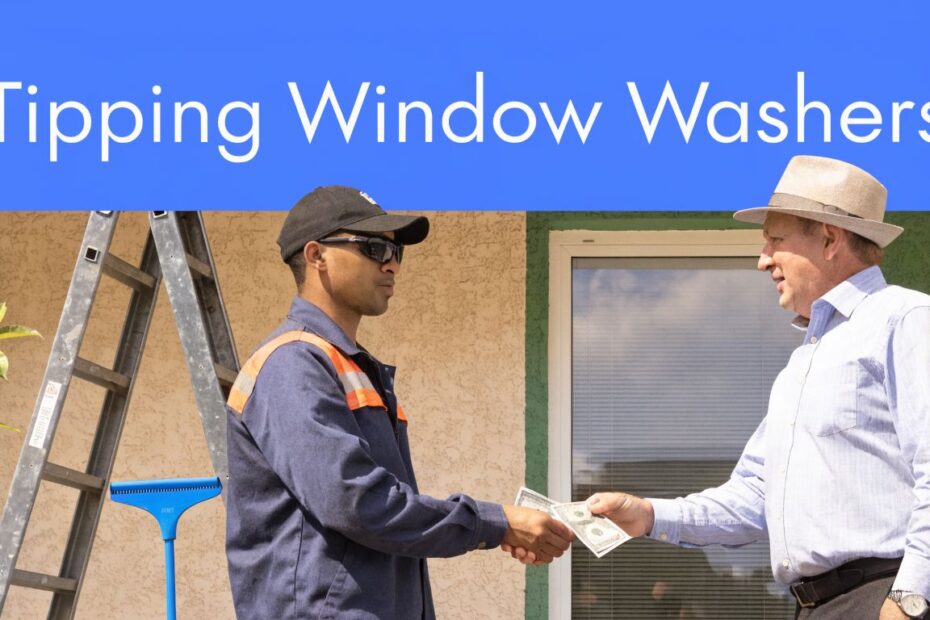
You’ve just had your windows cleaned. The glass looks sharp, the tracks are clear, the crew is packing up ladders and hoses, and now you’re standing there with one last question: do you tip window washers?
That hesitation is normal. Window cleaning sits in an odd spot between home maintenance and personal service. It’s not like dining out, where everyone already knows the rule. It’s also not a casual chore when the crew is using squeegees, pure water systems, ladders, scaffolding, boom lifts, or rope descent systems to reach difficult glass safely.
The short answer is simple. Tipping window cleaners is optional, not mandatory. But there are situations where it makes perfect sense, and there are other times when a review, referral, or straightforward thank-you is the better move.
The Moment of Truth After the Squeegee Stops
The awkward part usually happens after the hard work is already done.
A crew finishes the exterior glass on a two-story home. They’ve been moving ladders carefully around landscaping, detailing edges with towels, and checking for missed spots in direct sun. Or maybe it’s a retail storefront where the tech has just finished a fast, clean pass with a mop and squeegee before opening hours. The windows look great, and now you’re reaching for your wallet and wondering what the etiquette is.
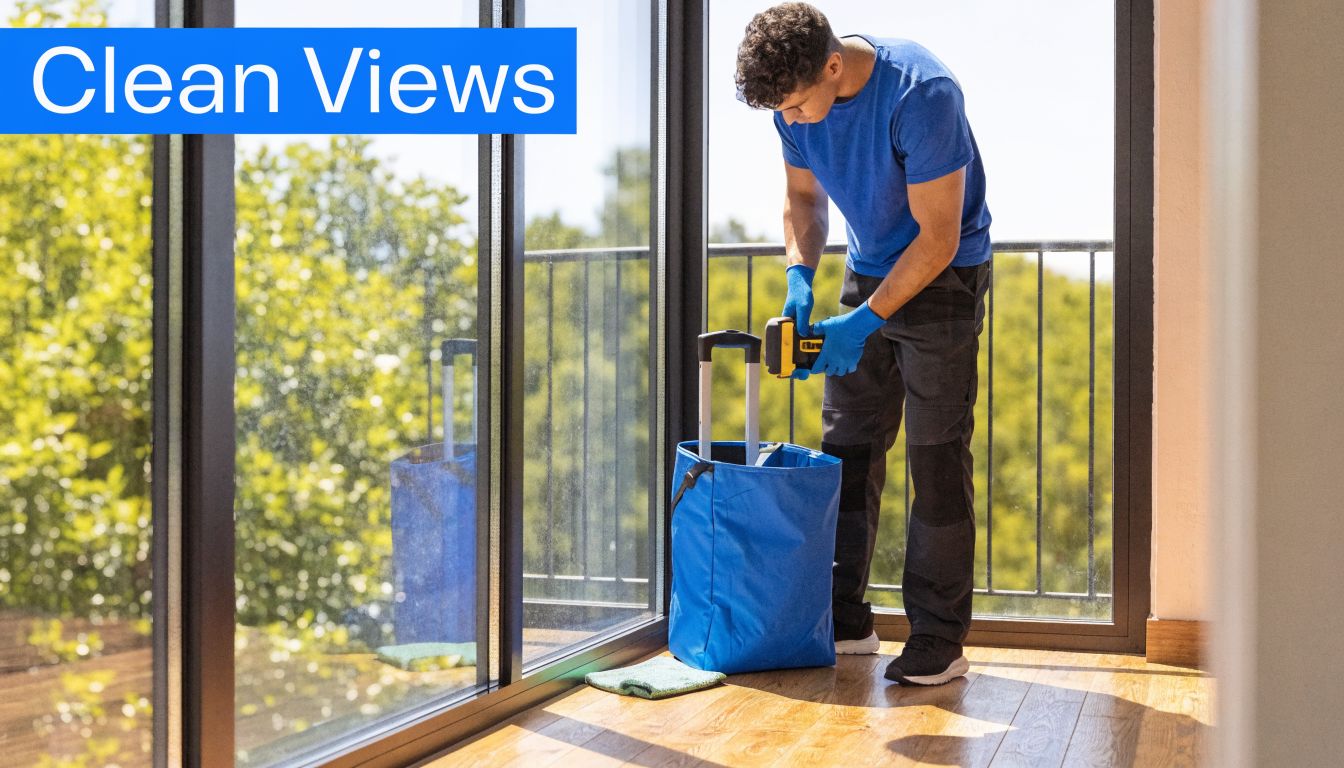
Most customers aren’t trying to avoid being generous. They just don’t want to guess wrong. They don’t want to under-tip if a tip is expected, and they don’t want to create an awkward moment if the company has a no-tip policy or the owner is doing the work personally.
Why this feels less obvious than other services
Professional window cleaning has a few real trade-offs:
- The price already reflects skilled labor. You’re paying for trained work, safety procedures, access equipment, and results.
- The effort can vary wildly from job to job. One service might be a simple ground-floor storefront. Another might involve skylights, ladders, or high-angle access.
- The crew structure matters. Tipping an employee team feels different from tipping an owner-operator.
Practical rule: If you’re happy with the work and the job involved unusual effort, tricky access, or standout professionalism, a tip is a thoughtful gesture. If the service was routine and the invoice was already substantial, you shouldn’t feel pressured.
That’s really the heart of it. There isn’t one universal script. There is judgment, and good judgment usually lands in the right place.
The Unspoken Rule of Tipping Window Cleaners
Here’s the baseline most customers need to hear. You don’t have to tip window washers. In the U.S., it isn’t treated like restaurant tipping.
According to Clear Rise Cleaning’s overview of window cleaner tipping, tipping window cleaners is not a standard practice, and when tips are given, they average $6 per job. The same source notes that flat rates of $5 to $20 per cleaner are more common than percentage tips when a customer wants to recognize exceptional work.
That tells you two useful things right away. First, most customers are not expected to add gratuity. Second, when they do, it’s usually modest and practical.
Who usually gets tipped
The answer changes depending on who showed up.
- Employee crews often receive tips more naturally because they’re doing the physical work on site.
- Crew leads may collect the tip and split it with the team.
- Owners usually don’t expect a tip in the same way an employee does, especially if they set the pricing themselves.
That doesn’t mean you can’t tip an owner. It just means there’s less social pressure to do it.
What actually earns a tip
Customers usually tip for service that feels above the baseline, such as:
- Difficult access, like second-story glass, atrium windows, or awkward skylights
- Extra care, such as catching small details without being asked
- Professionalism on site, including communication, shoe covers indoors, careful ladder placement, and clean cleanup
- Problem-solving, especially when the crew works around landscaping, furniture, or tight commercial access windows
Good window cleaners don’t expect a tip for showing up and doing the job correctly. They do appreciate one when the customer notices effort that went beyond the minimum.
If you’ve been asking yourself “do you tip window washers or not,” the cleanest answer is this: optional, appreciated, and most appropriate for excellent service or harder work.
How Much to Tip for Different Window Cleaning Jobs
If you decide to tip, the amount should match the kind of job that was done. A quick storefront route and a rope-access commercial project are not the same thing. Tipping works best when it reflects complexity, access, and how much extra effort the crew had to put in.
For high-rise and commercial work in Arizona, Colorado, and Nevada, ASF Clean Team’s guidance on tipping professional window cleaning services says industry benchmarks suggest 5 to 10% of the invoice or $5 to $20 per crew member. That same guidance states tips can motivate technicians on challenging jobs involving rope descent systems or boom lifts, with a direct connection to stronger detail work and fewer callbacks.
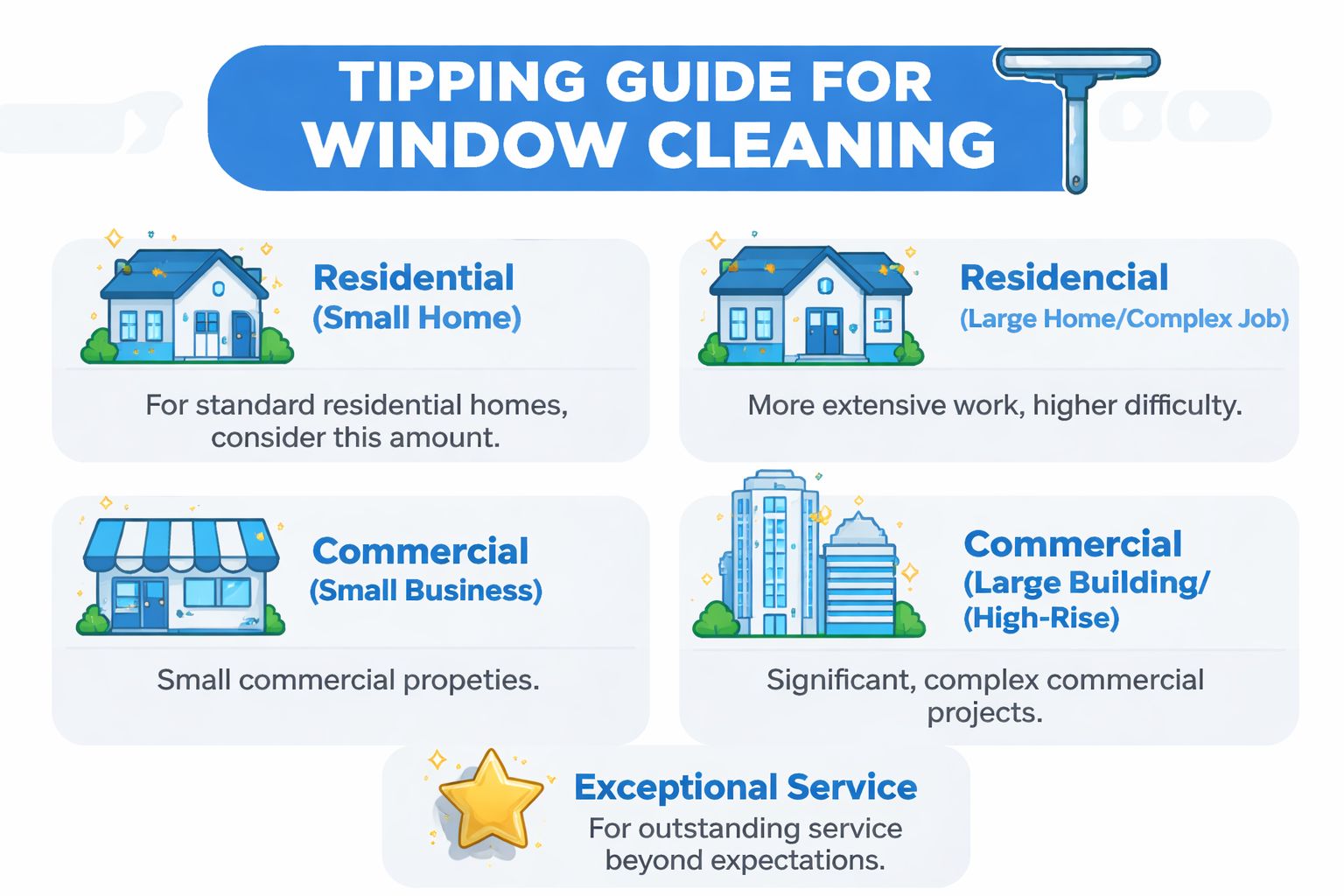
Window washer tipping guide by scenario
| Service Type | Job Complexity | Suggested Tip Amount |
|---|---|---|
| Small residential cleaning | Standard access, routine glass | Flat tip per cleaner if you want to tip |
| Large home or detailed residential job | More ladder work, more glass, more time | Higher flat tip per cleaner |
| Small storefront or office route | Quick service, easy access | Round up or give a modest flat tip |
| Mid-rise or high-rise commercial | Specialized access, safety gear, lift or rope work | Percentage of invoice or tip per crew member |
| Recurring route service | Ongoing relationship | Occasional tip or periodic bonus |
Residential jobs
For most homes, flat tips work better than percentages.
If a two-person crew cleaned interior and exterior glass, worked carefully around furniture, or handled difficult second-story windows, a tip per cleaner is easy to understand and easy to distribute. This is also the least awkward option for customers because it avoids mental math at the door.
A few practical examples:
- Small one-time home service often fits a modest flat tip if the work was excellent.
- Larger homes with more ladder work or specialty glass justify tipping toward the higher end of the flat range already discussed.
- Recurring home service doesn’t always need a tip every visit. Many customers save appreciation for the occasional standout appointment or a holiday bonus.
If you’re still pricing out the visit itself, this guide on what it costs to clean windows helps separate the service price from any optional gratuity.
Storefronts and small commercial work
Small business owners usually want something simple. They’re paying an invoice, opening the door for the cleaner, and getting on with the day.
In that setting, the easiest choices are:
- rounding up the bill
- handing over a small cash tip for a technician who’s consistently reliable
- giving a periodic thank-you bonus for someone who keeps the front glass looking sharp week after week
For recurring storefront service, consistency matters more than ceremony. A cleaner who shows up on schedule, works fast, and leaves no streaks has real value. If you want to reward that, a flat tip is cleaner than a percentage.
High-rise and complex commercial jobs
At this point, generic advice usually falls apart.
A crew using boom lifts, scaffolding, or rope descent systems is doing highly controlled work. They’re managing access, safety checks, drop zones, detailing, and communication with property staff while still being expected to leave the glass spotless. On jobs like that, a percentage tip can make more sense because the scale of the project is much larger.
That doesn’t mean every property manager should tip every service. It means that when the crew handles a difficult scope smoothly, a structured gratuity is reasonable.
On specialized access work, tipping is less about social custom and more about recognizing the extra concentration, exposure, and craftsmanship the job demanded.
What works and what doesn’t
What works:
- Flat tips for residential crews
- Percentages for larger commercial projects
- Periodic bonuses for recurring service relationships
- Tipping when the crew solved a hard access problem or delivered notably careful work
What doesn’t work:
- Treating every job the same
- Assuming the owner expects a tip
- Using restaurant rules for technical field work
- Feeling obligated when the service was merely adequate
The best tip is the one that matches the actual job.
Practical Tipping Logistics and Company Policies
Deciding to tip is one thing. Getting it to the right people is another.
The easiest method is still cash handed directly to the crew lead with a clear instruction that it’s for the team. That avoids confusion and makes sure the money doesn’t disappear into office processing. If you prefer card payment, ask before the appointment whether the company can add gratuity to the invoice or send a payment link that passes the tip through properly.
The cleanest way to handle it
A simple process keeps everything smooth:
- Ask when booking. Does the company allow tipping, and if so, how is it handled?
- Ask on site if there’s a crew. Should you give one amount to the lead or split it yourself?
- Confirm digital options. Some companies can add gratuity to an emailed invoice or payment portal.
- Be direct. A short sentence works: “This is for the crew. Thanks for the care today.”
For businesses and managed properties, this matters even more. Payment often goes through office staff, front desk personnel, or a centralized billing process. Teams that use digital check-in tools, resident notifications, or visitor workflows often benefit from clearer handoff systems. In that context, tools like Nimbio's smart entry features show how much smoother on-site coordination gets when access and communication are organized before the crew arrives.
Ask about policy before the truck pulls away
Not every company handles gratuity the same way.
Some allow:
- Cash tips on site
- Card-added tips through the invoice
- Direct digital payments to the technician
Others prefer all payments to run through the office. If you want to avoid the end-of-job pause, ask ahead while choosing a professional window cleaning company.
If you’re unsure, asking the office in advance is more professional than guessing in front of the crew.
That one step removes almost all of the awkwardness.
Great Alternatives to a Cash Tip
Cash isn’t the only way to show appreciation. In some cases, it isn’t even the most useful one.
A technician may remember a thoughtful customer review for longer than a small bill handed over, especially if that review mentions the crew by name and points out what they did well. That kind of feedback helps the company, helps the employees get recognized internally, and helps future customers trust the service.

The alternatives crews actually value
A detailed online review
Mention punctuality, professionalism, careful ladder work, clean squeegee detailing, or how well the crew handled difficult glass.Referrals to neighbors or other managers
This is especially valuable in neighborhoods, retail strips, HOAs, and office parks where one good job often leads to several more.Refreshments on a hot day
Cold water matters when crews are working exterior glass in direct sun.Clear positive feedback to the office
A quick call or message saying the team did excellent work gets remembered.
Why these can matter more
A cash tip is immediate. A review or referral keeps paying off.
If you can’t or don’t want to tip, don’t force it. A strong review, repeat business, and courteous treatment are all legitimate ways to say thank you. For recurring clients, those signals often carry more long-term value than a one-time gratuity.
“You took care of our property, and I’m telling others about it” is meaningful appreciation in this trade.
Tipping Advice for AZ CO and NV Property Managers
Regional norms matter, and so does the kind of property you manage.
In Arizona, crews often work under intense sun on reflective glass, storefronts, and larger residential exteriors. In Colorado, elevation, wind, and access around multi-story properties can change how a job is planned and executed. In Nevada, recurring commercial routes and large resort-area properties often run on tight scheduling and appearance standards. In all three states, tipping is still optional, but customers tend to reserve it for crews who handle difficult conditions well and make the process easy.

Homeowners in major service areas
If you’re booking service in places like Phoenix, Scottsdale, Tempe, Chandler, Paradise Valley, Glendale, Flagstaff, Denver, Boulder, Arvada, Westminster, Erie, Commerce City, Golden, Las Vegas, or Laughlin, the same basic rule applies. Tip when the work required unusual care, difficult access, or standout service.
For homeowners, the cleanest approach is usually a flat tip to the crew.
Property managers and recurring commercial service
For HOAs, office buildings, retail centers, and mixed-use properties, tipping every visit usually isn’t the best system. A periodic crew bonus is often cleaner and more professional, especially when the same technicians service the building regularly.
That approach fits recurring contracts better because it rewards consistency instead of turning each visit into a separate tipping decision. If you’re comparing vendors for route work, mid-rise service, or larger access projects, this guide to commercial window cleaning companies can help you evaluate the service structure first, then decide how you want to handle appreciation.
The best regional advice is simple. Keep tipping optional, tie it to difficulty and performance, and use periodic bonuses for recurring crews when you want to strengthen retention and goodwill.
If you want reliable Professional Window Cleaning for residential, commercial, mid-rise, or high-rise properties in Arizona, Colorado, or Nevada, book a team that already knows how to handle the access, safety, and finish quality the job demands.