



The real difference between pressure washing and soft washing boils down to one simple concept: force versus finesse. Pressure washing is all about using high-pressure water to physically blast away stubborn dirt and grime. On the other hand, soft washing takes a gentler approach, relying on low-pressure water mixed with specialized cleaning solutions to kill organic growth like mold and algae before rinsing it away.
Your choice isn't just a matter of preference—it's about protecting your property. Do you need brute force, or does the surface demand a more delicate, chemical-based touch?
A Clear Comparison of Cleaning Methods
Picking between pressure washing and soft washing is the first critical step in any exterior cleaning project. Get it wrong, and you could be looking at expensive, permanent damage, especially on more sensitive materials. While both methods are incredibly effective, they are absolutely not interchangeable.
Think of it this way: pressure washing is the heavy-duty tool for tough, durable surfaces. Soft washing is the precision instrument, perfect for building exteriors, roofs, and anything near delicate glass. As a professional window cleaning company, our expertise lies in selecting the right method to ensure your windows remain safe and spotless.
For property owners in dry, dusty climates like Phoenix, Scottsdale, and Las Vegas, blasting away caked-on grime from concrete is a common job where pressure washing shines. But in places like Denver and Boulder, where higher moisture can lead to mold and mildew on siding, soft washing is by far the better, safer solution, especially when working around windows.
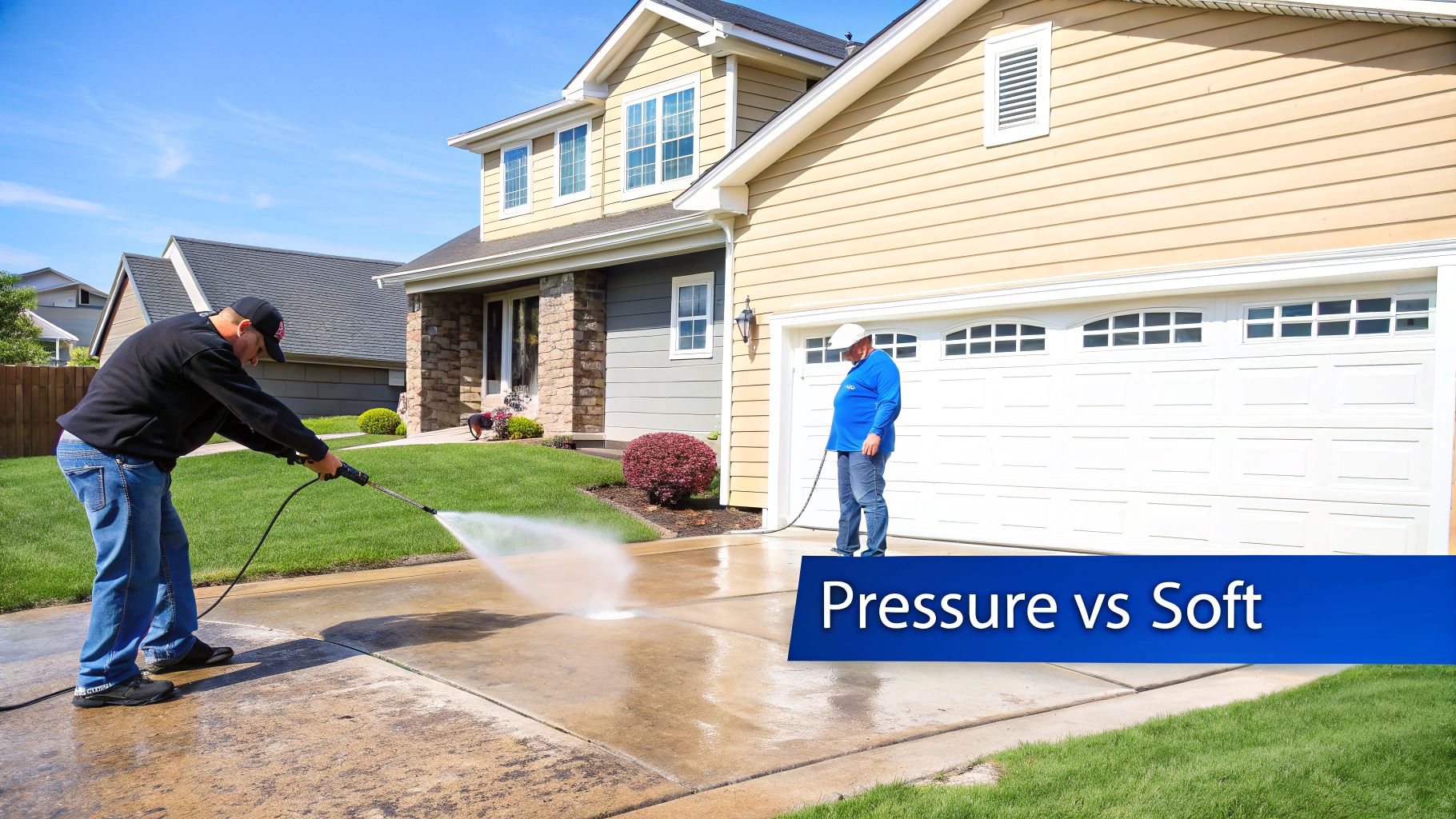
Key Differences Between Pressure Washing and Soft Washing
To make the decision straightforward, we've put together a table that cuts right to the chase. It lays out the core attributes of each method, helping you see at a glance which technique is right for your specific surface.
| Attribute | Pressure Washing | Soft Washing |
|---|---|---|
| Water Pressure (PSI) | High (1,500–4,000+ PSI) | Low (Under 500 PSI) |
| Primary Cleaning Action | High-pressure water force | Chemical cleaning solutions |
| Ideal Surfaces | Concrete, brick, stone, hardscapes | Siding, roofs, stucco, painted wood |
| Primary Use | Removing stubborn dirt, grime, loose paint | Killing mold, mildew, algae, bacteria |
| Risk of Damage | High on delicate or improperly chosen surfaces | Very low when performed by professionals |
| Best For Windows | Never used; can break glass and seals | The only safe method for cleaning building facades around windows |
Understanding this table is key to preserving the integrity and value of your property's exterior.
As a professional window cleaning company, we have to be crystal clear on one point: high-pressure water should never be aimed at or near your windows. The force is more than enough to shatter glass, destroy the airtight seals between panes (leading to fogging), and splinter window frames.
Our technicians exclusively use professional tools like squeegees, pure water systems, and when necessary for building exteriors, soft washing. This ensures your entire property—from the siding to the glass—is cleaned safely and effectively. We utilize specialized equipment like ladders, boom lifts, scaffolding, and rope descent systems to access every window without risking damage.
Understanding the Mechanics of Each Cleaning Method
To really get to the bottom of the pressure washing vs. soft washing debate, you have to look past the names and understand what’s actually happening. One method is all about raw, physical force, while the other is a carefully controlled chemical process. As window cleaning professionals, choosing between them isn’t a guess—it's a calculated decision based on the surface we're cleaning and the grime we need to remove, all while ensuring your glass is protected.
Pressure washing is pure physics. It uses a heavy-duty pump to blast water at incredibly high pressure through a specialized nozzle, creating a stream that acts like a chisel. It physically strips away years of caked-on mud, old paint, and stubborn gunk from tough surfaces. It’s all about kinetic energy doing the heavy lifting.
Soft washing, on the other hand, is all about chemistry. Instead of brute force, this technique uses a low-pressure stream to apply a precise blend of biodegradable cleaning solutions. This solution is what does the real work, breaking down and killing organic growth like mold, mildew, and algae right down to the root. After letting it sit, we gently rinse it all away, leaving the surface truly sanitized—a critical process when cleaning building exteriors adjacent to windows.
The Power of Pressure Washing Explained
The heart of a pressure washer is its pump, which can crank out water pressure from 1,500 to over 4,000 pounds per square inch (PSI). That incredible force is channeled through different nozzles that shape the spray. A zero-degree nozzle creates a laser-focused jet that can literally etch concrete, while a wider 40-degree nozzle spreads the pressure out for cleaning bigger areas.
This is the go-to method for hardscapes that can take a beating. Think about cleaning a concrete driveway in Chandler that's seen better days, or stripping peeling paint off a brick wall in Commerce City. The high pressure simply blasts the buildup away without a primary need for chemicals.
But that raw power is exactly why pressure washing is a terrible idea for most parts of your building's exterior, especially your windows. The force can shatter glass in an instant, blow out window seals, and force water deep into wall cavities, leading to thousands in repair bills.
As a professional window cleaning company, our job is to protect your whole property, not just the glass. Our technicians are trained to read every surface and pick the right tool for the job, ensuring powerful equipment is only ever used where it’s safe and effective, far away from delicate windows.
The Science Behind Soft Washing
Soft washing flips the script completely, relying on a custom-mixed chemical solution instead of high PSI. The pressure here is always under 500 PSI, making it perfectly safe for delicate surfaces like vinyl siding, stucco, and shingles. The real magic is in the cleaning agents, which are typically a mix of three key things:
- Sodium Hypochlorite: This is the workhorse. It’s the active ingredient that kills mold, algae, mildew, and other organic growth right at the source.
- Surfactants: Think of these as special soaps. They help the solution stick to vertical surfaces, giving it time to break down grime and lift it off the material.
- Water: We use water to dilute the solution to the exact strength needed for the job at hand.
This is the perfect way to treat those ugly algae stains common on buildings in Tempe or the mildew that pops up in shady spots around Arvada. Because soft washing actually sanitizes the surface, the results last much longer. When we're cleaning a building's exterior, this is the only method we’ll use anywhere near sensitive windows, as it protects their frames, seals, and glass from any risk of damage.
Choosing the Right Method for Different Surfaces
Picking the right cleaning technique isn't just about getting the best results—it's about protecting your property from serious, irreversible damage. Hitting a delicate surface with high-pressure water is a costly mistake, especially when windows are nearby. The surface itself tells you what it needs.
Knowing the real difference between pressure washing and soft washing is key for any property owner. A concrete driveway at a busy commercial building can absolutely handle the intense force of a pressure washer. But that same blast would rip apart the stucco siding on a home, making soft washing the only smart and safe choice to protect both the facade and the windows.
This decision tree breaks it down simply.
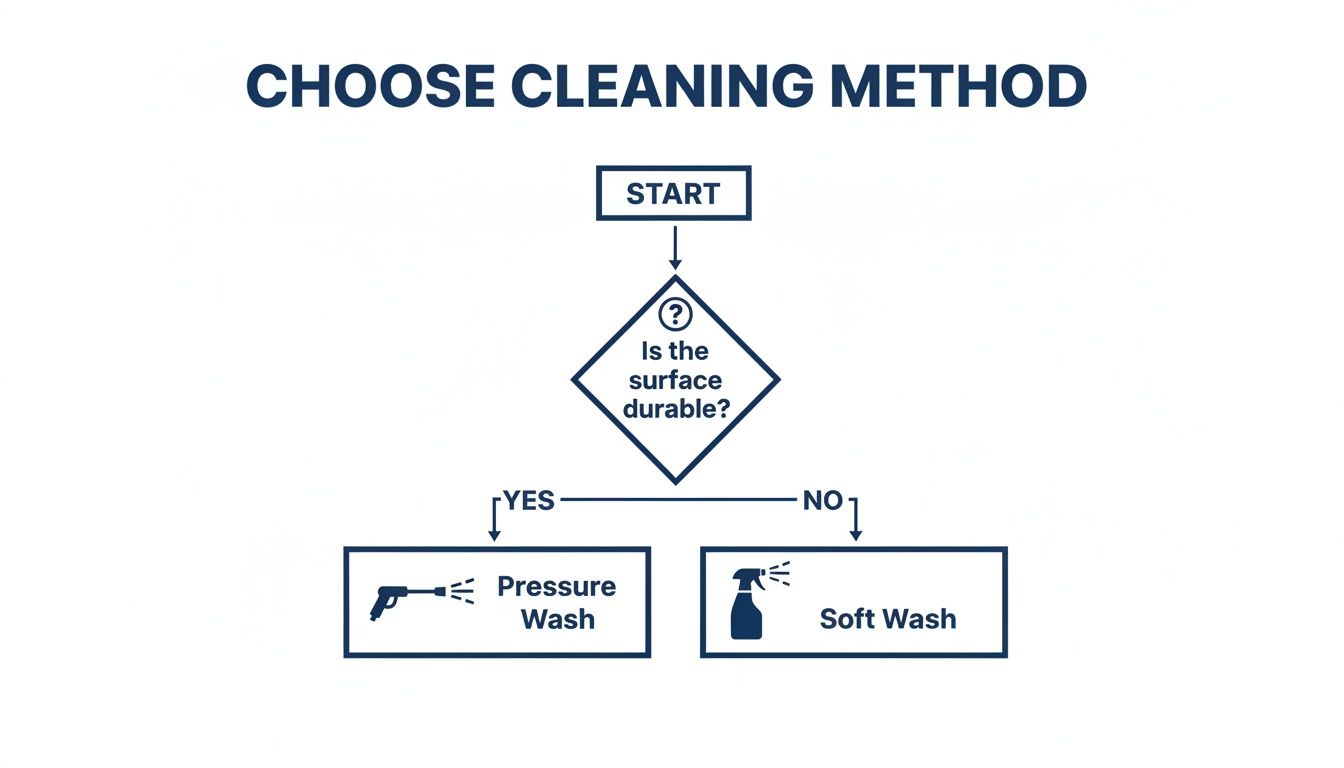
The bottom line is straightforward: durable, hard surfaces get the pressure washer. More fragile materials, especially those near windows, need the gentle, chemical-based touch of a soft wash.
When to Use High-Pressure Washing
Pressure washing is your heavy-hitter. It's built for tough, resilient surfaces that can take a beating. The magic is in its raw power, which physically blasts away dirt, grease, and other non-organic gunk without relying much on chemicals. This makes it perfect for property maintenance in dry climates like Arizona and Nevada, where dust and grime are the main enemies.
Picture these scenarios:
- Concrete Driveways and Walkways: Erasing ugly tire marks and deep-set oil stains from a concrete driveway.
- Solid Brick Facades: Blasting away years of accumulated city dust from a solid brick building.
- Stone Patios and Retaining Walls: Bringing a flagstone patio back to life after years of foot traffic and environmental exposure have left it discolored.
In these situations, the sheer force of the water does all the heavy lifting. But this power must be wielded carefully, far from any glass.
You have to be absolutely certain a surface can handle the force before you point a pressure washer at it. That said, it's incredibly effective for certain prep jobs. Our guide on pressure washing a house before painting dives deeper into that specific use case.
When Soft Washing is the Only Safe Option
For most of your building’s exterior, soft washing isn't just an option—it's a necessity. This method uses low pressure combined with specialized, biodegradable cleaning solutions to eliminate organic growth like mold, algae, and mildew right down to the root. It’s the only way to clean delicate materials without destroying them.
Soft washing is the non-negotiable choice for surfaces like:
- Stucco and Siding: Gently cleaning delicate stucco without chipping the finish or causing cracks.
- Asphalt Shingle Roofs: Safely removing the black algae streaks that are so common on roofs, especially in higher-altitude areas.
- Wood Decks and Fences: Cleaning a wooden deck without splintering the wood or stripping away its protective sealant.
Here’s a crucial point: soft washing is the only method a true professional will use when cleaning siding anywhere near windows. High pressure can instantly shatter glass, break window seals (leading to that foggy look between panes), and damage frames. Our technicians rely on professional tools like squeegees and pure water systems—and even rope descent systems when needed—to guarantee every window is cleaned perfectly, with zero risk from the work being done on adjacent surfaces.
The difference between these two methods becomes crystal clear in the professional world. Industry data shows pressure washing is effective for 60-70% of heavy-duty commercial jobs on hard, nonporous surfaces. However, that aggressive approach also leads to an estimated 15-25% rate of surface damage when misapplied. In contrast, soft washing boasts over 95% effectiveness at killing organic growth, making it the superior and safer choice for preserving your property’s integrity.
Analyzing Safety Risks and Property Protection
When you’re weighing pressure washing against soft washing, the conversation has to go deeper than just cleaning power. We need to talk about what’s far more critical: safety. Each method comes with its own set of risks—not just to the person holding the wand, but to your property itself. Understanding these dangers is exactly why exterior cleaning, especially around windows, should be left to trained, insured professionals.
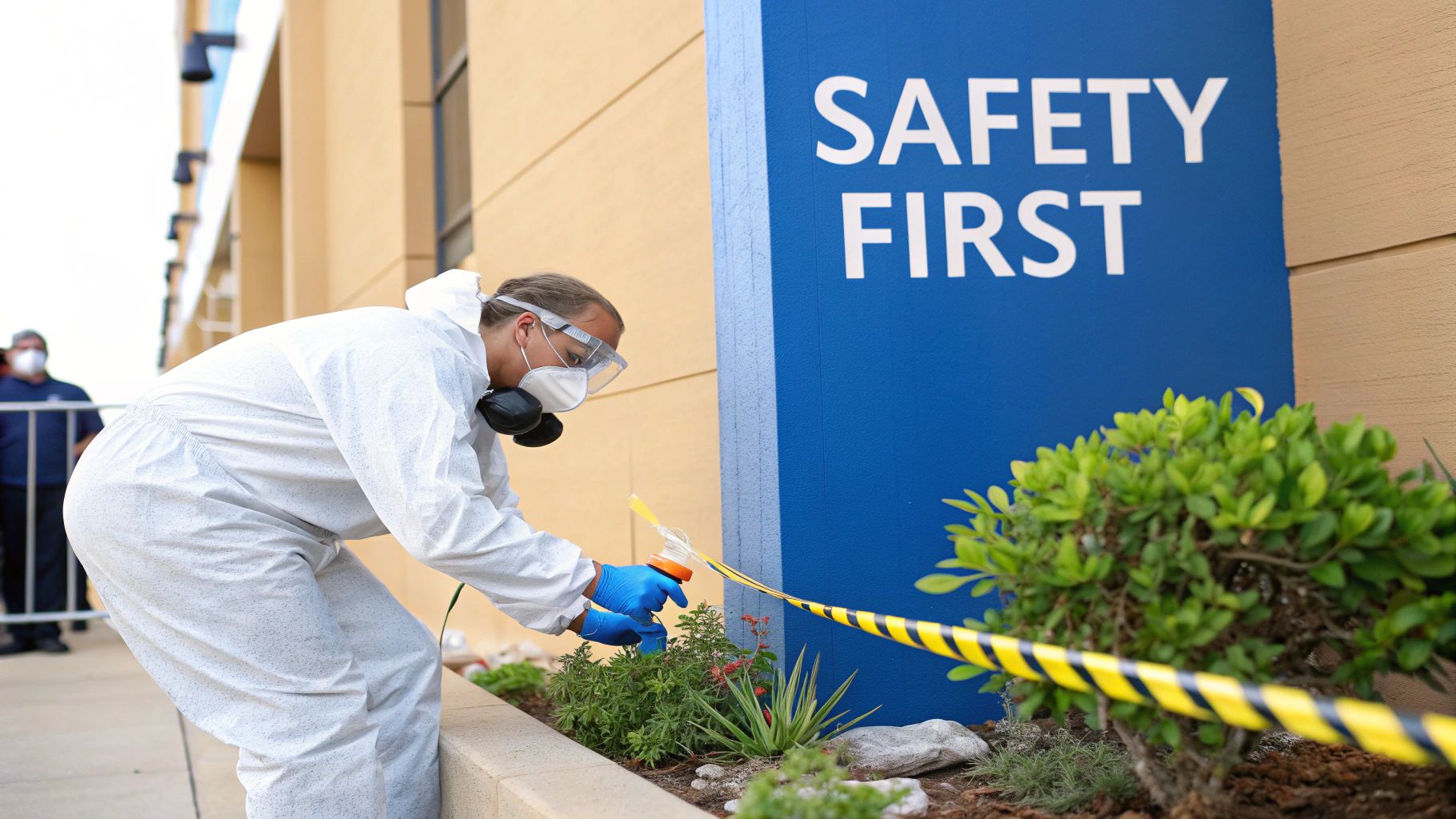
The biggest risk with pressure washing is the sheer force of that water jet. A stream of water blasting out at 3,000 PSI or more can cause serious bodily harm. That same level of force is a direct threat to the most vulnerable parts of your building, particularly your windows.
The Dangers of High-Pressure Water
High-pressure streams can etch durable surfaces like brick and stone if the operator uses the wrong nozzle or gets too close. Worse, they can shatter windows in an instant, blow out the seals between panes (leading to fogging and costly replacements), and splinter wooden window frames. This is precisely why our professional technicians never use a pressure washer anywhere near windows.
There's another hidden danger: water intrusion. When high-pressure water hammers against siding, it can get forced behind the panels and into your wall cavities. That trapped moisture quickly becomes a breeding ground for mold and mildew. This is why professional training, like the annual OSHA certifications our team completes, is absolutely non-negotiable for anyone using this powerful equipment.
The sheer force of a pressure washer is a liability in untrained hands. It can turn a simple cleaning task into a multi-thousand-dollar repair bill by damaging siding, breaking windows, and causing unseen water damage within your walls.
Responsible Soft Washing and Chemical Handling
With soft washing, the main risk shifts from physical force to chemical handling. While the low pressure is inherently safe for your property's surfaces, the cleaning solutions have to be managed responsibly to protect your landscaping. This is where professional expertise really shines.
Our trained technicians use exclusively eco-friendly, biodegradable cleaning solutions. But even safe chemicals require careful application to avoid harming delicate plant life. We follow a strict protocol that guarantees total property protection:
- Pre-Wetting Surfaces: Before a drop of cleaning solution is applied, we thoroughly saturate all nearby plants, shrubs, and grass with fresh water.
- Covering Sensitive Plants: For particularly delicate or valuable plants, like prized rose bushes in Paradise Valley or ornamental gardens in Golden, we use protective coverings as an extra layer of defense.
- Controlled Application: Our equipment allows for a precise, low-pressure application. This minimizes overspray and keeps the solution exactly where it needs to do its job.
- Thorough Rinsing: Once the cleaning agents have worked their magic, we do a comprehensive rinse of the building and all surrounding landscaping, washing away any leftover solution.
This meticulous process ensures that while we’re effectively cleaning your siding, your prized garden remains vibrant and untouched. It's this level of care that separates a professional service in Glendale or Westminster from a potential disaster.
Comparing Costs and Long-Term Value
When you're deciding between pressure washing and soft washing, the initial price is usually the first thing that jumps out. You have to look at the long-term value, how often you'll need to clean, and the potential cost of damaging your property, especially windows.
At first glance, pressure washing often looks like the more budget-friendly option. Over the long haul, though, soft washing typically proves to be the more cost-effective choice, giving you a much better return on your investment. The price difference really comes down to the process, the specialized equipment, and the professional-grade cleaning agents required.
Breaking Down the Initial Investment
The upfront cost for any exterior cleaning job is shaped by a few key things: the size of your property, what kind of surface is being cleaned, and the method we use. Generally, soft washing does have a slightly higher price tag.
That extra cost is directly tied to the materials and expertise involved. Soft washing uses specific biodegradable, chemical solutions that are designed to kill organic growth at the root. This takes skilled technicians who know exactly how to mix and apply these solutions safely to protect your property and landscaping, whether you're in Paradise Valley or up in Flagstaff.
Here’s how the numbers typically break down:
- Soft Washing: $0.15 to $0.30 per square foot
- Pressure Washing: $0.10 to $0.25 per square foot
The difference reflects the cost of the specialized chemicals and the low-pressure equipment that soft washing requires to do the job right.
The Long-Term Value of a Deeper Clean
The real financial win with soft washing becomes clear over time. A pressure washer might blast away the visible layer of algae on a building in Tempe, but it almost always leaves microscopic spores behind. That means those ugly green and black stains will pop back up much faster.
Soft washing, on the other hand, is a sanitizing treatment. The cleaning solutions actually seep into the surface to kill mold, mildew, and algae at their source, which stops them from growing back for a much longer time.
This longer-lasting clean means fewer service calls over the years, which translates directly into lower overall maintenance costs. An investment in soft washing is an investment in your property's sustained curb appeal and structural integrity.
This approach is especially smart for surfaces like roofing, where blasting it with high pressure too often can cause serious premature wear. For a detailed breakdown of what that can cost, check out our guide on roof pressure washing prices. The gentle nature of soft washing protects your roof while still delivering a clean that lasts.
Thinking about the long-term impact of either method is really about seeing it as part of a bigger picture. If you want to understand the importance of regular property maintenance, you’ll see that choosing the right cleaning method is a huge piece of that puzzle.
Why You Should Always Hire a Professional
After breaking down the differences between pressure washing and soft washing, one thing should be crystal clear: exterior cleaning is a job for trained specialists. Choosing to hire a professional isn’t about convenience—it's about protecting your property, ensuring your safety, and getting a result that actually lasts, especially when windows are involved.
A real pro brings a lot more than just a power washer. Our team, with over 22+ years of experience, shows up with a fleet of specialized equipment ready for any challenge. We’re talking commercial-grade ladders, boom lifts for reaching multiple stories, scaffolding for tricky building layouts, and even advanced rope descent systems for high-rise work. This is the gear that allows us to clean every single window safely and without compromise.
Expertise That Protects Your Investment
One of the most common mistakes we see is using high-pressure water near windows. It’s a recipe for disaster. This can shatter glass, destroy window seals (leading to that dreaded fog between the panes), and force water deep into your wall cavities, creating a perfect environment for mold and rot.
Our technicians are meticulously trained to avoid this costly error. We treat glass with the respect it deserves, using professional squeegees and pure water systems to deliver a perfect, streak-free shine. Powerful washing methods are never aimed where they don't belong.
This dedication to doing things right is why our entire team is background-checked, drug-free, and fully insured. You can dive deeper into the benefits by reading our guide on why you should hire a professional window cleaning company.
Choosing a professional means you're not just paying for a clean surface; you're investing in the preservation of your property. Our expertise ensures the right technique is used on every material, from delicate stucco to durable concrete.
Beyond just the cleaning itself, proper surface preparation is everything. It's a detailed process that ensures a flawless, long-lasting finish, much like understanding how professionals prep walls for painting, where every single step is critical.
Your Local Cleaning Experts in AZ, CO, and NV
Whether your property is in Phoenix, Scottsdale, or Las Vegas, or the four-season climate of Denver, Boulder, or Flagstaff, our local teams understand the unique challenges your environment presents.
We have the right tools and deep regional knowledge to safely clean homes and businesses in communities from Tempe and Chandler to Arvada, Westminster, and Erie.
Don't put your property's integrity on the line. Reach out today for a professional consultation and a free, no-obligation quote. Let's make sure your building is cleaned correctly, safely, and effectively.
Have Questions? We Have Answers.
When it comes to pressure washing versus soft washing, it's natural to have a few questions. Getting the details right is the key to protecting your property and getting the best possible results. Here are some of the most common things we get asked about.
Can Pressure Washing Damage My Windows?
Yes, absolutely. A high-pressure water stream can shatter glass in an instant. It can also destroy window seals, which leads to that foggy moisture trapped between the panes, and it can splinter wood frames or crack vinyl. The force is just way too much for a delicate surface like a window.
That’s a big reason why our professional technicians use a completely different set of tools for window cleaning. We bring out specialized equipment—squeegees, ladders, boom lifts, rope descent systems, and pure water systems—to make sure we get a perfect, damage-free shine every single time. When cleaning building exteriors near glass, soft washing is the only safe and responsible choice.
Is Soft Washing Safe for My Plants and Pets?
It is when done correctly by a trained professional. Our team exclusively uses biodegradable, eco-friendly cleaning solutions. Protecting every part of your property is our top priority.
We meticulously train our technicians to pre-wet and thoroughly rinse all surrounding vegetation. Whether we're working on a home in Golden or a commercial property in Laughlin, we take every precaution needed to shield your landscaping and ensure your pets stay safe during the entire process.
A key differentiator of a professional service is the strict adherence to safety protocols. We don't just clean your property; we protect its entire ecosystem, from the foundation to the flowerbeds.
How Often Should I Have My Building Exterior Cleaned?
That really depends on where you are. In the dry, dusty climates of places like Phoenix, Chandler, or Las Vegas, you might need an annual cleaning just to keep up with the accumulated dirt and grime.
On the other hand, in areas that get more moisture or have more shade, like parts of Flagstaff or Denver, the battle is against algae and mold. Because soft washing actually kills these organic growths at the root, its results last significantly longer. This extends the time between cleanings and gives you much better long-term value.
So, Which Service Should I Book?
The only way to know for sure is with a professional assessment. Our expert team is equipped to offer both services and, more importantly, is trained to identify the perfect technique for every unique surface on your property, always prioritizing the safety of your windows.
We’ve invested in the professional-grade equipment, extensive training, and hands-on experience to perform both pressure washing and soft washing safely and effectively. This guarantees you get the best possible outcome without any risk of damage. Whether it's a commercial complex in Denver or a beautiful home in Scottsdale, we tailor our approach to what your property actually needs.
Ready for a crystal-clear, professionally cleaned property? Trust the experts at Professional Window Cleaning. Schedule your free, no-obligation quote today!