



By midafternoon, a lot of properties in Phoenix start fighting the same battle. The west-facing glass gets hot, TVs and monitors pick up glare, tenants pull blinds shut, and the building loses the view people paid for. In Denver and Boulder, the issue can feel different because the air is cooler, but strong sun at altitude still pounds interiors. In Las Vegas and Laughlin, the problem is usually obvious the moment sunlight hits the glass.
That's where tinted screens for windows come into the conversation. They're not just about making a window darker. They're about controlling heat before it settles into the room, cutting glare so people can use the space, and adding daytime privacy without closing everything off.
Property managers often focus on selection and installation first. That makes sense. But the part that gets skipped is maintenance. A solar screen that's coated in dust, pollen, hard-water residue, and city grime won't perform or look the way it should. In the Southwest, where wind, dry soil, traffic, and sun work against exterior materials every day, professional screen cleaning matters a lot more than most buyers expect.
Your Best Defense Against the Blazing Sun
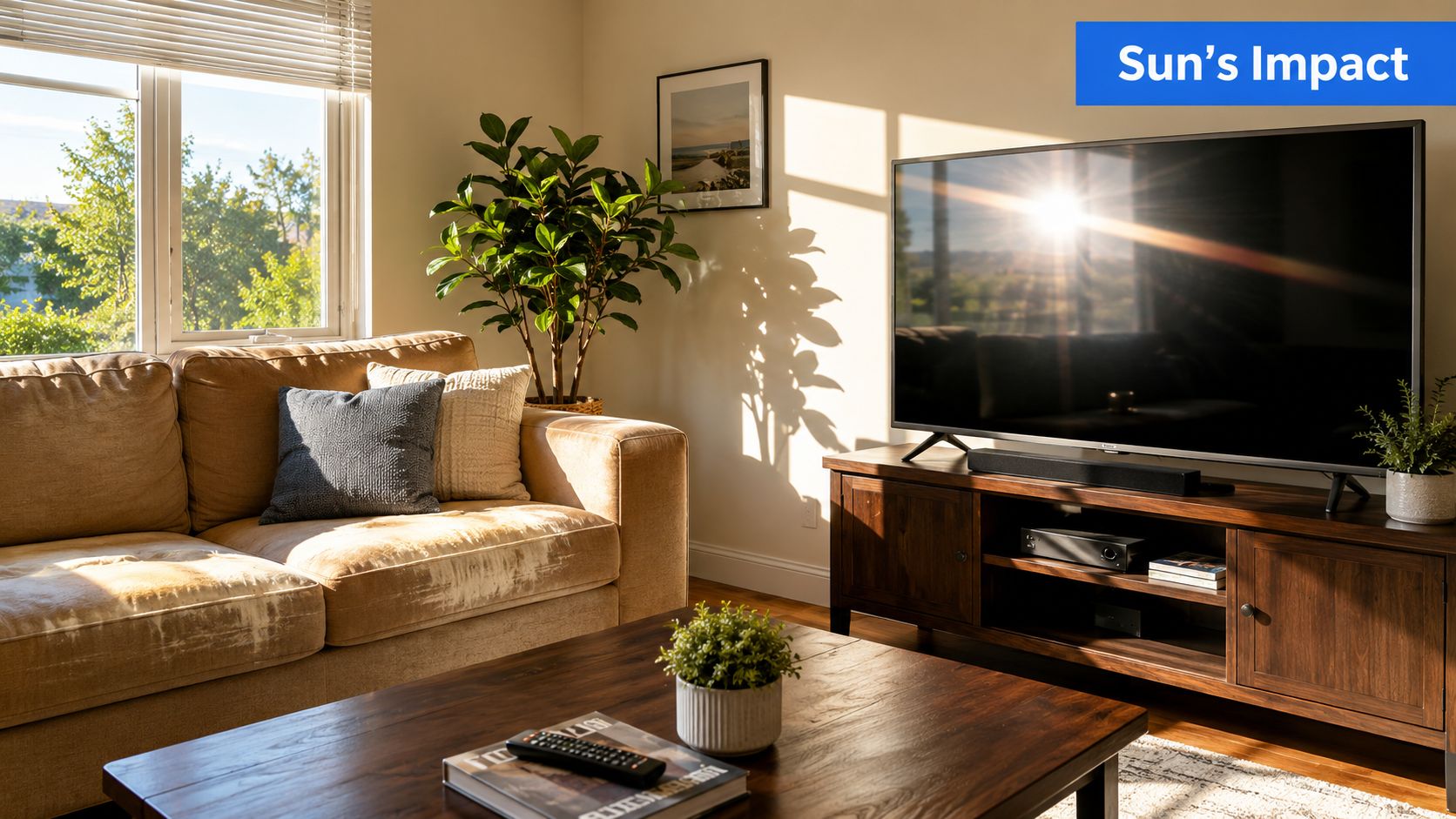
The strongest sun problems usually show up in ordinary ways. A conference room gets bright enough that staff avoid using the screen. A living room stays warmer than the rest of the house. Merchandise near storefront glass starts looking tired. Tenants complain that they have to choose between daylight and comfort.
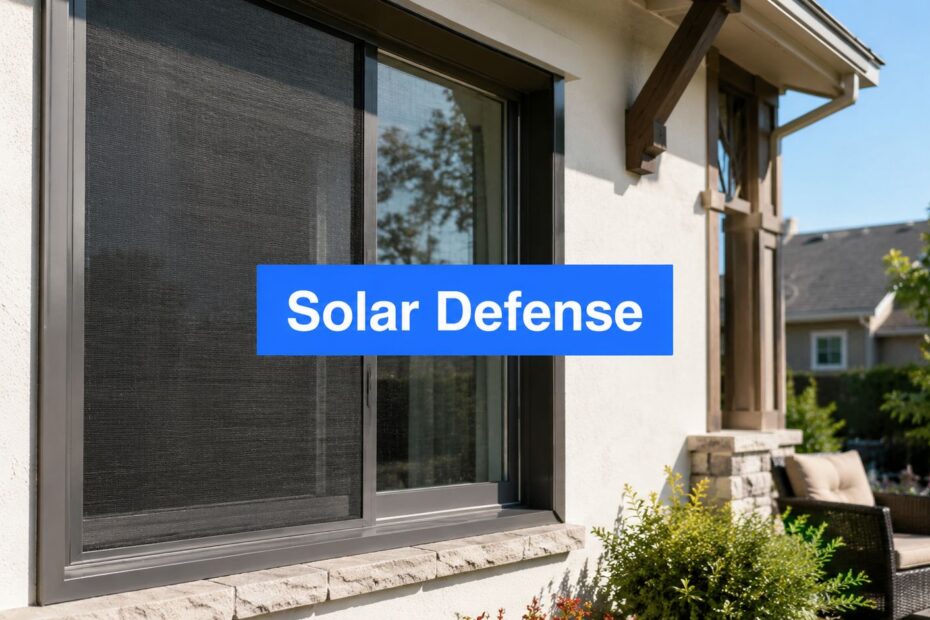
Tinted screens for windows help because they work outside the glass line, where the significant heat problem begins. Instead of waiting for sunlight to pass through the window and then trying to manage it with interior coverings, they intercept a meaningful share of that solar load earlier. For a property manager in Phoenix, Scottsdale, or Tempe, that difference shows up in comfort first and operations second. Rooms stay more usable, glare drops, and the HVAC system doesn't have to fight as much direct solar gain.
What property owners usually want
Most buyers are trying to solve a mix of issues, not just one:
- Heat control: Afternoon sun can make one side of a building noticeably harder to cool.
- Glare reduction: Screens help people see monitors, televisions, and point-of-sale displays more comfortably.
- Daytime privacy: Darker mesh makes it harder to see in from outside during the day.
- Interior protection: Less harsh sun on finishes means less stress on flooring, fabrics, and furnishings.
Practical rule: If occupants keep closing blinds on the same windows every day, those windows are asking for exterior sun control.
There's also a long history behind the idea of tinted window materials. Sources on the history of window tinting trace tinted glass back to ancient Egyptian and Mesopotamian cultures around 3000 B.C., with later decorative and metallic-oxide uses in the ancient world. That matters because it reminds buyers that solar control on glass isn't a trend. It's an old materials problem with newer, more practical solutions.
Understanding Solar Screens Versus Window Tint Film
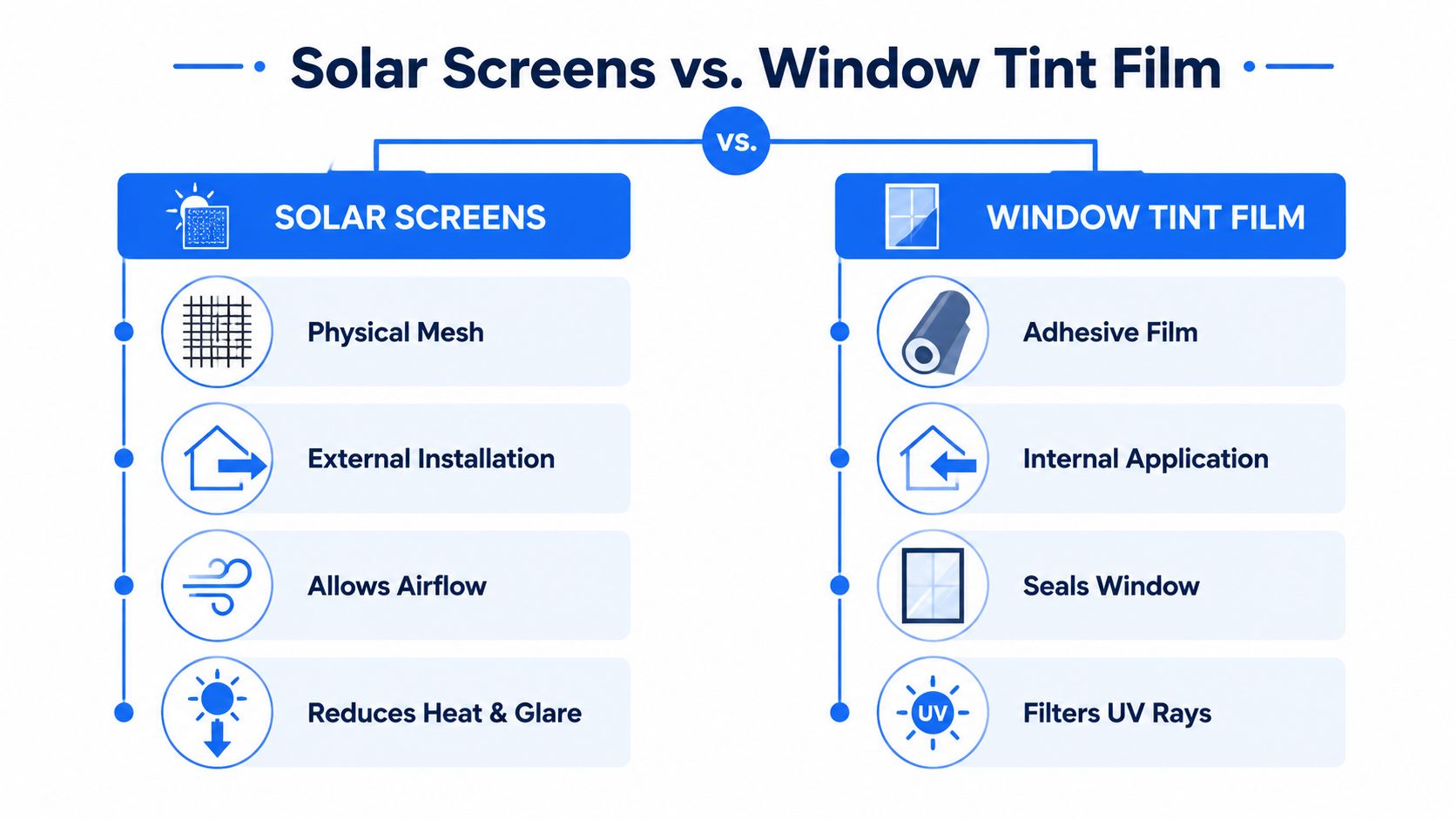
A lot of confusion starts with one simple assumption. People hear “tinted windows” and picture adhesive film on the glass. But solar screens and window tint film are not the same product, and they don't solve the problem in the same place.
Think of a solar screen like an umbrella
A solar screen acts like an umbrella for your window. It sits outside the glass and blocks part of the sun before that energy reaches the pane. Film, by contrast, is applied directly to the glass surface. It can still be useful, but it works later in the process.
That distinction matters most in hot climates. If your biggest problem is west-facing heat in Phoenix, Glendale, or Chandler, stopping sunlight earlier usually gives you a more practical line of defense.
What openness factor means
The U.S. Department of Energy notes that exterior solar screens reduce solar heat gain, UV damage, and glare, and that performance is mainly determined by the openness factor, which can range from about 25% down to 1% in the screen weave according to its guidance on energy-efficient window coverings.
In plain language, openness factor tells you how tight the mesh is.
- Higher openness: More outward view and more daylight.
- Lower openness: More shading, stronger glare control, and a darker interior feel.
- Color matters too: Darker screens often preserve the outward view better than many people expect.
Where readers often mix up the options
Property owners also compare solar screens with indoor shades, roller systems, and film because all of them affect light. That's reasonable, but they serve different jobs. If you're sorting through options for glare and daylight management indoors, this guide to light control and UV protection shades is useful because it separates interior shade choices from other window treatments.
Solar screens change what reaches the glass. Film changes what happens at the glass. Interior coverings change what happens after sunlight is already inside the window line.
A quick side-by-side
| Type | Installed where | Main function | Best fit |
|---|---|---|---|
| Solar screen | Exterior | Stops sun before it hits glass | Heat, glare, daytime privacy |
| Window tint film | On glass | Filters light through the glazing system | UV control, appearance, added glass performance |
| Interior shades | Inside | Manage light after entry | Room darkening, interior privacy, décor |
That's why product selection should start with the question, “Where do I want to stop the sun?” not “Which window product is most popular?”
The Major Benefits for Your Home or Business
At 3 p.m. in Phoenix, the complaints usually start at the same windows. A leasing office gets too bright to work in. A west-facing conference room heats up before the day is over. A living room looks fine in the morning, then turns into the hottest spot in the house by late afternoon. Tinted screens address those day-to-day problems from the outside of the building, where the sun first hits.
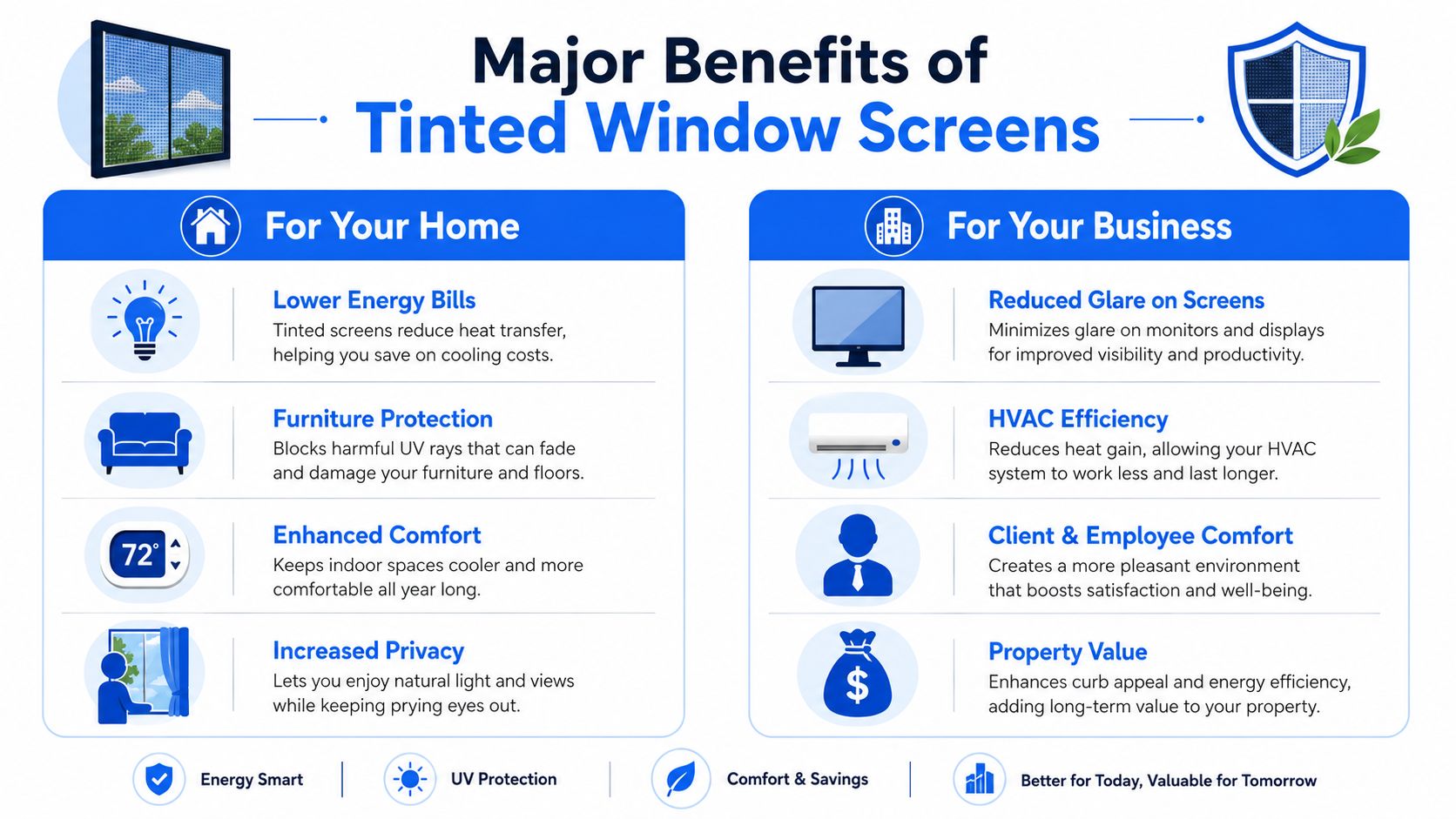
Comfort and cooling
The first benefit people feel is comfort. Rooms near sun-heavy glass stay more usable during peak heat hours, and occupants spend less time adjusting blinds or avoiding certain seats.
That matters even more in Arizona and Nevada, where sun exposure is not occasional. It is part of the operating environment. On south- and west-facing windows, tinted screens reduce heat buildup before it turns the glass into a radiator for the room.
If you manage buildings in Phoenix, Scottsdale, Denver, or Las Vegas, you already see the pattern. The problem is rarely every window. It is the exposed elevations that take the hardest hit in the afternoon.
Screens also work best as part of the full cooling picture. If shaded windows are helping but indoor temperatures still drift upward, the HVAC side may need attention too. This overview of Mesa cooling services is a useful reference for property owners comparing shading improvements with mechanical cooling performance.
Cleanliness affects these gains more than many owners expect. A tinted screen loaded with dust, pollen, and mineral residue stops looking and performing like it should. The mesh openings get obstructed, the outward view gets dull, and the glass behind the screen often stays dirtier longer. Regular service protects the value of the installation, much like routine filter changes protect an air-conditioning system. That is one reason many owners pair screen care with the broader benefits of clean windows.
UV, glare, and privacy
Heat is only part of the story.
Tinted screens also soften harsh glare, which makes a big difference in offices, reception areas, classrooms, and living spaces with strong afternoon sun. People can use the room more normally. Computer screens are easier to see. Tenants are less likely to keep every blind shut all day.
Interior protection is another practical benefit. Strong sun is hard on flooring, furnishings, and finishes, especially in rooms that get repeated exposure through the same glass. Tinted screens help reduce that stress while also improving daytime privacy. From the outside, the view inward becomes less direct. From the inside, occupants usually keep a workable outward view, depending on screen density and color.
Privacy is where many property managers get tripped up. A screen is not a blackout barrier. It is closer to a visual filter. During the day, it makes it harder for people outside to see in clearly. At night, with interior lights on, that effect drops. Setting the right expectation upfront prevents complaints later.
Business impact versus home impact
The benefit changes a little depending on the property.
- For homes: Screens make bedrooms, living rooms, and west-facing kitchens easier to use in the late afternoon.
- For offices: They cut screen glare and reduce hot spots near desks, waiting areas, and perimeter workstations.
- For storefronts: They soften intense light while still allowing visibility and curb appeal.
- For multifamily properties: They improve daytime privacy and create a more uniform exterior appearance than improvised foil, paper shades, or mismatched blinds.
The long-term business value is maintenance stability. A professionally maintained screen system keeps performing season after season, even in dusty, high-UV climates like Arizona, Colorado, and Nevada. DIY care often misses the buildup that slowly reduces airflow, clarity, and appearance. Professional cleaning catches that early and helps the screens last longer, which protects both comfort and replacement budgets.
How to Choose the Right Tinted Screens
A property manager in Phoenix usually notices the same pattern first. The west side of the building heats up by mid-afternoon, tenants close blinds, and the rooms still feel bright, hot, and uncomfortable. Choosing the right tinted screen starts with fixing that specific problem, not with picking the darkest mesh on a sample card.
Three questions will narrow the field quickly. How much afternoon heat needs to be reduced, how much natural light should stay in the room, and how important is the view from inside? If you answer those based on the actual window exposure and room use, the right screen type becomes much clearer.
Start with placement, then evaluate shade level
For solar control, exterior screens usually make more sense than interior light-blocking products because they intercept sunlight before the glass absorbs so much heat. That is the practical difference property owners feel. The room stays more usable during peak sun hours, instead of looking dimmer.
Many owners ask for "window tint" when their primary goal is better heat control on sun-heavy elevations. In those cases, a tinted screen system is often the better fit.
Match density to the room
Mesh density affects four things at once. Heat reduction, daylight, privacy, and view. That is why this choice deserves more attention than color alone.
| Feature | 80% Screen (Standard) | 90% Screen (High-Efficiency) | 95%+ Screen (Maximum Privacy) |
|---|---|---|---|
| View outward | More open | Balanced | More restricted |
| Daylight | Brighter interior | Noticeably reduced | Darkest feel |
| Heat control | Good | Stronger | Most aggressive |
| Daytime privacy | Moderate | Higher | Highest |
| Best use | General living areas | Hot west-facing rooms | Privacy-sensitive windows |
A good way to picture it is like sunglasses. Lighter lenses preserve more brightness and openness. Darker lenses cut more glare, but they also change how the space feels.
That tradeoff is where buyers often get surprised. From inside the room, darker screens can still provide a usable outward view, especially in strong daylight. The only reliable way to choose is to test samples on the actual elevation, during the part of the day that causes the complaint.
Material and maintenance
Material matters more in Arizona, Colorado, and Nevada than many DIY guides admit. Dust, wind, UV exposure, hail, and monsoon moisture all put stress on mesh and frames. A screen that looks good on day one can lose its clean appearance much faster if the material is wrong for the location or if the maintenance plan is weak.
That maintenance piece gets overlooked all the time. Fine debris settles into the mesh, especially on roadside exposures, desert-facing lots, and upper floors with steady wind. Once buildup starts, the screen can look patchy, reduce clarity, and lose some of the performance the owner paid for.
Property managers comparing patio and exterior screening options can use this guide to the best screen for porch to weigh durability, airflow, and visibility together.
A practical way to choose
Use the room itself as the test case.
- Media room or office: Put glare control first.
- Living room with a view: Choose a mesh that protects the room without making it feel closed in.
- Street-facing bedroom or bath area: More privacy may justify a denser screen.
- West-facing commercial frontage: Heat reduction usually ranks above maximum brightness.
If occupants already keep blinds shut through the hottest part of the day, a somewhat darker screen can make the space more functional. The room may feel slightly dimmer, but it often becomes easier to occupy, easier to cool, and easier to manage.
Color affects the experience too. Darker screens often create a cleaner outward view from inside, while lighter colors stay more visible to the eye and can feel less transparent. A seasoned installer or window care professional can help you compare those differences on site, then set up a cleaning approach that keeps the screens performing well after installation.
Why Professional Screen Cleaning Is Essential
A property in Phoenix can install tinted screens to cut glare and heat, then lose part of that benefit within one dusty season. The screen still hangs in place, but the mesh starts acting more like a filter loaded with debris than a clean shade cloth. In Arizona, Nevada, and parts of Colorado, that buildup is not cosmetic. It affects how the screen looks, how the window reads from the street, and how well occupants can still see out.

Dirt changes performance
Tinted screens work like the air filter in an HVAC system. Leave the filter packed with dust, and airflow drops. Let screen mesh load up with fine grit, pollen, exhaust residue, and mineral spots, and you start to lose the clean balance the product was chosen for. Privacy can look uneven. Views get hazy. The whole window assembly can seem older and duller than it is.
Owners and maintenance teams often assume a quick rinse or stiff brushing will solve the problem. That approach can shorten the life of the screen. Mesh can stretch, corners can loosen, spline can shift, and clips can crack when screens are handled roughly or blasted with too much pressure.
Why trained crews matter
Professional cleaning is controlled cleaning. A trained crew checks how the screen is mounted, how brittle the frame has become in the sun, and what method fits the material. Some screens should be removed and washed carefully. Others are safer to clean in place. The glass, frame edges, and tracks also need attention, or the screen goes back onto a dirty opening and picks up residue again.
Access affects the plan too. Second-story windows, atriums, stairwells, and commercial façades require the right setup and the right judgment. Crews may use squeegees, ladders, boom lifts, scaffolding, rope descent systems, and pure water depending on the building and window location.
Property managers who want a clearer picture of the tools involved can review what professional window cleaners use for residential, commercial, mid-rise, and high-rise work.
What professional maintenance usually includes
- Screen-safe agitation: Soft brushes and measured cleaning that protects the mesh instead of fraying or stretching it.
- Frame and track cleaning: Grit in corners and channels can rub against the screen over time and wear it down.
- Safe access planning: Tall elevations, awkward rooflines, and glass near skylight roof windows in Arizona often call for more than a ladder and a hose.
- Glass and screen coordination: A clean screen on dirty glass still looks unfinished, and clean glass behind a dusty screen still looks cloudy.
A dirty solar screen does not just soften sunlight. It also reduces the clear, usable view the owner expected.
Professional Window Cleaning is one example of a company that handles both the screen and the window side of the job with the proper access equipment and pure-water methods where appropriate. That service helps on properties with mixed screen conditions, upper-floor windows, and elevations that in-house teams cannot safely reach.
Timing matters more in the Southwest
In desert climates, delay changes the job. Dust settles deep into the weave. Sprinkler overspray dries into mineral residue on the frame. UV exposure bakes debris onto the surface and makes older materials less forgiving during cleaning.
Cleaning schedules should match the property, not a generic calendar. A shaded home in Flagstaff will not collect debris at the same rate as a roadside retail site in Tempe, a multifamily building in Glendale, or a sun-beaten office property in Henderson. Still, exterior screens perform better and last longer when they are inspected and cleaned on a routine schedule instead of being ignored until they look bad.
Installation Compatibility and Local Considerations
The screen itself is only part of the decision. The rest of the job is compatibility. Frame type, window coating, orientation, façade materials, and HOA rules can all affect whether a tinted screen setup is straightforward or fussy.
Low-E glass and reflected heat
Modern low-E windows change solar behavior, which is why you don't want to treat every house or building the same. One nuanced issue is reflected energy. Guidance from A to Z Screens notes that solar screens placed over low-E glass can help prevent reflected solar energy from contributing to warped vinyl siding in some situations, as explained in their discussion of pairing low-E glass with sunscreens.
That's a useful reminder that screens and glazing systems interact. A darker or denser screen might help one elevation and be unnecessary on another. On some properties, the question isn't “Do screens work?” It's “Which windows should get them, and how will they behave with this façade?”
HOAs and exterior appearance
In communities with stricter design standards, especially parts of Scottsdale, Paradise Valley, Boulder, and some master-planned neighborhoods, exterior screen changes may need approval. HOA boards often care about visible color, uniformity from the street, and whether the installation changes the look of the façade.
Before ordering, property owners should check:
- Approved colors and finishes
- Street-facing appearance requirements
- Rules for removable versus permanent exterior elements
- Any restrictions on upper-story modifications
Don't forget skylights and specialty glass
Some properties also need a different strategy for skylights, roof windows, or unusual overhead glazing. If that's part of your sun problem, it helps to review how skylight roof windows in Arizona differ from standard vertical windows before choosing a screen or shade approach.
Compatibility decisions should be made window by window, not property wide. Sun angle, coating, frame type, and nearby materials all change the answer.
That's especially true for mixed-use buildings and larger homes where one side of the property may need aggressive solar control and another side may only need basic glare reduction.
Frequently Asked Questions for Property Owners
How often should tinted screens be professionally cleaned
It depends on exposure. A property near active roads, desert dust, irrigation overspray, or heavy pollen usually needs more frequent service than a sheltered property. In Phoenix, Tempe, Chandler, Glendale, Las Vegas, and Laughlin, exterior screens often collect grime faster than owners expect. In Flagstaff or Boulder, debris patterns may be more seasonal.
Will tinted screens make interiors too dark
They can, if you choose a density that doesn't match the room. That's why sample testing matters. A media room may benefit from a darker screen, while a kitchen or lobby usually needs a more balanced mesh that keeps daylight usable.
Can screens affect window warranties
They can, depending on the window manufacturer and the exact product installed. The safe move is to review the window documentation and ask both the screen provider and the window manufacturer about compatibility, especially if the glass has low-E coatings or the home is newly built.
Are tinted screens a good fit for HOAs
Often yes, but approval may be required. Some associations are fine with exterior screens if the color is uniform and the installation looks consistent from the street. Others are more restrictive.
Why hire a professional cleaner instead of handling it in-house
Because the screen is part of an exterior system, not a loose accessory. Cleaning it correctly means protecting the mesh, frame, fasteners, and surrounding glass while working safely at height when needed. On a multi-story property, access equipment and trained crews matter just as much as the cleaning method.
If your screens are dusty, streaked, or making the whole window system look tired, it's time to bring in Professional Window Cleaning. A trained crew can clean exterior screens and glass safely with the right tools for ground-level homes, multi-story buildings, storefronts, and hard-to-reach elevations across Arizona, Colorado, and Nevada.