



High windows tend to get ignored until they become impossible to miss. A property manager sees streaks across an upper lobby wall in Phoenix. A homeowner in Boulder notices dust baked onto second-story glass. A restaurant owner in Las Vegas looks up and realizes the lower panes are clean, but the higher ones are telling a different story.
At that point, many realize the same thing. Window cleaning high windows is not a simple extension of ground-level cleaning. It is a different service category with different tools, different risks, and different standards for execution.
That matters in Arizona, Colorado, and Nevada. Dust, heat, wind, hard-to-reach architecture, overhangs, and multi-story glass all change the job. So does liability. If a worker is off the ground, the property owner should care about training, access method, insurance, and whether the crew is choosing the right system for the glass instead of forcing one method onto every building.
The demand for professional service is not slowing down. The professional window cleaning industry is forecasted to expand by 13% between 2020 and 2028, driven by glass-heavy architecture and demand in markets such as Phoenix, Denver, and Las Vegas, according to window cleaning industry statistics.
The Challenge of Sparkling High Windows
High windows create two problems at once. They are hard to reach, and they are hard to clean well.
A lot of people focus on the access problem first. That is understandable. If the glass is above an entry canopy, over landscaping, behind a slope, or several stories up, getting a technician into position is a job in itself.
The second problem is where many amateur attempts fail. High glass shows every shortcut. Poor angle control leaves water lines. Wrong brush pressure leaves debris in corners. Wind and heat dry solution too fast. On dusty buildings, loosened soil can redeposit if the rinse method is wrong.
Why height changes the work
On standard first-floor glass, a cleaner can correct details in real time. On high windows, small mistakes scale up fast.
A crew has to think through:
- Access path: Can the glass be reached safely from grade, from the roof, or with equipment?
- Surface condition: Is it routine dust, heavy buildup, mineral spotting, or post-construction debris?
- Architectural layout: Are the panes recessed, angled inward, divided by frames, or blocked by landscaping?
- Site control: Is there pedestrian traffic, vehicle traffic, or a tight work zone?
That is why professional service feels different. The work starts long before a brush touches the glass.
Why appearance is only part of the issue
For a homeowner, dirty upper windows affect curb appeal and the view from inside. For a property manager, the stakes are broader. Dirty glass changes how tenants, shoppers, visitors, and board members judge the building. It can also turn a straightforward maintenance visit into a complicated access project if buildup is allowed to sit too long.
Key takeaway: High-window service is not just about making glass look better. It is about choosing a safe access method, protecting the building, and getting a finish that holds up.
In practice, the best high-window crews do not ask, “How do we get up there?” They ask, “What is the safest and cleanest way to service this particular elevation?”
That distinction separates professional operations from crews that rely on whatever ladder or pole happens to be on the truck.
The Professional Toolkit for Reaching New Heights
Professional crews do not clean every high window the same way. The right method depends on height, setbacks, ground conditions, glass type, and how often the property is serviced.

Water-fed poles for efficient mid-rise work
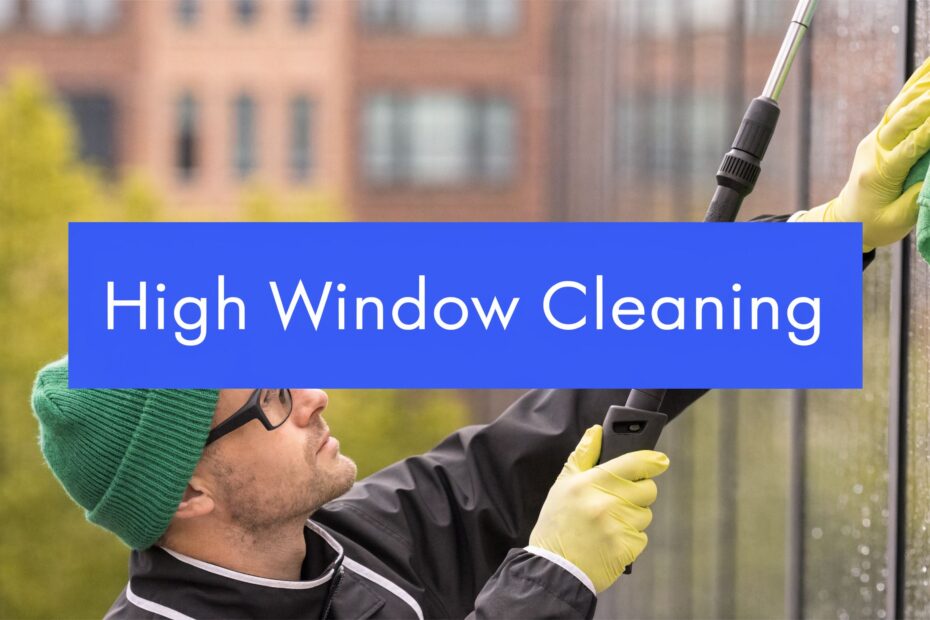
For a large share of exterior high-window work, water-fed pole systems are the best fit. These systems use purified water and long carbon fiber poles so technicians can stay on the ground while cleaning upper exterior glass.
When the water quality is right, the finish is the whole point. Water-fed pole systems can clean windows up to 60 to 72 feet from the ground, using purified water with total dissolved solids under 10 ppm. That allows the glass to air dry spot-free and can raise production to 500 to 1000 square feet per hour, as explained in this overview of the water-fed pole window cleaning system and in the supporting technical discussion on washing high windows.
This method works especially well on:
- Retail centers and offices with repeated upper panes
- Homes with second- and third-story exterior glass
- Mid-rise buildings where ground-based access is open and stable
- Properties in dusty climates that benefit from routine exterior maintenance
It is not magic, though. Water-fed poles are strongest on routine maintenance cleaning. They are less ideal when the glass has stubborn contamination, tight inward angles, or access obstacles that keep the brush from meeting the pane correctly.
Rope descent for true high-rise access
Rope descent systems solve a different problem. They are used when the building height, façade design, or access layout makes ground-based cleaning unrealistic.
This is the method often envisioned for tower cleaning. A technician is suspended and moves vertically with controlled descent equipment, proper anchors, and a planned drop. On the right building, rope descent is efficient and precise. It allows direct hand cleaning on glass that a pole cannot reach with enough control.
Rope access tends to make sense when:
- the building has substantial height
- setbacks prevent lift positioning
- façade sections require direct contact work
- roof access and anchor planning support the job
The strength of rope descent is precision. The trade-off is planning. Roof conditions, anchor locations, drop paths, and weather all matter before the crew ever starts.
Aerial lifts and specialty access for complex layouts
Some buildings are not especially tall, but they are still difficult. That is common in upscale residential neighborhoods, medical campuses, hotels, schools, and mixed-use properties.
Boom lifts, scissor lifts, and specialty lift equipment come into play when the architecture fights every other option. Think of windows over courtyards, glass above sloped entries, high panes above canopies, or sections tucked into corners where neither a pole nor a rope drop gives clean access.
Aerial equipment gives crews a stable work platform and direct approach angle. That often leads to better detailing on frames, edges, and divided panes.
Good crews match the method to the building
The wrong tool can still produce a completed job. It just usually takes longer, costs more, or delivers weaker results.
A sound estimate should explain why the company chose one of these paths:
| Access method | Best fit | Main advantage | Main limitation |
|---|---|---|---|
| Water-fed pole | Exterior glass reachable from grade | Fast, ground-based cleaning | Less effective on some complex angles and heavy contamination |
| Rope descent | Tall façades with roof-supported access | Direct control on high-rise glass | Requires detailed planning and building-specific setup |
| Aerial lift | Mid-rise and architecturally awkward buildings | Stable positioning and precise hand work | Site access and equipment footprint can limit use |
If a provider uses the same method on every property, that is a warning sign. Skilled high-window service starts with method selection, not habit.
Safety and Compliance The Unseen Value
A clean result matters. The way the crew gets that result matters more.
Property owners often judge a window cleaning company by the quote, the schedule, and the before-and-after photos. For high windows, the more important questions are usually invisible from the ground. Is the crew trained for elevated work? Is the access method compliant? Is the company insured correctly for the task being performed?

Why modern safety systems matter
The best argument for professional standards is simple. They work.
High-rise window cleaning involves about 1.5 million worker exposures annually, yet occupational fatalities are only one or two per year, a sharp contrast with 1932, when one in every 200 cleaners was killed on the job annually, according to this high-rise safety overview from psi-info.net.
That change did not happen by luck. It came from training, equipment design, written procedures, inspections, and enforcement.
When a qualified company cleans high windows, the work should be built around systems such as:
- Fall protection planning: harnesses, lifelines, anchors, and rescue considerations
- Equipment inspection: ropes, descenders, lanyards, lifts, and connection points checked before use
- Site control: cones, exclusion zones, and pedestrian protection below the work area
- Crew qualification: technicians trained for the exact access method being used
If a company treats safety as a sales talking point instead of an operating discipline, that usually shows up somewhere else too.
What compliance means to the client
Most clients do not need to memorize OSHA language. They do need to know what responsible compliance looks like.
A credible provider should be able to discuss the basics of fall protection training requirements in plain language. That includes who is trained, how often training is refreshed, and what procedures govern work at height.
Insurance matters just as much. Two coverages are especially important:
- General liability insurance helps protect against property damage or third-party claims.
- Workers’ compensation insurance helps cover employee injuries on the job.
Without both, the property owner can end up exposed to risk they thought they had outsourced.
Tip: Ask for current certificates of insurance and confirm that the scope of work matches the actual access method. High-window cleaning with rope access or lift work should not be treated like ordinary janitorial service.
Cheap bids usually hide risk
The market always has low-price operators. On ground-level storefront glass, the gap may be mostly about experience. On high windows, low pricing often means corners are being cut somewhere you cannot see.
That might mean limited training. It might mean the crew is using the wrong access method because it is cheaper to mobilize. It might mean weak insurance, borrowed equipment, or no real plan for an awkward elevation.
Clean windows are the visible result. Risk control is the hidden product. A professional company is not only selling cleaner glass. It is selling a process that protects residents, tenants, pedestrians, vehicles, and the building owner.
DIY Dangers vs Professional Peace of Mind
The line between manageable and risky gets crossed fast with high windows. Many owners discover that after buying longer poles, moving ladders around, or trying to work around landscaping and uneven ground.
The issue is not effort. It is control.

Where DIY usually breaks down
Consumer-grade setups struggle for a few predictable reasons.
- Reach without precision: Long poles can touch the glass, but that is not the same as controlling scrub pattern, pressure, rinse, and edge detailing.
- Poor working angle: Upper panes often sit above ledges, shrubs, slopes, or architectural projections that make direct contact awkward.
- Drying too fast: In Arizona and Nevada, sun and heat can punish slow technique.
- Instability: Ladders on decorative concrete, rock beds, irrigation-softened soil, or sloped walkways create obvious risk.
There is also the finish problem. High windows cleaned from the wrong position often look acceptable from the ground and disappointing from inside.
What professionals bring instead
Professional service is not just “someone else doing the work.” It is a different level of control.
A trained crew arrives with the method already decided. If the glass suits pure water, they use it. If the panes need direct hand detailing, they bring the right access equipment. If the layout is awkward, they choose gear that keeps the worker stable and the glass reachable.
For clients, that changes the whole experience:
| DIY attempt | Professional service |
|---|---|
| Trial and error on access | Building-specific access plan |
| Limited reach and tool control | Purpose-built equipment for height and angle |
| High chance of streaks or missed edges | Consistent finish across upper glass |
| Personal injury risk | Managed jobsite and trained technicians |
| Hidden risk to frames, screens, and landscaping | Process designed to protect surrounding surfaces |
A closer look at what professional window cleaners use helps explain why the outcome is so different. The tools are part of it. The bigger difference is knowing when each tool should and should not be used.
Key takeaway: DIY high-window cleaning usually fails in one of two ways. The glass still looks poor, or the process becomes unsafe. Sometimes both happen on the same job.
A significant benefit of hiring a professional is peace of mind. The building gets serviced correctly, and nobody has to gamble with ladders, improvised pole work, or methods that were never meant for that elevation.
Planning Your Service Cost and Scheduling Expectations
High-window pricing is driven less by square footage alone and more by access reality. Two properties can have a similar amount of glass and require very different labor plans.
The cleanest way to think about cost is this. You are paying for access, method, risk control, and finish quality, not just for “washing windows.”
What affects the price most
Height is the first variable, but it is not the only one.
A straightforward second-story exterior with open ground access is usually simpler than a lower section blocked by deep landscaping, a narrow side yard, or a fragile entry canopy. The more time a crew spends setting up safe access and repositioning equipment, the more the project shifts from routine maintenance into specialized field work.
Complex geometry also changes the quote. Super inward-angled tall windows can significantly affect job complexity and cost, often requiring angled adapters or hybrid water-fed-pole and squeegee systems rather than standard pricing assumptions, as discussed in this industry forum thread on super inward-angled tall windows.
Other variables that regularly move a quote:
- Frequency of service: Glass cleaned on a routine schedule is faster to maintain than neglected glass with heavy buildup.
- Window design: Divided panes, deep frames, skylights, and recessed sections all take longer.
- Site logistics: Courtyards, locked roof areas, HOA restrictions, and limited parking can add coordination time.
- Soil load: Desert dust, traffic film, bird debris, and sprinkler overspray all change the labor profile.
What scheduling should look like
Good scheduling is about consistency, not guesswork.
Some properties need regular service because appearance matters every day. That includes storefronts, restaurants, office entries, and common-area glass. Other properties can be scheduled around season, dust exposure, and visibility from key rooms or gathering areas.
A practical planning conversation usually covers:
- How visible are the upper windows? Front elevation glass and lobby-facing panels typically get prioritized.
- How fast does the site collect soil? Busy roads, construction nearby, and desert wind all increase buildup.
- Does the building have access restrictions? Roof keys, tenant notices, and lift staging windows affect timing.
- Is the goal appearance, preservation, or both? Some clients want event-ready glass. Others want a routine schedule that prevents long-term accumulation.
Ask for a scope, not just a number
A useful estimate should spell out what is included. Exterior only? Interior and exterior? Frames? Screens? Lift work? Hard-water stain removal? Specialty access?
If the quote does not define the method and scope, comparing bids gets messy fast. One company may be pricing routine pole work. Another may already be factoring in hand detailing or specialty equipment. On high windows, the details behind the number matter as much as the number itself.
How to Choose a Qualified Provider in AZ CO and NV
The easiest way to hire the wrong window cleaning company is to shop only by price. The better approach is to vet the company the same way you would vet any trade working above people, landscaping, vehicles, or expensive glass.
Ask how they handle difficult access
This question separates routine operators from true high-window specialists.
Top-tier providers can often service windows that look inaccessible by using internal access with rope descent systems or by renting specialty equipment such as atrium spider lifts, which can be safer and more effective than oversized poles on complex mid-rise architecture, as explained in this article on cleaning windows that are not accessible from the inside.
Do not settle for a vague answer like “we can probably reach it.” Ask what method they would use and why.
Use this hiring checklist
A qualified provider should be able to answer these points clearly:
- Insurance verification: Ask for current proof of general liability and workers’ compensation.
- Training records: Confirm technicians are trained for elevated work and for the specific access systems they use.
- Method selection: Ask whether the company uses water-fed poles, rope descent, lifts, scaffolding, or a combination.
- Site protection: Find out how they manage pedestrian areas, landscaping, and parked vehicles.
- Scope clarity: Make sure the estimate defines interior, exterior, screens, frames, and any specialty glass.
- Service guarantee: Ask what happens if detail issues show up after the crew leaves.
Local presence matters
A company that works your market understands the conditions that shape the job. In Arizona, that often means dust, heat, and architectural styles with large upper panes. In Colorado, wind, elevation, and varied building styles matter. In Nevada, dry climate, urban buildup, and intense sun exposure can all affect scheduling and finish quality.
For local property owners, it makes sense to look for city-specific coverage such as Phoenix window cleaning, Scottsdale window cleaning, Tempe window cleaning, Chandler window cleaning, Paradise Valley window cleaning, Glendale window cleaning, and Flagstaff window cleaning.
The same applies in Colorado. Check for active service in Denver window cleaning, Boulder window cleaning, Arvada window cleaning, Westminster window cleaning, Erie window cleaning, Commerce City window cleaning, and Golden window cleaning.
In Nevada, confirm support for Las Vegas window cleaning and Laughlin window cleaning.
Reputation still counts
Reviews are not the whole story, but they are useful when you read them correctly. Look for comments about punctuality, communication, safety, professionalism on difficult access jobs, and how the company handled any callback.
One overlooked clue is the company’s overall professionalism outside the jobsite. Businesses that invest in clear communication, usable websites, and organized local outreach tend to be easier to work with operationally too. If you manage a service business yourself, this guide to effective digital marketing strategies for local businesses is a useful reminder that strong presentation and consistent systems often go together.
Conclusion Your Partner for Crystal-Clear Views
High windows expose every weakness in a cleaning plan. Bad access choices slow the job down. Weak technique leaves streaks and missed edges. Poor safety practices create risk that no property owner should accept.
That is why window cleaning high windows belongs in the hands of trained professionals using the right combination of pure water systems, squeegee work, rope descent, lifts, and site-specific planning. The value is not only in the final appearance. It is in the controlled process behind it.
For homeowners, that means cleaner views without the hassle or hazard. For property managers, it means a vendor who understands access, compliance, scheduling, and presentation. For both, it means the glass gets cleaned the right way the first time.
Frequently Asked Questions About High Window Cleaning
| Question | Answer |
|---|---|
| How often should high windows be professionally cleaned? | It depends on the property, exposure, and appearance standard. Buildings near traffic, construction, or open desert areas usually need more frequent service than protected residential sites. The right schedule is based on how fast the glass collects soil and how visible that buildup is. |
| Are water-fed poles always the best choice for high windows? | No. They are excellent for many exterior applications, especially routine maintenance from the ground. But some windows need direct hand work, lift access, or rope descent because of angles, setbacks, or contamination on the glass. |
| Can high windows be cleaned from the inside if the outside is difficult to reach? | Sometimes, yes. Some buildings allow safer access through interior planning, roof-supported systems, or specialty lift setups. The method depends on the architecture and which side of the glass needs service. |
| What happens if the weather changes on service day? | Professional crews watch wind, heat, and site conditions closely. If the weather makes the work unsafe or likely to produce poor results, the job should be adjusted or rescheduled. |
| Do high windows need different methods in Arizona, Colorado, and Nevada? | Often, yes. Desert dust, heat, wind, and building style all influence method choice. A company familiar with those regions will adapt the approach instead of treating every property the same. |
If you need expert help with hard-to-reach glass, multi-story homes, mid-rise buildings, or high-rise access, contact Professional Window Cleaning for a fast quote and a service plan built around safe access, proper equipment, and streak-free results.