



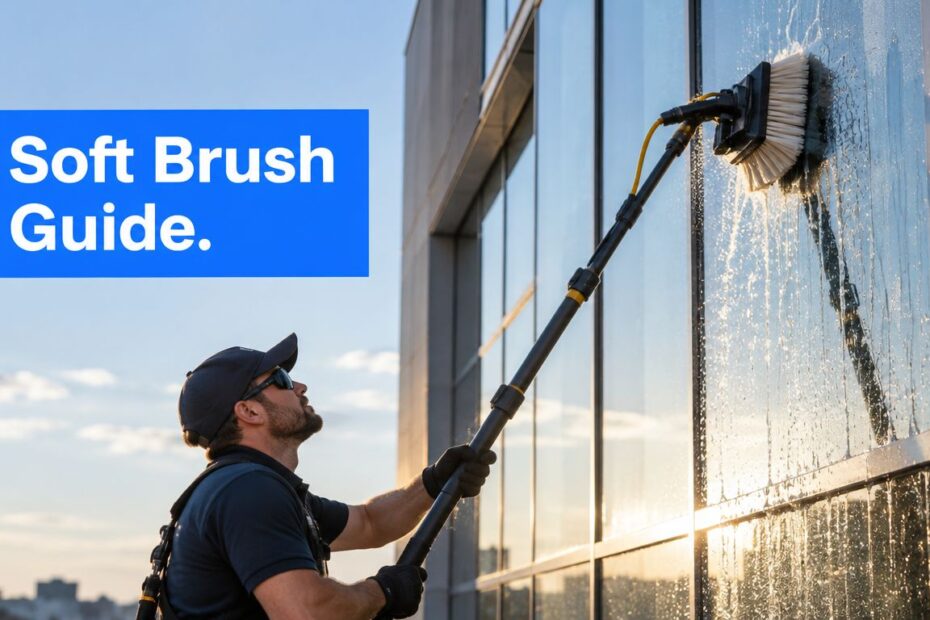
A soft-bristle water-fed brush head is the industry standard for professional glass cleaning because it removes soil without marring delicate surfaces. The modern system's history runs from a 3- to 6-foot kit introduced in 1955 to purified-water telescopic cleaning in 1997, and that development still shapes the brush heads crews use across Arizona, Colorado, and Nevada.
The popular advice is simple: choose the softest brush available. That's incomplete. Bristle material, flagged or unflagged tips, head movement, water flow, and maintenance determine whether a soft brush cleans efficiently or merely pushes dirt around. In Phoenix, Scottsdale, Tempe, Chandler, Paradise Valley, Glendale, and Las Vegas, desert dust and hard-water residue test those choices. In Denver, Boulder, Arvada, Westminster, Erie, Commerce City, Golden, and Flagstaff, cold weather, road soil, and changing glass conditions expose different weaknesses.
Understanding Water Fed Window Cleaning Pole Soft Brush Head Quality
Softness matters, but softer isn't automatically safer or more effective. A very soft brush can conform well to sensitive glass, yet it may struggle with heavy construction dust or greasy buildup. A slightly firmer head can lift stubborn soil faster when the surface can tolerate more agitation.
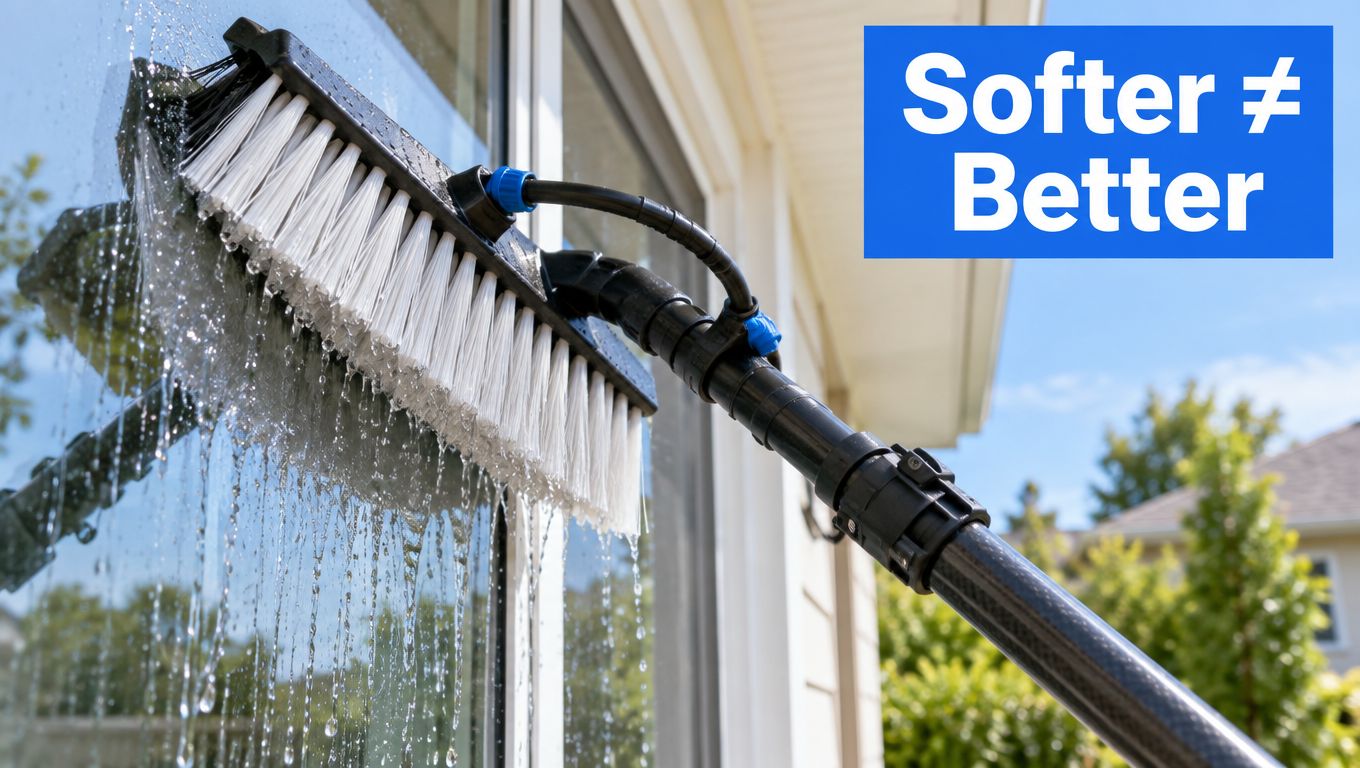
Professional quality starts with how the filaments are made and finished. Soft-bristle water-fed brush heads typically use nylon or polypropylene, and the critical variable is whether the filament tips are flagged, meaning split, or unflagged. Flagged tips create more contact points and distribute pressure across the surface, giving coated glass, leaded panes, and solar panels a more forgiving cleaning action. Unflagged tips have a sharper edge and can cut through heavier soil more aggressively, but excessive pole pressure increases abrasion risk. This guide to water-fed brush-head construction explains why tip geometry matters as much as the material itself.
What crews should inspect
A dependable head should maintain an even bristle field, deliver water consistently, and tolerate repeated work without developing hard, distorted tips. The brush also needs enough water retention and spring to suspend loosened soil while the rinse carries it away. A head that feels soft in the hand but sheds filaments, dries unevenly, or leaves dead zones around the jets won't produce reliable field results.
- Surface contact: Flagged nylon is generally the safer maintenance choice for delicate finishes.
- Soil handling: Firmer polypropylene can be useful against construction dust or greasy buildup.
- Durability: Heat, ultraviolet exposure, freezing conditions, and chemical contamination can change how filaments behave.
- Water delivery: Blocked or uneven jets can turn a gentle brush into a dry scrubbing tool.
The modern water-fed pole system traces back to 1997, when U.K. cleaner Craig Mawlam launched a telescopic pole integrated with water purification, creating the foundation for today's pure-water systems used from the ground. The documented history of water-fed window cleaning also records the earlier development of horse-hair and nylon brush formats.
For a broader look at system selection, compare this guide to the best water-fed pole window cleaning equipment. The practical standard is simple: choose the head for the glass and soil profile, not for softness alone.
Nylon and Polypropylene Bristle Materials Explained
Nylon and polypropylene both appear in professional soft brush heads, but they don't behave identically. Nylon is usually the more adaptable choice for routine glass maintenance, while polypropylene offers a firmer feel that can help with difficult soil. The correct decision depends on the work, not on a universal material ranking.
Nylon has a resilient, springy feel and can maintain useful flexibility through repeated contact. That matters on commercial routes where the same head sees frames, edges, coated panes, and ordinary dust throughout the day. A nylon head with flagged tips spreads contact across the glass and conforms well to slight irregularities. It's a good fit for maintenance cleaning where protecting the finish matters as much as removing the soil.
Polypropylene generally provides a slightly firmer working action. That can be helpful on storefronts with greasy deposits, renovation dust, or neglected frames, provided the operator controls pressure and confirms that the surface can tolerate the added bite. The material itself doesn't eliminate scratch risk. Pressure, contamination, dry contact, and tip condition still control the outcome.
How regional conditions change the choice
Phoenix, Scottsdale, Tempe, Chandler, Paradise Valley, Glendale, and Las Vegas crews regularly deal with suspended desert dust, mineral residue, intense sun, and rapid drying. A soft flagged nylon brush is useful for regular maintenance because it reduces aggressive contact while purified water carries loosened particles away. In this environment, technicians should pay close attention to drying soil on the brush. A dirty head can become more dangerous than its original bristle specification.
Denver, Boulder, Arvada, Westminster, Erie, Commerce City, and Golden present a different mix. Road grime, seasonal debris, construction residue, and cold-weather stiffness can make a medium-feeling polypropylene head productive on suitable commercial glass. Flagstaff's colder conditions also make storage and rinsing important. A brush that freezes with contaminated water in its jets won't deliver the controlled flow expected on the next job.
Practical rule: Match softness to surface sensitivity, then match firmness to soil load. Don't use a hard-working brush on delicate glass just because it finishes a dirty pane faster.
The material history supports this distinction. Early Tucker pole brushes used horse hair, deluxe versions used Chinese pig bristle, and semi-automatic brush-making equipment had shifted the industry toward nylon by the 1970s. This brief history of water-fed poles and brush materials shows how the trade moved from natural bristles toward standardized synthetic formats. That evolution didn't make every synthetic brush interchangeable. It gave technicians more control over stiffness, tip design, and job suitability.
Choosing the Right Brush Head Design and Compatibility
A soft brush is not automatically the right brush. The head must connect securely, deliver water across the bristle field, and suit the glass, frame layout, and working height. Check the attachment mechanism, water connection, head width, angle adjustment, and total system compatibility before ordering a replacement.
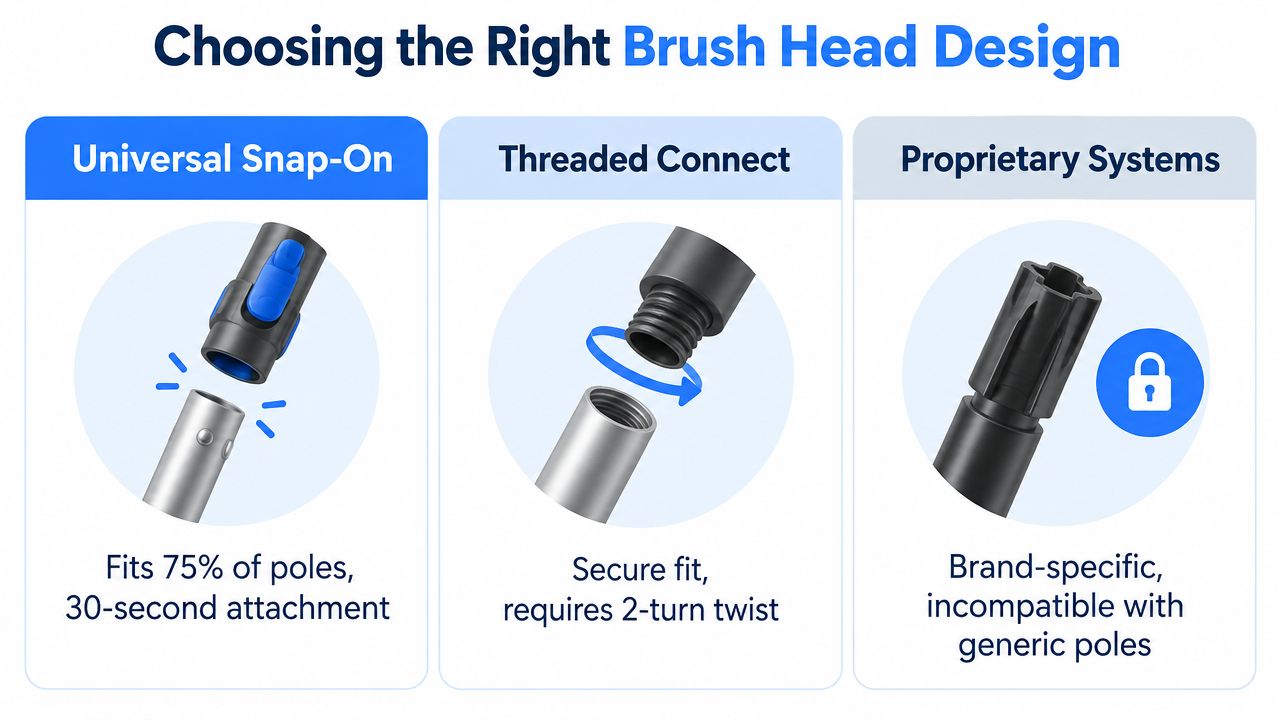
Start with the connector. Snap-on fittings suit crews that change heads often, while threaded connections can hold more securely when an extended pole works against angled frames. Proprietary systems may need brand-specific parts. Matching dimensions alone does not confirm that the hose port will align or that the head will lock safely.
Tip design also affects surface control. Flagged bristles have split, feathered ends that spread contact over the glass and feel more forgiving on sensitive surfaces. Unflagged tips are more direct and can move stubborn soil effectively, but they demand better pressure control. Choose hardness for the surface, not by default. Delicate or easily marked glazing may need a softer flagged head, while heavily soiled commercial glass can justify firmer unflagged filaments.
Regional conditions change that decision. In Phoenix and Las Vegas, heat can dry contamination onto the glass and make a softer head work harder. In Denver, cold can stiffen bristles and reduce flexibility around frames. Keep the head clean, inspect the tips, and avoid treating a desert soil load or a cold-weather job as a reason to use the hardest brush on every surface.
A rotating head keeps the bristle field against the glass while the operator changes the attack angle around corners, recessed frames, and uneven glazing. Mobility can matter more than extra width when access is awkward. The angle-adjustable design shown in this example demonstrates that point.
Width, movement, and working height
A wide head covers broad commercial glazing efficiently, but becomes awkward on divided residential panes and narrow frames. A compact head gives better control around muntins, corners, and restricted access points. Many crews use one primary head for open glass and a more maneuverable option for detailed work.
Review this selection guide for extension poles before pairing a pole with a head. Reach must work with stiffness, balance, and handling. Excessive flex or a twisted brush reduces contact and increases fatigue.
Use this field check before service:
- Dry-fit the connector. Confirm a firm lock without wobble.
- Test water delivery. Run purified water through every jet and check for even flow.
- Check the working angle. Move the head across a simulated frame and corner.
- Assess balance. A tip-heavy head slows high work.
- Inspect the bristle field. Reject bent, hardened, or contaminated filaments.
One professional-grade kit describes a brush rotating 180 degrees and a pole extending from 7 feet to 30 feet. The product documentation for that adjustable system shows how reach and head movement work together. A fixed head may suit a flat facade and struggle on a recessed balcony, so choose for the access conditions on your routes.
How Water Purity and Brush Maintenance Prevent Scratches
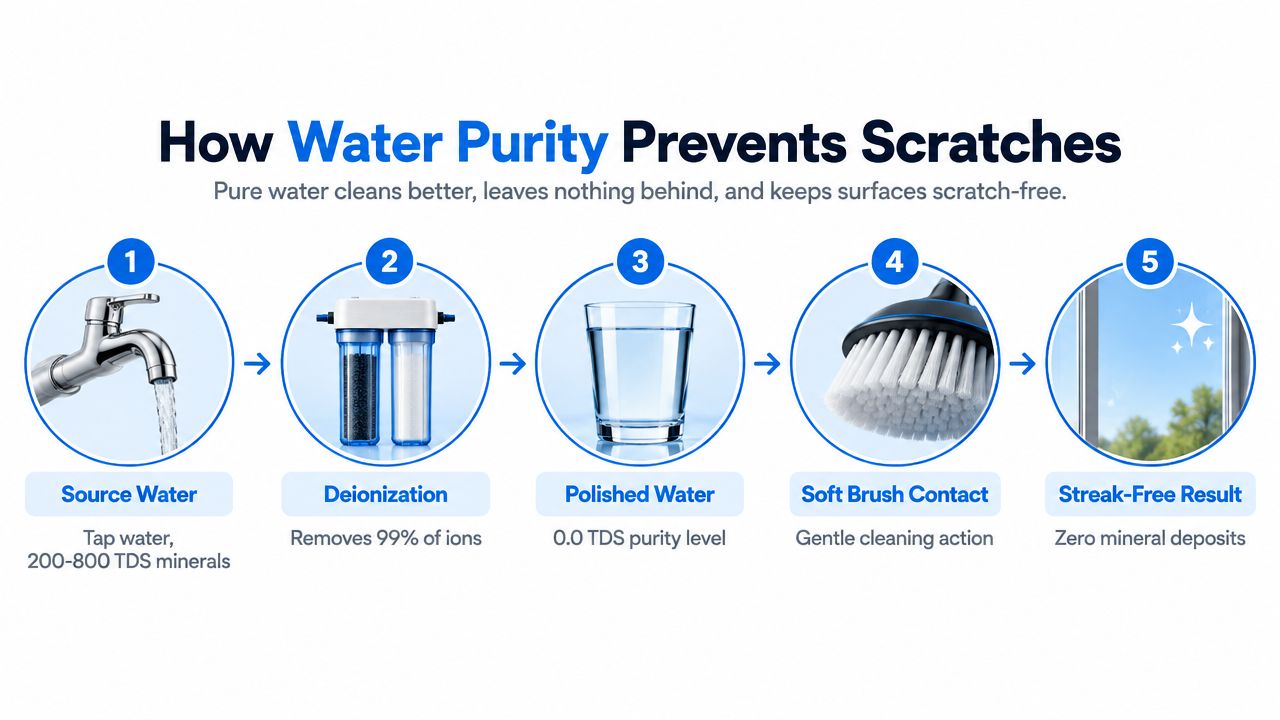
The brush gets blamed for many failures that begin with water quality or poor maintenance. Water-fed pole brushes deliver purified water through the head while the bristles agitate the glass. The water removes minerals that could leave deposits when it dries, then rinses loosened grime away. This explanation of pure-water brush operation describes the relationship between filtration, scrubbing, and rinsing.
A soft brush can still cause trouble if dirt has dried into the bristle field or if a blocked jet leaves part of the head working without enough water. When flow becomes uneven, the technician may unknowingly apply more pressure to compensate. That increases the chance of grinding loose particulate against the surface.
The maintenance routine that prevents avoidable failures
Inspect the jets before each route. Tiny blockages can reduce or redirect flow, and the symptoms often appear as dry patches, uneven rinsing, or streaking. Flush the brush, clear the correct components using the manufacturer's method, and don't push contamination deeper into the water channel.
Keep the bristle field clean. After dusty desert work, rinse thoroughly rather than allowing residue to dry between jobs. In mountain cold, protect the brush and hose from freezing. A frozen or partially frozen line can interrupt flow and encourage rough handling when the technician tries to force water through.
Check the water before replacing the brush
Streaking isn't always a brush problem. If purified water no longer has the required quality, mineral residue can remain after drying. Check the system with a TDS meter and replace exhausted resin when the reading indicates that purification is no longer adequate. This diagnostic step prevents crews from replacing a serviceable brush while leaving the underlying fault in the purification stage.
A clean brush with poor water is still a poor system. A good brush, clean jets, and verified pure water have to work together.
The water-fed pole setup guide is useful when checking the relationship between the pole, hose, brush, and purification equipment. The order of operations matters. Rinse contaminated glass with adequate flow, keep the brush moving instead of grinding in one spot, and inspect the head whenever the finish changes unexpectedly.
Professional Techniques for Effective Soft Brush Use
The brush should stay in contact with the glass, but the operator shouldn't lean the pole into the pane. Use the bristles to agitate soil while the water suspends and carries it away. The pressure should come from controlled movement, not from forcing the pole tip against the surface.
On a dusty Phoenix storefront, start with a thorough wetting pass. Work the brush across the glass and frame with overlapping movements, giving the water time to loosen the film. Follow with a deliberate rinse from the top down, watching for areas where the flow breaks or where dust remains around the frame.
A residential pane in Boulder may need a different rhythm after road grime or seasonal debris has accumulated. Use a softer flagged head on sensitive or coated glass, keep the angle stable, and make additional controlled passes rather than switching immediately to force. On heavier construction residue, a slightly firmer polypropylene head may be appropriate after confirming that the substrate can tolerate it.
Handling technique by surface condition
- Routine maintenance: Use soft flagged nylon, moderate movement, and a complete rinse.
- Heavy soil: Consider a firmer polypropylene option where the glass and finish allow it.
- Frames and corners: Adjust the head angle so the bristle field reaches the recess without levering the pole.
- Solar panels or delicate coatings: Favor softer contact and avoid excessive pressure.
- Cold conditions: Watch for restricted flow and stiff equipment before increasing force.
Soft brushes are used on delicate glass because they protect sensitive surfaces while still cleaning thoroughly, which is why they're common in professional pure-water setups. Kärcher's soft-brush accessory documentation supports that application, but the operator still controls the result.
For crews refining their movement, this guide to using a water-fed pole provides a useful reference for setup and handling. The basic discipline is consistent: keep water flowing, maintain contact, avoid unnecessary pressure, and inspect the rinse before moving on.
On multi-story work, don't chase a narrow spot with an awkward pole angle. Reposition your feet, adjust the head, and let the water do the carrying. That approach is safer for the glass and easier on the technician.
When to Attempt DIY and When to Hire a Professional
DIY water-fed pole cleaning suits accessible exterior glass when the operator understands water purity, brush maintenance, and safe pole control. The decision changes quickly around high windows, roof edges, fragile access points, difficult landscaping, or equipment that the homeowner has not used before.
A ground-based pole reduces ladder use, but it does not remove every hazard. Long poles can contact overhead lines, catch wind, or become difficult to control near architectural features. Ladders, boom lifts, scaffolding, and rope descent systems require suitable training, planning, and equipment. Anyone without that training should not improvise an access system for window cleaning.
Compare the practical options
| Situation | DIY water-fed pole | Professional service |
|---|---|---|
| Accessible exterior glass | Possible with compatible equipment and verified pure water | Efficient and consistent |
| High or angled glazing | Control and reach may be difficult | Water-fed poles and other access tools can be selected for the building |
| Interior glass | Usually requires careful hand tools and access planning | Crews can combine professional squeegees with exterior pure-water work |
| Heavy soil or mineral contamination | May require additional diagnosis and specialized methods | Technicians can assess the glass, water, and access together |
| Multi-story commercial work | Equipment and safety demands increase quickly | Lifts, scaffolding, rope descent systems, and trained crews may be appropriate |
Adjustable heads and extended reach improve ground-based access, but they still require competent handling on angled or high glazing. Keep the pole controlled, monitor wind, and reposition rather than forcing the brush into an awkward angle.
Regional conditions affect that decision. Phoenix, Scottsdale, Tempe, Chandler, Paradise Valley, Glendale, Las Vegas, and Laughlin bring intense heat, dust, and mineral deposits. Denver, Boulder, Arvada, Westminster, Erie, Commerce City, and Golden add cold-weather handling concerns, including restricted water flow and stiffer equipment. Flagstaff can combine cold with difficult access. On large or exposed buildings, a professional crew can match the brush, pole, water system, and access method to the site instead of treating every pane the same way.
For homes and facilities across these Arizona, Colorado, and Nevada service areas, Professional Window Cleaning uses pure-water poles, squeegees, ladders, boom lifts, scaffolding, and rope descent systems according to the building. The company handles residential, commercial, mid-rise, and high-rise properties, so the access plan can follow the glass and site conditions.
Professional Window Cleaning can assess glass, water-fed pole access, and brush-head requirements for residential or commercial work. Visit Professional Window Cleaning to request a quote and schedule a trained crew for safe, streak-free service in Arizona, Colorado, or Nevada.