



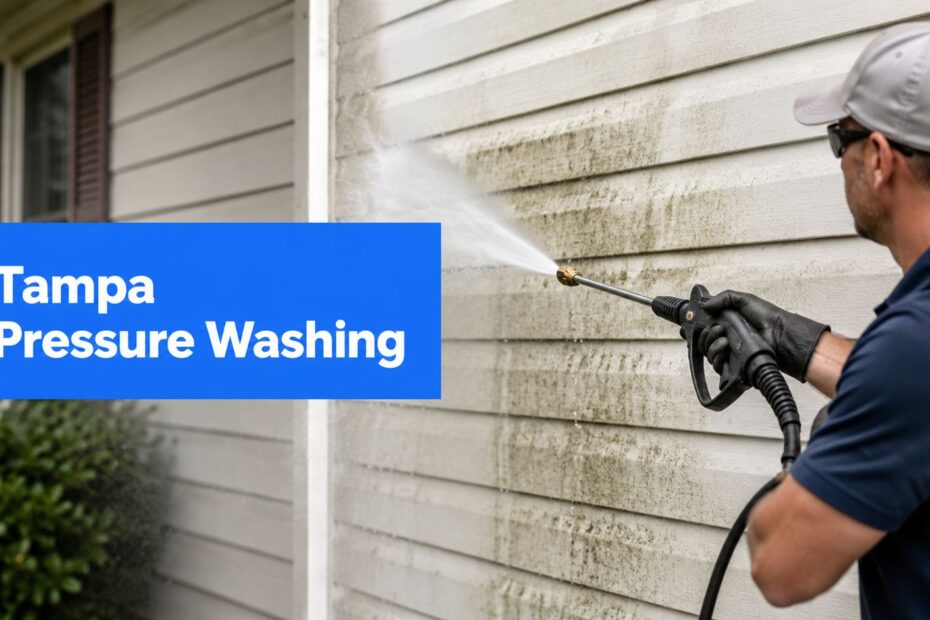
Most advice about pressure washing services in Tampa starts with a simple rule: wash the exterior whenever it looks dirty. That rule is no longer reliable. Tampa's 2026 drought restrictions prohibit annual pressure washing for aesthetic purposes, while allowing pressure washing for painting or sealing preparation and for necessary maintenance, including mold, mildew, or hazardous buildup that mechanical cleaning alone can't remove. The practical question isn't just how clean a property can look. It's whether the work is necessary, technically appropriate, and compliant.
That changes how owners, HOA boards, and property managers should evaluate exterior maintenance. A professional crew needs to identify the surface, document the reason for cleaning, select a method that won't drive moisture into the substrate, and control wastewater before it reaches a storm drain. The same discipline matters for window cleaning, façade maintenance, and other access-intensive work across commercial and residential properties.
Understanding Tampa's Pressure Washing Regulations
Pressure washing isn't automatically allowed just because a driveway, wall, or façade looks stained. The City of Tampa's watering days and hours guidance draws a practical line between cosmetic washing and cleaning tied to maintenance or preparation. Annual pressure washing for appearance is prohibited under the current restrictions, while work needed to remove mold, mildew, hazardous buildup, or prepare a surface for painting or sealing remains allowed.
That distinction affects the scope of work. A request such as “make the sidewalk look newer” may raise a different compliance question from “remove a slippery biological coating that creates a safety concern.” Property owners should describe the condition in writing, photograph the affected areas, and preserve the contractor's proposal, method notes, and completion record. A property manager may also need records showing why mechanical cleaning alone wasn't sufficient and why the selected treatment was necessary.
Documentation that supports a legitimate service
A useful job file can include:
- Condition photographs: Show mold, mildew, algae, staining, slippery buildup, or coating failure before work begins.
- A written purpose: Identify whether the service supports mold removal, hazard reduction, paint preparation, sealing preparation, or another maintenance need.
- Surface notes: Record whether the area is stucco, concrete, siding, tile, asphalt, or another material.
- Wastewater controls: Note how the crew will prevent treated runoff from entering storm drains.
- Completion photographs: Capture the result without presenting the work as routine cosmetic washing.
HOAs should apply the same reasoning to common areas. A board can still address safety, moisture-related growth, and preparation for repairs, but it shouldn't describe prohibited aesthetic washing as ordinary annual upkeep. If exterior growth appears connected to broader moisture or pest concerns, owners may also benefit from the Pestless Inc. Tampa pest help resource while separating pest treatment from exterior cleaning.
Practical rule: In Tampa, the reason for cleaning belongs in the work order, not only in the contractor's memory.
Soft Wash vs Pressure Wash Which Method Your Property Needs
Tampa's humidity and rainfall encourage biological growth on porous surfaces, but stronger pressure isn't automatically a better answer. Soft washing uses cleaning chemistry and controlled rinsing to treat organic contamination with less force. Traditional pressure washing relies more heavily on water impact, making it useful for durable flatwork but risky on materials that can absorb water or lose their finish.
Concrete flatwork can generally tolerate roughly 2,500 to 4,000 PSI when it's pre-treated and cleaned with a surface attachment, according to trade guidance on pressure washing methods. Stucco and vinyl siding need substantially lower pressure or a soft-wash approach. High pressure can force water and solution behind siding panels, into stucco pores, or beneath vulnerable finishes. That may leave hidden moisture and worsen deterioration rather than solving the visible stain.
Match the tool to the substrate
| Surface | More suitable approach | Main concern |
|---|---|---|
| Concrete driveway or walkway | Pre-treatment, controlled pressure, and a surface cleaner | Wand marks, splashback, and uncontrolled runoff |
| Stucco | Soft wash or very low-pressure rinse | Water intrusion, pitting, and trapped moisture |
| Vinyl siding | Low-pressure soft wash | Water behind panels and damaged seals |
| Roof tile or shingles | Roof-specific soft washing | Broken tiles, granule loss, and leaks |
| Windows and glass | Dedicated window-cleaning tools and controlled rinsing | Scratched glass, residue, and failed seals |
Windows deserve separate treatment. Glass, frames, screens, and seals can be damaged by careless pressure, especially when water is directed into weep holes or behind trim. A useful explanation of the boundary appears in guidance on whether windows should be pressure washed, but the operational answer is straightforward: use pressure washing for appropriate exterior surfaces and use professional window-cleaning methods for glass.
The right method also depends on contamination. Concrete with embedded grime may need pre-treatment and surface cleaning. Stucco with organic growth may need chemistry, dwell time, and a gentle rinse. More force can make a fast-looking job fail earlier by driving contaminants deeper into the material.
Tampa's Market Why Exterior Cleaning Demand Continues Growing
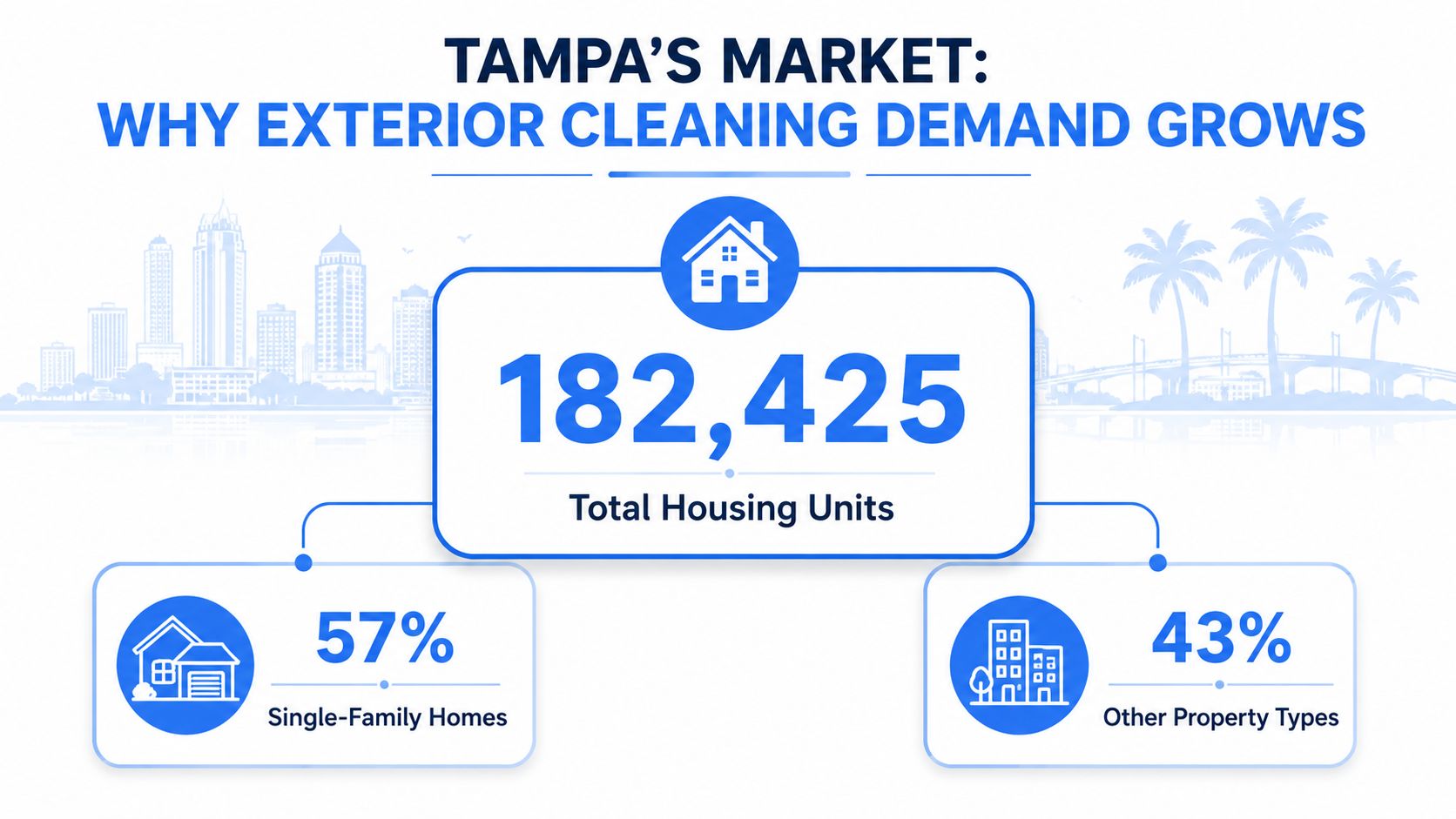
Tampa's property base gives maintenance companies a broad audience, but the mix of buildings matters more than the headline alone. The city has about 182,425 housing units, including 166,278 occupied units and 16,147 vacant units, with an 8.9% vacancy rate, according to Tampa housing market data. Single-family homes account for 104,050 units, or 57.0% of the total, and the median year built is 1985. Many properties therefore have decades of exposure to heat, humidity, rain, and surface buildup.
That age profile doesn't mean every home needs routine washing on a fixed schedule. It does mean owners should expect different maintenance concerns from newer construction. Older stucco, concrete, and siding may require careful inspection before cleaning, particularly where cracks, failed caulking, chalking paint, or loose finishes can turn a washing job into a water-intrusion problem.
Development creates several types of work
Tampa's demand also extends beyond detached homes. The Tampa Bay area has 329,151 existing multifamily units, with 33,214 proposed or planned units and 17,458 under construction, while 7,458 units were completed in 2023, based on regional planning data. At the city level, Tampa has added approximately 20,000 housing units per decade since 2000, supporting ongoing turnover and construction-related cleaning.
That activity creates different service requirements:
- Post-construction cleanup: Remove construction residue from appropriate exterior surfaces before occupancy.
- Multifamily turnover: Refresh breezeways, walkways, entries, and shared areas when maintenance needs justify the work.
- Commercial upkeep: Address safety-related buildup and prepare surfaces for coatings or repairs.
- Window maintenance: Clean storefront glass, common-area glazing, and multi-story façades with suitable access equipment.
For owners, market depth means availability doesn't eliminate the need for screening. A busy contractor may still use the wrong pressure, ignore runoff, or quote work without examining the surface. The property type should shape the specification, not just the size of the invoice.

How to Vet and Compare Professional Contractors
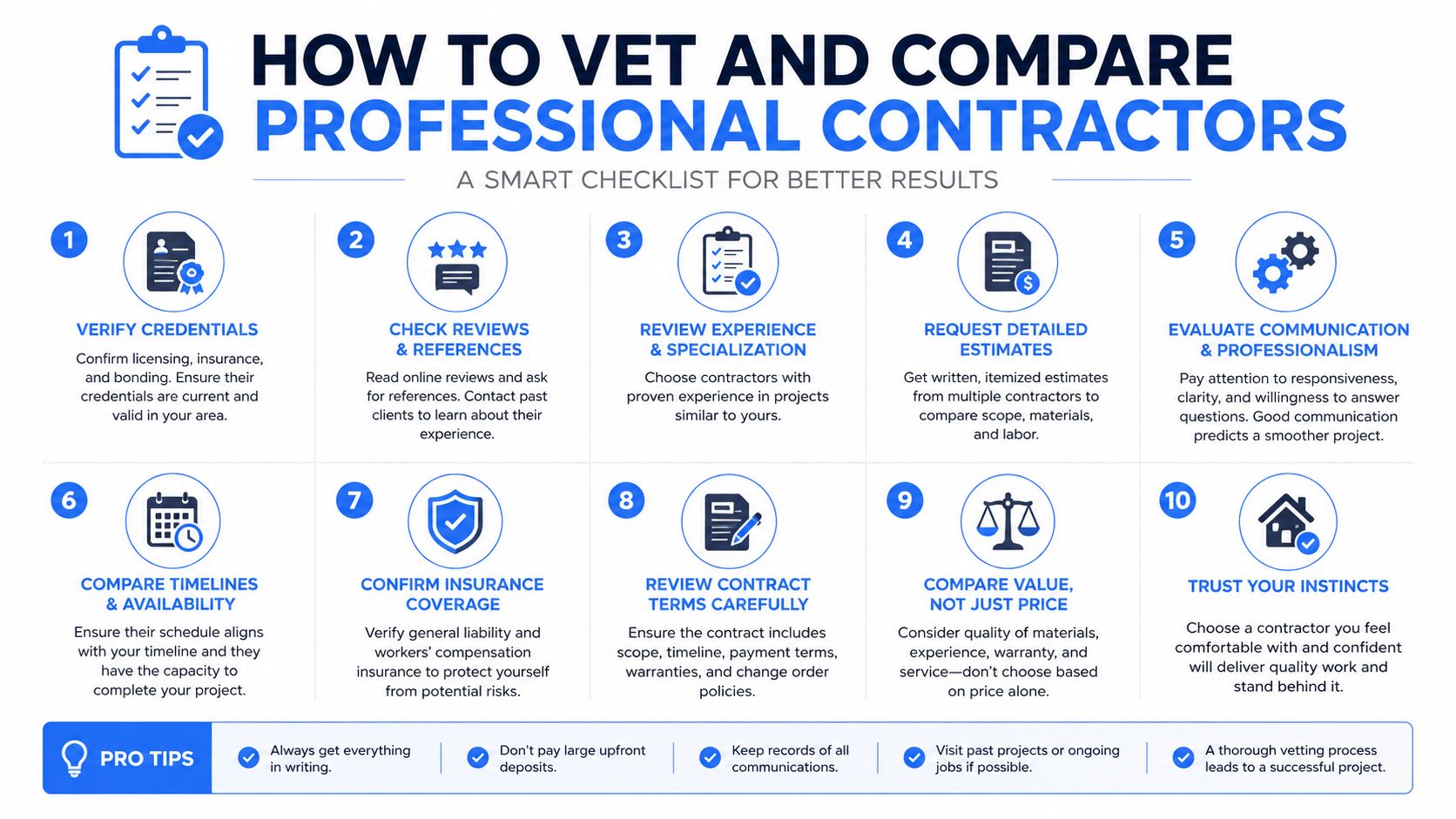
A low quote tells you very little about whether a contractor can protect a Tampa property. Compare the method, insurance, access plan, and wastewater controls before comparing price. A legitimate proposal should identify the surfaces being cleaned, the expected result, the cleaning agents involved, and the steps used to keep runoff out of stormwater infrastructure.
Florida county BMP guidance treats wastewater containing detergents, surfactants, oils, or sodium hypochlorite as an illicit discharge if it enters a storm drain. The Florida HOA pressure-washing wastewater guidance explains why containment, recovery, or sanitary-sewer disposal planning matters, particularly for commercial sites and shared communities.
Questions worth asking before signing
- What exactly makes this cleaning necessary? Ask the contractor to describe the buildup, hazard, repair preparation, or other maintenance purpose in the written quote.
- What method will you use on each surface? “Pressure washing” isn't enough. The proposal should distinguish soft washing, controlled pressure, surface cleaning, and hand or window-cleaning work.
- How will you manage wastewater? Ask where water will flow, how drains will be protected, and whether recovery equipment or sanitary-sewer disposal is required.
- Can you provide current insurance documentation? Confirm coverage for property damage and worker injuries, rather than relying on a verbal assurance.
- Who handles work at height? Ladders, boom lifts, scaffolding, and rope descent systems each require different planning and competent operation.
- What happens if the surface is already failing? A responsible crew should pause and explain risks instead of blasting loose paint, cracked stucco, or fragile sealants.
Commercial and high-access work requires another layer of scrutiny. OSHA's general-industry rope descent rule is codified at 29 CFR 1910.27, and OSHA describes a typical system as including a roof anchorage, support rope, descent device, carabiners or shackles, and a chair or seat board in its rope descent system interpretation. Before use, the building owner must provide written notice that each anchorage has been identified, tested, certified, and maintained to support at least 5,000 pounds in any direction for each attached employee. The federal regulation text also calls for annual inspection by a qualified person and certification at least every 10 years.
For broader disaster or contamination concerns, property managers may find Eagle Restoration cleanup advice useful as a separate planning resource. It shouldn't replace a site-specific cleaning proposal, but it can help clarify when ordinary washing is no longer the right category of service. For owners comparing providers outside Tampa, the same evaluation principles apply to pressure washing companies in Orlando.
Surface-Specific Maintenance Schedules and Best Practices
A fixed calendar can be convenient, but Tampa properties respond to exposure, material, shade, drainage, and biological growth. More frequent washing isn't always safer or more compliant. The better approach is to inspect the surface and connect the work to a legitimate maintenance need.
Roofs require particular restraint. Tile and shingle systems can suffer damage from traditional high-pressure cleaning, so Tampa-area guidance commonly favors soft washing and often discusses roof-cleaning cycles of 2 to 3 years. House washing is commonly discussed on a 1 to 2 year cycle, but those intervals are starting points, not automatic authorization under drought restrictions. The Tampa pressure-washing FAQ guidance reinforces the importance of surface type and method selection.
Use the condition, not the calendar
- Roof surfaces: Prioritize biological growth, warranty concerns, and preparation for repair. Don't use high pressure just because it removes visible streaks quickly.
- Walkways and pool surrounds: Address slippery buildup and pedestrian safety. Concrete may accept controlled pressure, but the crew still needs runoff controls.
- Stucco and siding: Inspect for cracks, failed joints, and loose coatings before using any water-based method.
- Painted or sealed surfaces: Clean only when needed for preparation or maintenance, and confirm the coating manufacturer's requirements.
- Windows: Treat glass, frames, and screens as a separate trade task. Water-fed poles, squeegees, ladders, lifts, scaffolding, or rope descent may be appropriate depending on access and building design.
Rainfall patterns and shade can accelerate regrowth in protected areas, while exposed surfaces may weather differently. HOA rules and insurance requirements can also shift the priority from appearance to slip prevention, repair preparation, or preserving a warranty. A written inspection record makes that reasoning easier to explain.
The best maintenance schedule is the one that answers why the surface needs cleaning today and why the chosen method won't create a larger problem tomorrow.
Why Professional Services Outperform DIY Approaches
DIY pressure washing looks inexpensive because the machine rental is obvious, while substrate damage, runoff handling, and access risks appear later. In Tampa, a visually clean result may still create a compliance problem if wastewater reaches a storm drain or cleaning occurs during restricted conditions. Professional work starts with method selection and wastewater planning, not just higher pressure.
A trained crew separates tasks that need water impact from those better handled with chemistry, hand tools, or window equipment. It also plans for ladders, boom lifts, scaffolding, and rope descent systems instead of improvising from unstable surfaces. For commercial or high-rise properties, OSHA requirements and building anchorage documentation make training and preparation part of the service.
Equipment choice matters, but equipment alone does not create a safe job. Property owners comparing machines can review this commercial pressure washer equipment guide, then ask whether the contractor has the controls, recovery tools, and access plan the site requires.
Where DIY attempts commonly fail
- Surface damage: Excessive pressure can pit concrete, scar finishes, force water behind siding, or damage roof materials.
- Runoff violations: Detergent, oil, surfactant, or sodium hypochlorite wastewater must be kept out of storm drains and managed under local requirements.
- Injury exposure: Roofs, ladders, lifts, and wet walking surfaces create hazards homeowners may underestimate.
- Incomplete cleaning: A quick rinse can remove loose dirt while leaving organic contamination in porous materials.
- Window damage: Glass and seals need different tools from concrete and siding. Pressure is a poor substitute for controlled window-cleaning technique.
Professional Window Cleaning offers residential and commercial pressure washing for decks, fences, siding, and concrete, while its window crews use water-fed poles, squeegees, ladders, lifts, scaffolding, and rope descent systems. Its pure-water process targets dissolved solids well below 50 ppm, ideally close to zero, helping windows dry without spotting, as described in pure-water window-cleaning guidance. The company serves Arizona, Colorado, and Nevada, so Tampa owners should confirm local availability before including it in a vendor comparison.
Preparing Your Property and What to Expect on Service Day
Preparation starts with access. Move outdoor furniture, toys, planters, and loose decorations away from the work zone. Close windows and doors, secure pets indoors, identify fragile landscaping, and tell the crew about exterior outlets, irrigation controls, recently painted areas, or known leaks.
A professional arrival should begin with a walkthrough, not an immediate blast from the machine. The crew should confirm the scope, inspect substrates, identify vulnerable areas, select pressure or soft-wash treatment by surface, and review how wastewater will be contained or recovered. If the work is justified by mold, mildew, hazardous buildup, or coating preparation, keep the written service record with the before-and-after photos.
The service timeline depends on building size, access, surface condition, and whether windows, lifts, scaffolding, or recovery equipment are involved. Don't judge quality by speed alone. A careful crew may spend substantial time protecting landscaping, controlling overspray, managing drains, rinsing thoroughly, and checking for missed areas.
At completion, request the final invoice, method notes, photographs if promised, and any documentation relevant to HOA or property-management records. If windows are included, confirm that glass, frames, screens, and sills were handled as a separate scope from pressure-washed surfaces.
Professional Window Cleaning brings specialized window-cleaning tools, access equipment, and pressure-washing capability for residential and commercial properties in Arizona, Colorado, and Nevada. Visit Professional Window Cleaning to request service information, schedule a quote, and discuss a safe scope for hard-to-reach glass and exterior surfaces.