



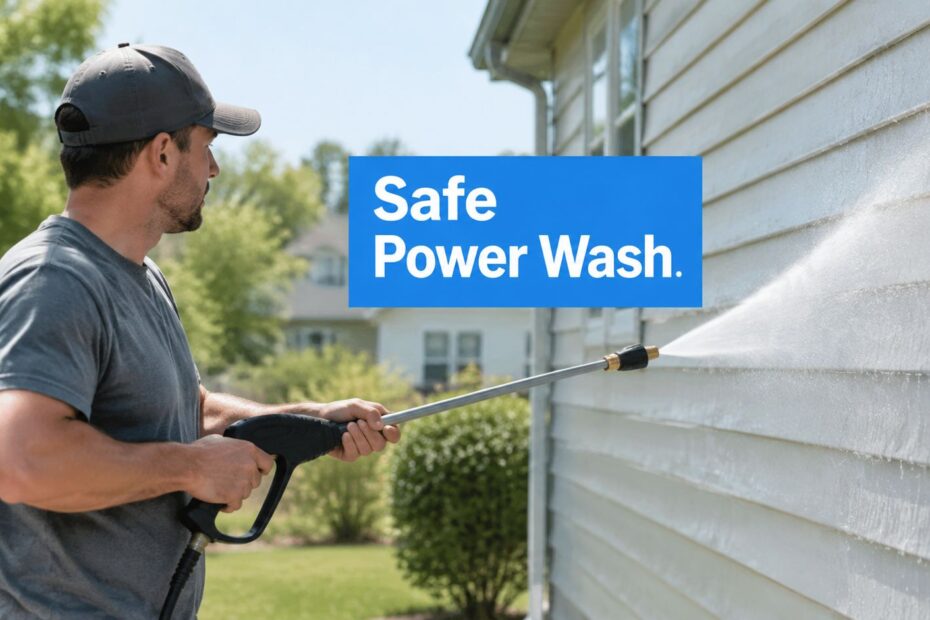
You've probably noticed it while pulling into the driveway. Dust has settled into the siding, mineral deposits have dulled the glass, and shaded areas carry a film of algae or mildew that makes the whole property look older than it is. The natural response is to rent a pressure washer and blast everything clean. That approach can work on the right hard surface, but house exterior power washing becomes risky when one pressure setting is used across siding, stucco, painted wood, roofing, and windows.
A professional exterior cleaning plan starts with the material, the contamination, and the safest method for reaching each area. For many homes, that means soft washing for delicate surfaces and professional window cleaning for the glass, rather than treating the entire exterior like a concrete driveway.
The Enduring Appeal of a Clean Home Exterior
A clean exterior does more than improve curb appeal. It helps homeowners see damaged paint, loose siding, blocked drainage paths, and deteriorating sealants before those issues become harder to address. Dirt and organic growth can hide the condition of the surface underneath, so cleaning should be approached as part of responsible property maintenance, not only as a cosmetic project.
The method has a long history. Modern pressure washing traces back to 1926, when Frank W. Ofeldt II is widely credited with inventing the first steam pressure washer in the United States after observing that pressurized steam could remove grease from a garage floor. You can find the historical background in this history of pressure washing. Later equipment developments, including Alfred Kärcher's early hot-water high-pressure cleaner prototype in Germany in 1950, helped shape the systems contractors use today.
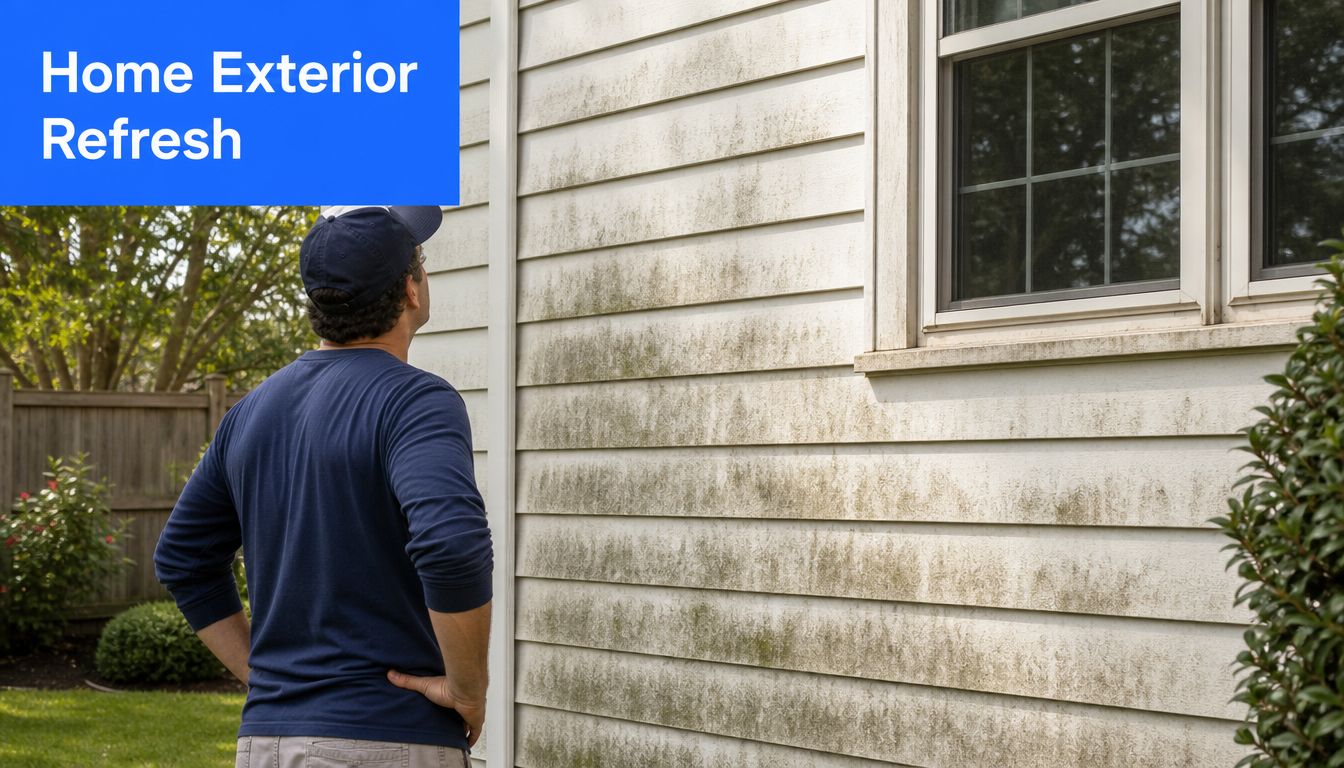
The promise is straightforward: loosen embedded grime, remove biological growth, brighten the exterior, and leave the property looking cared for. The execution is more nuanced. A nozzle that safely cleans concrete may damage painted wood, and a stream aimed at a window frame can send water into places the homeowner can't inspect.
Start with an exterior assessment
Before choosing equipment, identify the materials and their condition. Look for chalking paint, cracked caulk, loose siding, deteriorated wood, fragile screens, and areas where water could enter behind cladding. A trained technician also considers nearby landscaping, electrical fixtures, exterior lighting, and the access route to upper floors.
The right question isn't, “How much pressure can this machine produce?” It's, “What combination of pressure, detergent, distance, spray pattern, and access will clean this surface without creating a new problem?”
Practical rule: Clean the material you have, not the surface you wish you had.
Power Washing Versus Soft Washing Methods
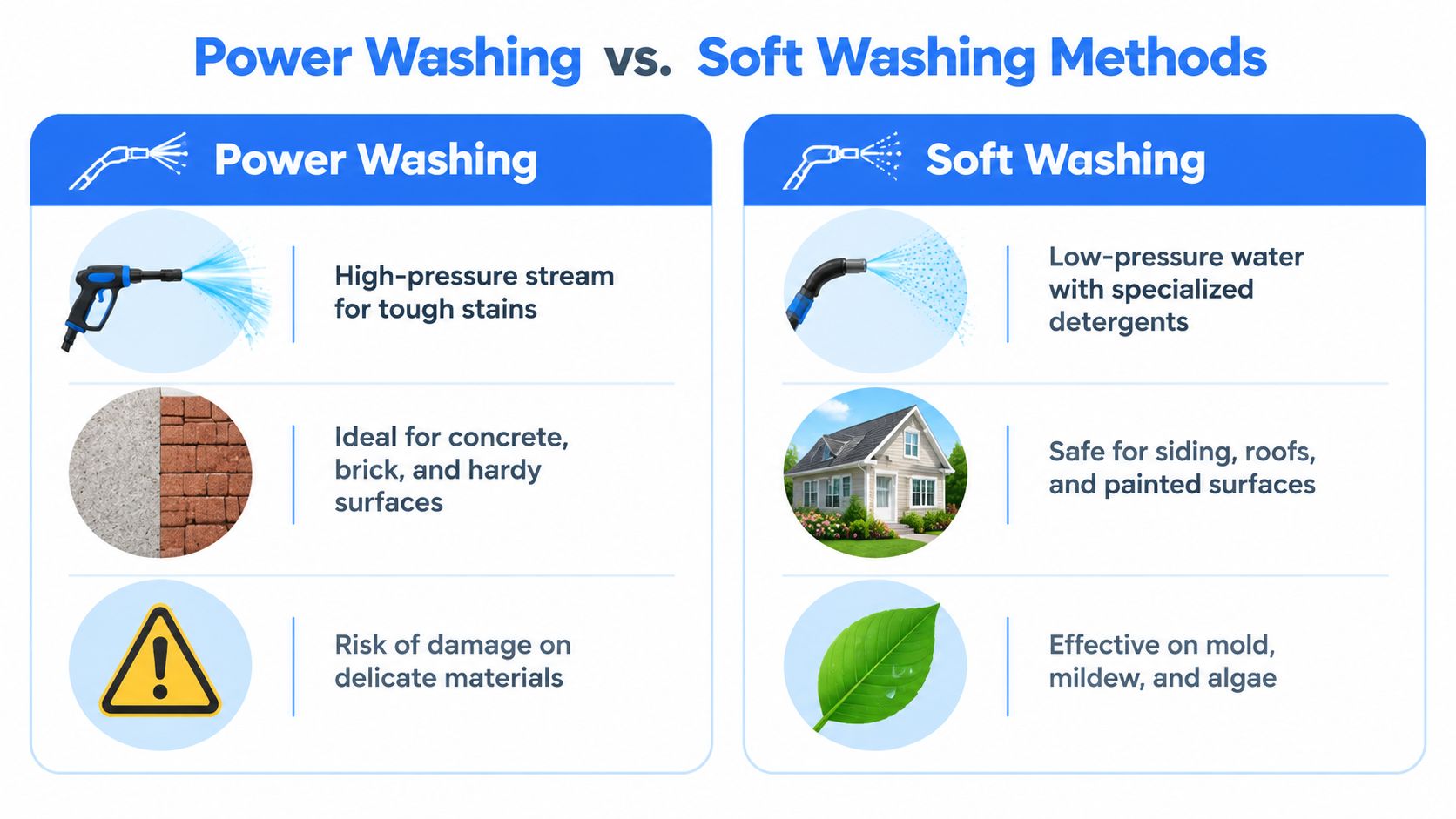
Traditional power washing uses a concentrated, high-pressure water stream to break contaminants away from a surface. That force has a legitimate place. Concrete, some brick, and other hardy materials can benefit from pressure that removes heavy soil, tire marks, and buildup without harming the substrate.
Soft washing takes a different route. It applies a surface-appropriate cleaning solution at lower pressure, gives the solution time to work, and then rinses the loosened contamination away. The difference is similar to using a sandblaster versus applying a detergent soak. One relies primarily on impact. The other relies on chemistry, dwell time, and controlled rinsing.
Match pressure to the substrate
Independent house-washing guidance places soft-grain wood, painted wood, and aluminum siding in a typical range of 1,200 to 1,500 PSI, while sound vinyl siding may tolerate roughly 2,500 to 3,000 PSI when the operator uses a wide fan pattern. These operating ranges are outlined in this house-washing pressure guide.
Those figures aren't a universal recipe. Surface age, damage, paint condition, nozzle angle, operator distance, and water flow all affect the result. A professional tests an inconspicuous area rather than assuming that a machine's maximum rating is appropriate.
| Method | Best suited to | Main limitation |
|---|---|---|
| High-pressure power washing | Concrete and other hardy surfaces | Can damage siding, paint, wood, stucco, and roofing |
| Low-pressure soft washing | Siding, painted surfaces, and delicate assemblies | Requires correct detergent selection, application, and dwell time |
| Professional window cleaning | Exterior glass, frames, and hard-to-reach windows | Requires specialized tools and access planning |
Windows deserve separate treatment. Glass, seals, screens, frames, and surrounding trim all respond differently to water pressure. A window cleaning crew may use squeegees, pure water systems, water-fed poles, ladders, boom lifts, scaffolding, or rope descent systems, depending on the building and access requirements. For a broader example of exterior service planning, review these pressure washing services.
Soft washing doesn't mean weak cleaning. It means using the cleaning agent and controlled rinse to remove the contamination without forcing water into the building envelope.
The Hidden Risks of DIY Power Washing
The most expensive pressure-washing mistakes often look successful at first. The siding appears brighter, the paint looks clean, and the homeowner assumes the job is finished. Later, trapped moisture, damaged coatings, or failed window seals reveal what the stream did beneath the surface.
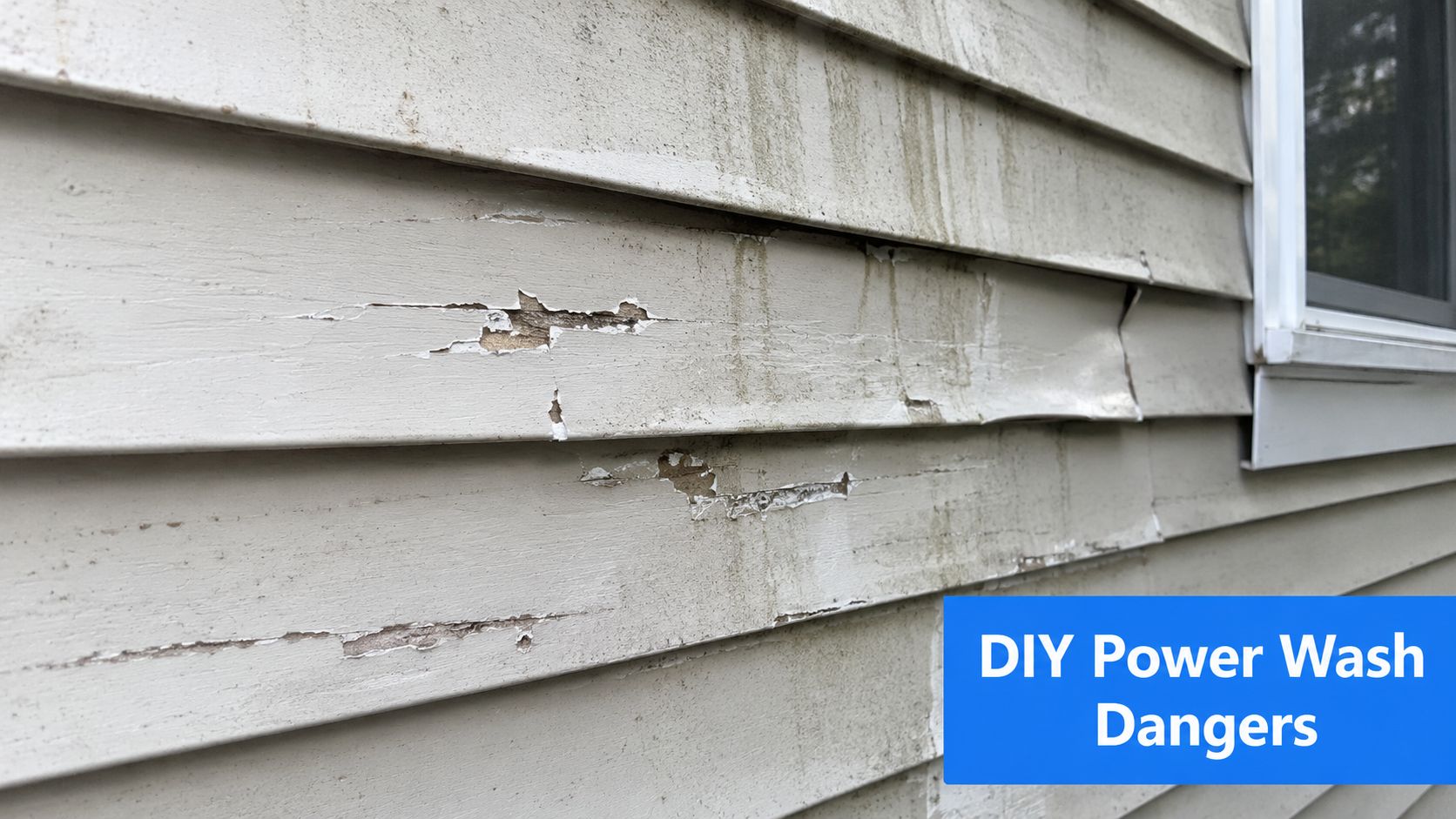
High pressure can crack vinyl, dent aluminum, strip paint, force water behind cladding, and create moisture problems that aren't immediately visible. Guidance on pressure-washing safety for home exteriors identifies siding, stucco, and roofing as especially important risk areas because homeowners often assume these surfaces are routine.
Damage can begin at the edges
Water driven upward beneath siding laps can reach sheathing and insulation. A narrow nozzle held too close can scar wood fibers, leave paint edges exposed, or create uneven striping that becomes more noticeable as the surface dries. Aluminum may show dents or disturbed oxidation, while stucco can lose its finish or develop visible surface damage.
Windows create another failure point. A direct stream can stress seals, disturb glazing compounds, damage screens, or push water around frames. Double-pane glass with a failed seal may later develop fogging, turning a cleaning project into a glass replacement problem. Spraying exterior windows with the same force used on a driveway isn't a shortcut. It's a poor match between tool and assembly.
A professional also has to control runoff and overspray. Cleaning solutions can affect plants, exterior furnishings, electrical components, and neighboring surfaces. Ladders introduce another hazard when the operator is trying to control a forceful hose at height.
Watch the difference between aggressive force and controlled technique in this exterior cleaning demonstration.
If water enters through a window or door, the problem may not appear until the interior trim discolors or the insulation stays damp. For homeowners considering indoor work, pressure washing inside a house requires an even more controlled approach because interior finishes and electrical systems have little tolerance for uncontrolled water.
The visible dirt may disappear in minutes. The hidden repair can take much longer to diagnose.
Hiring a Professional Versus Doing It Yourself
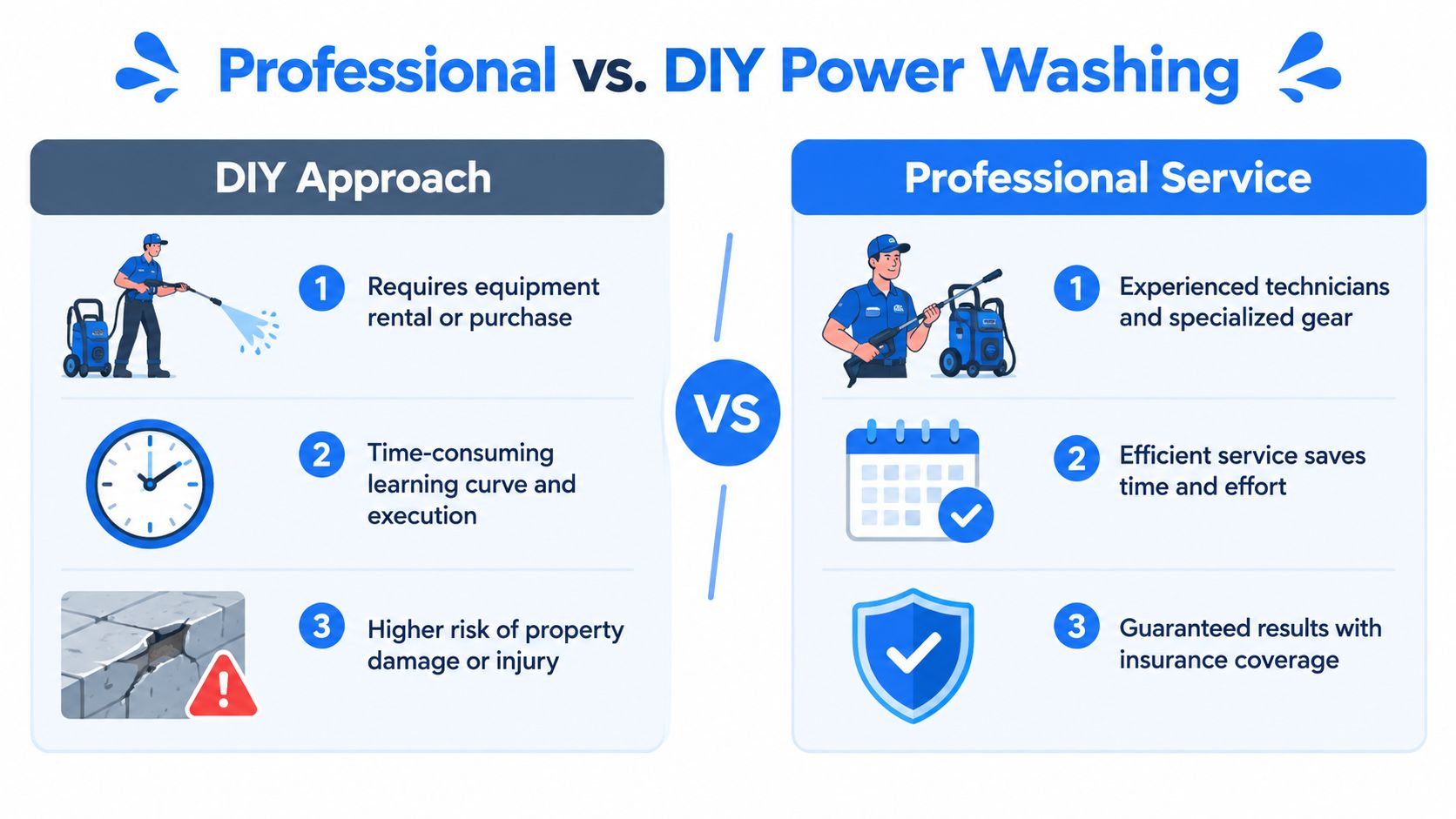
DIY looks economical when the homeowner already owns a hose and sees only a dirty wall. In practice, the job may require equipment, detergents, protective materials, access tools, surface testing, and enough time to learn how each material reacts. The homeowner also carries the risk if a stream damages paint, siding, glass, landscaping, or personal safety.
A professional service brings a different value calculation. Technicians can select soft washing for delicate areas, reserve higher pressure for appropriate hard surfaces, and use tools such as squeegees, pure water systems, water-fed poles, ladders, boom lifts, scaffolding, and rope descent systems for windows and façades at height.
| Decision factor | DIY approach | Professional approach |
|---|---|---|
| Equipment | Requires rental or purchase and setup | Crew arrives with specialized equipment |
| Surface selection | Homeowner must identify safe pressure and detergent | Technician evaluates material and condition |
| Access | Ladders and extension equipment create added exposure | Crew plans access with appropriate equipment |
| Results | Can be uneven if dwell time or rinsing is inconsistent | Process is organized around treatment and inspection |
| Risk | Property damage and injury remain the homeowner's responsibility | Insurance and documented safety practices add protection |
Industry reporting places typical residential pricing at $0.15 to $0.30 per square foot, or about $300 to $500 for a 1,500-square-foot home, according to this 2026 pressure-washing industry report. The exact quote depends on material, access, contamination, and the surfaces included, so a low headline price doesn't necessarily represent the safest or most complete service.
Evaluate the contractor before scheduling
Ask what method the company will use on each surface, how it protects windows and landscaping, and whether the quote includes a final inspection. Confirm that the crew has experience with glass at height if window cleaning is part of the project.
Insurance matters, but homeowners should verify rather than assume. This resource on how to check contractor bond and insurance offers a useful framework for reviewing contractor credentials before work begins.
The right professional doesn't promise that maximum pressure will solve every problem. They explain why a lower-pressure treatment, controlled rinse, or separate window-cleaning process is the better choice.
Exterior Cleaning Needs in Arizona Colorado and Nevada
Southwestern homes face a distinct combination of dry dust, intense sun, mineral-rich water, and dramatic seasonal conditions. In Phoenix, Scottsdale, Tempe, Chandler, Paradise Valley, and Glendale, airborne dust can settle into textured siding, frames, tracks, and exterior glass. Sun exposure can bake that residue onto a surface, so a stronger blast isn't automatically the answer. The technician still has to loosen the soil without damaging paint, sealants, or window assemblies.
Arizona homes also commonly develop hard-water spotting around glass, walls, irrigation zones, and patio areas. Mineral deposits don't respond to pressure in the same way loose dust does. Window cleaning may require pure water equipment, squeegees, or specialized mineral-deposit treatment rather than repeated passes with a pressure nozzle.
Colorado properties bring their own considerations. Homes in Denver, Boulder, Arvada, Westminster, Erie, Commerce City, and Golden may collect dust, pollen, and weather-related grime on siding and windows, while elevation and seasonal exposure can make access and scheduling more complicated. A crew should inspect caulking, screens, frames, and painted surfaces before applying water.
Nevada properties in Las Vegas and Laughlin also deal with dust and mineral spotting, especially around irrigation and outdoor living areas. Water conservation deserves attention across all three states. Typical residential pressure washers use 2 to 4 gallons per minute, which can total 120 to 240 gallons per hour, while conservation methods cited by industry commentary can reduce water consumption by up to 80 percent. See this explanation of pressure washer water use for the underlying figures.
Plan the work around the property
Use a professional assessment to decide whether the project needs:
- Soft washing: Controlled detergent application and low-pressure rinsing for siding and painted surfaces.
- Pure water window cleaning: A method suited to reducing spotting on exterior glass when the system and water quality are properly managed.
- Access equipment: Ladders, lifts, scaffolding, or rope descent systems for windows that cannot be reached safely from the ground.
- Targeted hard-surface cleaning: Higher-pressure work reserved for compatible concrete or masonry.
Seasonal planning also affects drying, runoff, and the comfort of the crew. This guide to the best time to pressure wash a house can help homeowners think through timing, but the material and site conditions should decide the final method.
Achieving a Clean Home and Complete Peace of Mind
House exterior power washing can restore a tired property, but the best result doesn't come from using the most forceful setting. It comes from identifying the surface, selecting the cleaning chemistry, controlling dwell time, protecting vulnerable areas, and rinsing without driving water behind the exterior assembly.
For windows, the process should remain specialized. Professional crews use squeegees, pure water, ladders, boom lifts, scaffolding, and rope descent systems according to the building's height and layout. Rope descent work must follow OSHA requirements, including an independent personal fall arrest system for each employee, separate from the descent system, as described in this rope descent safety overview. Building owners also need written confirmation that each anchorage has been identified, tested, certified, and maintained to support 5,000 pounds in any direction for each attached worker, according to this window-washing anchorage guidance. OSHA further explains that the fall-arrest anchorage must be independent of the anchorage suspending the worker or platform in its suspended-access interpretation.
For broader exterior-maintenance ideas, Outdoorbrite is another resource homeowners can consult while planning outdoor property care. The practical decision remains simple: use pressure where the material can handle it, soft wash where force creates risk, and hire trained professionals for high-up or delicate window work.
If your home is in Phoenix, Scottsdale, Tempe, Chandler, Paradise Valley, Glendale, Flagstaff, Denver, Boulder, Arvada, Westminster, Erie, Commerce City, Golden, Las Vegas, or Laughlin, request an exterior assessment before choosing a cleaning method.
Professional Window Cleaning provides safe, professional window cleaning and exterior-cleaning services using squeegees, pure water, lifts, scaffolding, and rope descent systems where appropriate. Visit Professional Window Cleaning to request a quote for clean windows and a carefully planned exterior service.